


How to Store Quilts Without Crushing the Folds

Store quilts in a clean, dark space with stable conditions, support their weight and keep folds gentle. Flat storage is the first choice when space allows. If a sound everyday quilt must be folded, cushion the folds and give it enough room without compression. A fragile or historic quilt needs a conservation plan suited to its materials and condition.
The Canadian Conservation Institute's flat-storage guidance explains the reason: full support keeps a textile from carrying its own weight, while fewer folds reduce concentrated stress. Start by choosing the support and space, then choose the container.
Separate an everyday quilt from a fragile textile
A recently made, sound cotton throw used every week presents a different problem from a nineteenth-century silk quilt with splitting fabric. The first may need an accessible seasonal place; the second may need professional advice before another fold or move.
Before storing either, note loose seams, worn areas, previous repairs and any visible signs of pests or dampness. Keep a questionable textile apart from other stored quilts and seek suitable conservation advice. This article doesn't prescribe cleaning or pest treatment.
Avoid using one fabric label to decide the care of the whole object. The quilt also contains thread, batting, dyes, prints and possibly decorations. Keep the maker's actual material and care information with the storage record.
Compare three footprints for one 60 x 72 quilt
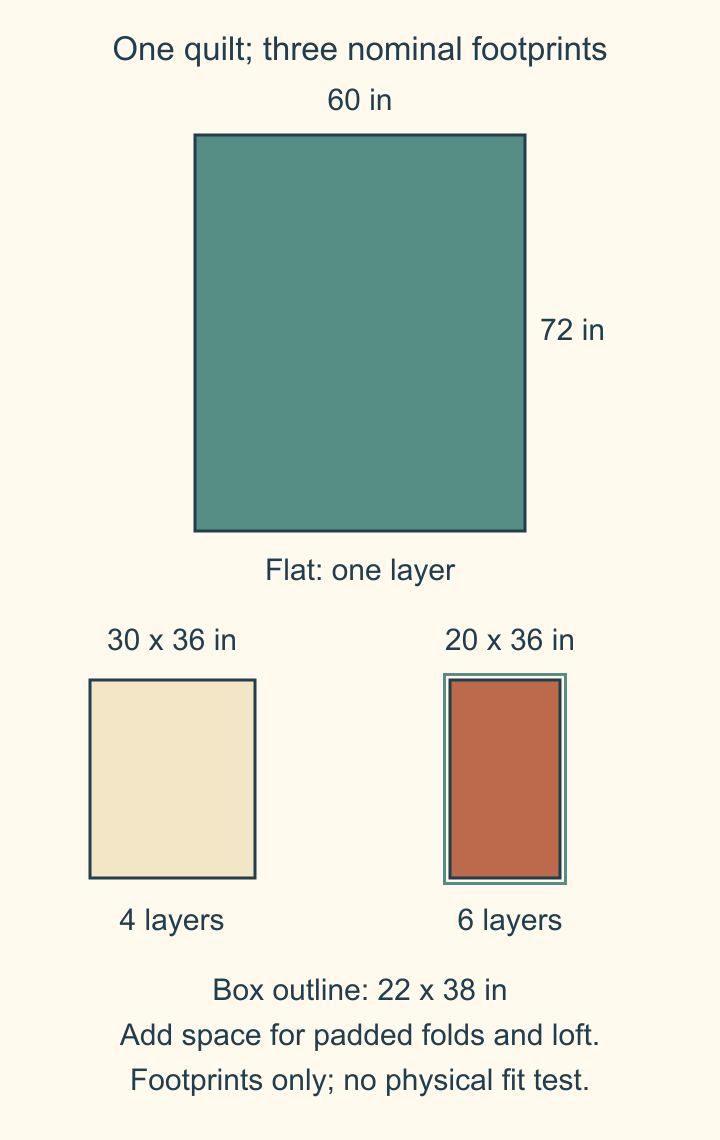
For a drawn space-planning example, consider a sound everyday quilt measuring 60 x 72 inches. We are comparing nominal footprints only; no physical quilt or box was tested.
| Arrangement | Nominal footprint | Layers before padding |
|---|---|---|
| Fully flat | 60 x 72 inches | 1 |
| Halved in both directions | 30 x 36 inches | 4 |
| Thirds across the 60-inch side, halves along the 72-inch side | 20 x 36 inches | 6 |
Each arrangement contains the same 4,320 square inches of quilt: 60 x 72, 30 x 36 x 4, or 20 x 36 x 6. Smaller footprints mean more layers and more folds, not less textile to accommodate.
Suppose a box has a stated interior of 22 x 38 inches. The six-layer arrangement has 2 inches of nominal space in each direction, or 1 inch per side if centered. The quartered arrangement doesn't fit that footprint. But the six-layer arithmetic still doesn't prove the quilt fits: rounded folds, lining and loft need additional room, including depth.
Try the supported, gently folded quilt in the prepared container before committing to that storage choice. If the lid or sides press on it, use a larger space or another arrangement rather than pushing the folds flatter.
Pad the folds and protect the surfaces
In its basic textile-care guidance, CCI recommends supporting unavoidable folds with acid-free tissue or muslin, lining the storage surface and avoiding unnecessary stacking. Choose materials appropriate to the textile, rather than assuming any tissue or decorative paper is suitable.
Keep the quilt away from direct contact with unfinished wood or ordinary cardboard. The lining is part of the storage plan, not a substitute for enough room. Put support where the fold curves instead of pressing it into a sharp crease.
For the 60 x 72-inch study, first compare the larger 30 x 36-inch arrangement with your available shelf or box. If it can be supported comfortably, fewer folds may be preferable to squeezing the quilt into the smaller nominal footprint. A rarely used spare bed may provide a supported flat option when a box cannot.
Choose the location as carefully as the container
The International Quilt Museum's care and conservation guidance discusses protective linings, stable household locations and refolding its collection along different lines. It warns against spaces such as attics and basements where conditions can fluctuate sharply.
For your own storage, compare the actual closet, room and shelf. Is the location near a leak, exterior dampness or a heat source? Can you remove the quilt without dragging it past rough edges? Is there room to open the container and support the textile as you lift it?
Don't stack a heavy box of supplies on top of the quilt container. Make the intended support easy to keep in place during everyday use. If accessing the quilt requires removing several unrelated objects, routine inspection is less likely to happen.
Keep an inspection and folding record
The museum reports refolding its collection every two years; that is its stated collection practice, not a universal safe interval for every household textile. CCI advises periodic checks and refolding appropriate to the object. Set a reminder suited to your quilt and conditions, and inspect sooner after a suspected leak or environmental change.
A simple record has the date, storage location, arrangement, condition observations and a sketch or photograph of the fold positions. For an everyday seasonal throw, you might choose to inspect it whenever you put it away or bring it out. That is a practical household reminder, not a conservation standard.
On the next inspection, compare the actual condition with the record before changing the fold. Support the quilt throughout. If a fragile area would carry a new crease, choose another support arrangement and obtain advice rather than rotating folds by habit.
Make the storage choice reversible
Keep material notes and maker information where you can find them without repeatedly unfolding the quilt. Our quilt-label guide helps preserve that identity; a storage note can record later care and condition observations separately.
Measure the available interior space, try the quilt with its actual padding and choose the least cramped supported arrangement. Leave enough access to inspect it again. A container that closes easily without pressure is a more useful result than a nominal footprint that fits only on paper.
Related posts

Freezer Paper Foundation Paper Piecing or Sew-Through?
Compare sewing through a foundation with sewing beside folded freezer paper, using one simple unit and a realistic plan for sixteen repeats.
Pinked Edges on Precuts: Where to Measure the Seam
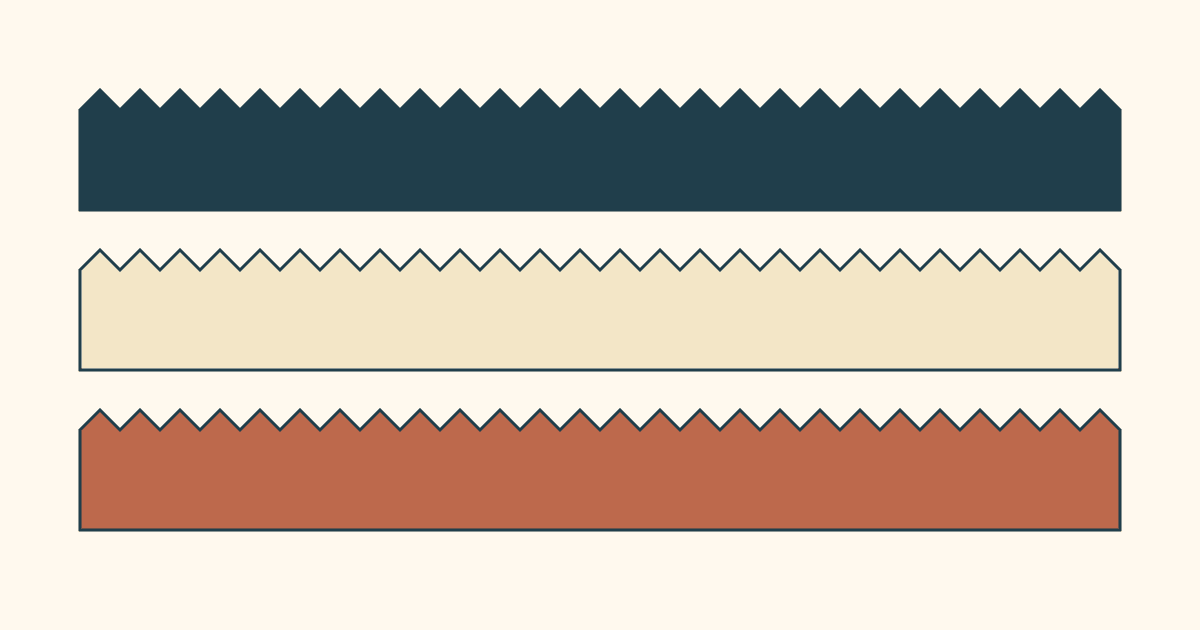
Peaks or valleys? Compare Moda and C&T guidance, then use a three-strip check to choose a consistent seam reference for your actual precuts.
Scrappy Quilt Binding: Plan the Color Rhythm
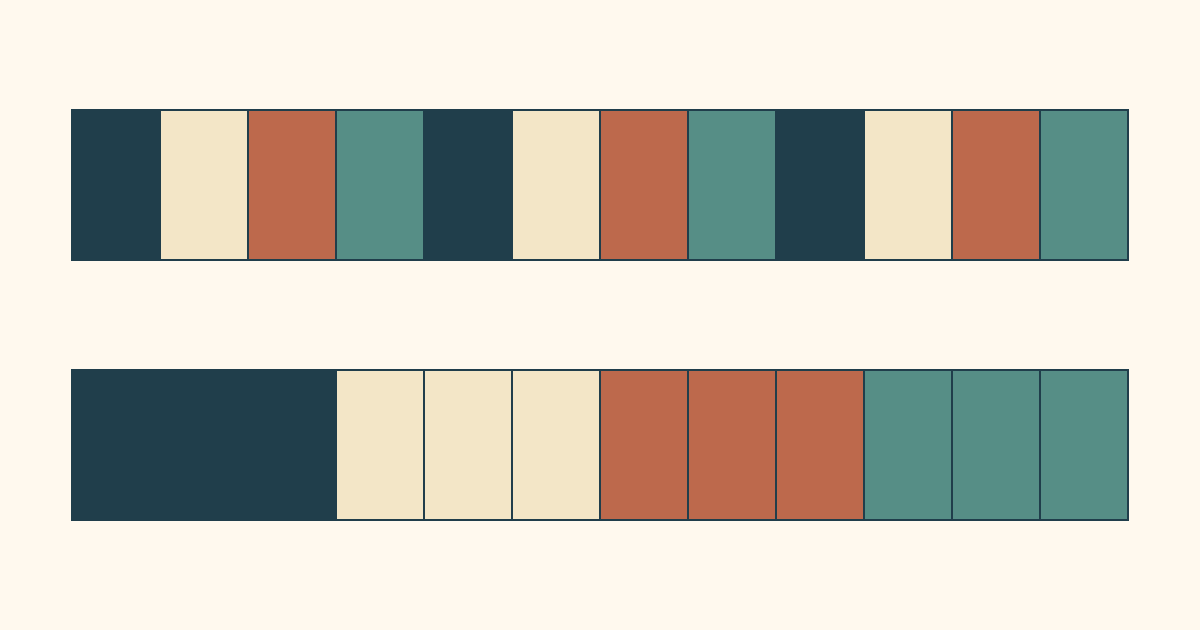
Give leftover binding strips a deliberate order. Compare repeated and grouped colors, allow for joins and audition the sequence around a 40 x 52 quilt.