


The Best Sewing Machines for Quilting in 2026: Five Picks for Every Budget
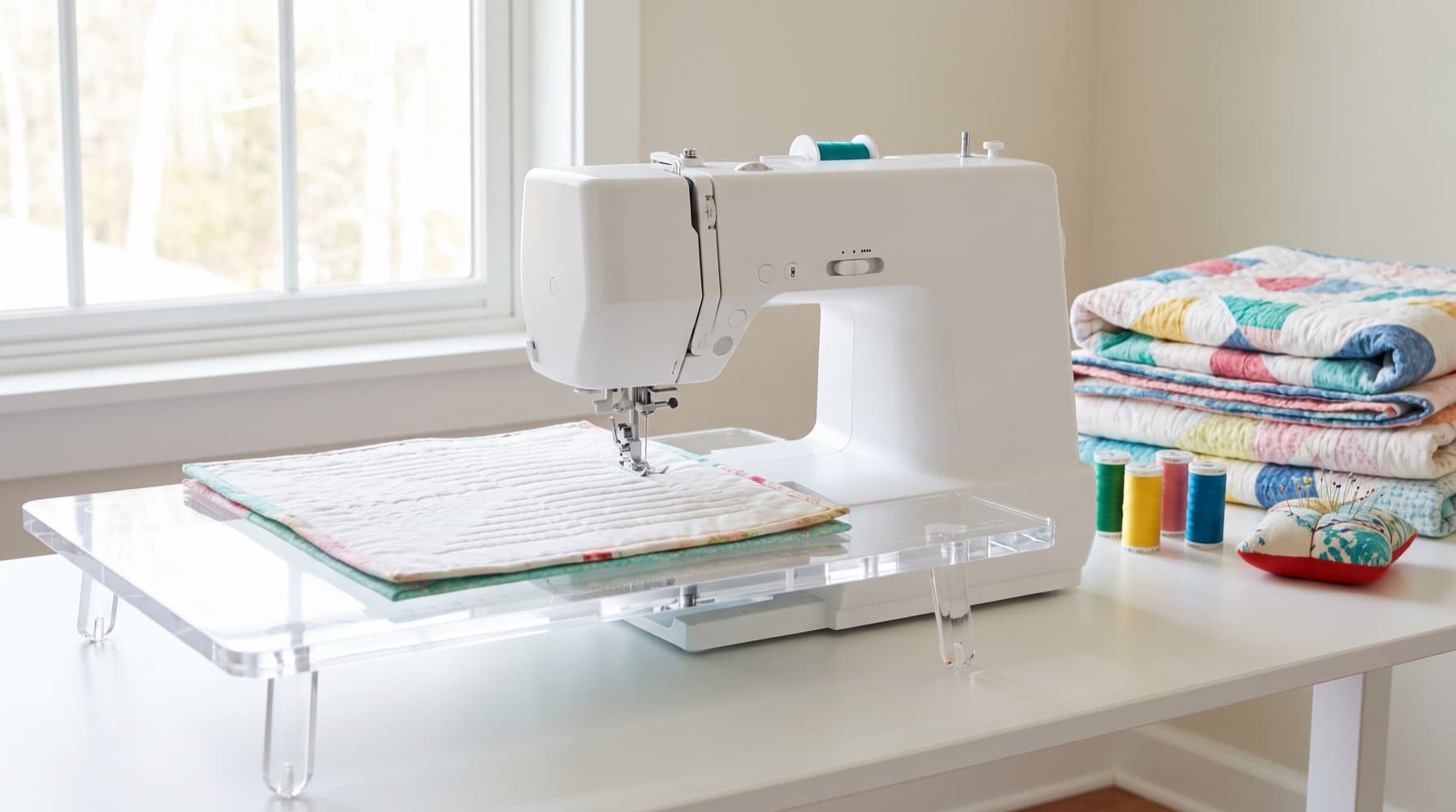
Specifications and manufacturer price snapshots reviewed October 9, 2026. The cover is a Gemini-generated illustration, not a photograph of a machine we tested.
The best sewing machine for quilting depends on the work you want to do: piecing a top, quilting a sandwich, or sewing other projects too. A large stitch library cannot substitute for enough room to move your quilt, and a low machine price can leave out the accessories you need.
This guide compares five machines at different levels, then gives you a small sewing test and a total-cost worksheet to take to a dealer. Our method: current manufacturer pages, manuals and accessory lists. We have not bench-tested these machines side by side, so the recommendations describe documented functions and tradeoffs rather than measured stitch quality. US prices below are dated manufacturer snapshots or a request for a dealer quote, not market averages.
Start with the work you actually sew
If you send tops to a longarm quilter, your home machine mainly needs to piece accurately and handle binding. If you quilt large sandwiches yourself, fabric support and room to move the quilt become more important. If you also sew garments or machine applique, a straight-stitch-only machine may serve as a second machine rather than your only one.
Look at these features in that order:
- Workspace width and height. Harp or throat width means the space to the right of the needle. Height affects how you can arrange a bulky sandwich. Compare both dimensions, then try moving your own quilt material; dimensions alone do not prove that a particular quilt will be comfortable to quilt.
- Fabric feeding. An even-feed foot, a compatible walking foot or a built-in dual-feed system can help manage layers during feed-driven stitching. For free-motion work, check the machine's feed-dog and foot setup in its manual.
- Piecing control. Try slow starts, a consistent quarter-inch seam and needle-down stopping. A foot described as a quarter-inch quilting foot may be intended for free-motion work, rather than guiding a piecing seam.
- Included versus optional accessories. Ask specifically about the piecing foot, free-motion foot, layer-feeding foot, table and knee lifter. Compatibility and box contents are different questions.
- Support. Compare lessons, servicing arrangements and warranty terms for the exact seller and package. A nearby dealer's support may matter more to you than another automatic function.
An automatic thread cutter and knee lifter are useful conveniences. A stitch regulator can assist free-motion stitch-length control, but it does not remove the need to practice moving the quilt and managing starts and stops.
Five machines at a glance
| Machine | Useful fit | Workspace, width x height | US price basis |
|---|---|---|---|
| Juki TL-2010Q | Dedicated straight-stitch work | 8.5 x 6 inches | Dealer quote; $2,169 suggested retail |
| Brother PQ1600S | Straight stitch with pin feed | 8.7 x 5.7 inches | $999.99 manufacturer listing |
| Janome MC6650 | Quilting plus other sewing | 10 x 4.7 inches | Dealer quote; $2,999 displayed |
| Brother CS7000X | Small-project starter | Not published on its US page | $249.99 sale; $279.99 regular listing |
| BERNINA 770 QE PRO | Free-motion stitch regulation | 10 x 5 inches | Dealer quote |
These are the manufacturer pages reviewed on October 9, 2026; promotions and dealer packages change. Obtain a written quote before deciding. The Juki and PQ1600S are straight-stitch-only machines. The other three provide multiple stitches. Maximum speed is 1,500 stitches per minute for the two straight-stitch models, 1,000 for the Janome and BERNINA, and 750 for the CS7000X. That is a specification, not a target speed for quilting.
Juki TL-2010Q: a dedicated straight-stitch option
Juki's US product page lists a speed-control slider, automatic thread trimmer, knee lifter and sub-tension unit. It includes an even-feed foot and a 23-by-13-inch auxiliary table. The named quarter-inch quilting foot is described as a free-motion foot; confirm which piecing guide foot your package supplies or requires separately.
Juki's global specification page confirms the 8.5-by-6-inch opening. The combination deserves a demonstration if most of your work is patchwork and quilting. It cannot add zigzag stitches, buttonholes or decorative stitches to a project, so keep those needs in your comparison.
The US page gives a $2,169 suggested retail price and directs buyers to an authorized dealer for pricing. Compare the dealer's actual package with your accessory list rather than treating suggested retail as the amount you will pay.
Brother PQ1600S: straight stitch with pin feed
Brother's PQ1600S page documents the pin-feed mechanism, four feed-dog levels, push-button thread cutter and included knee lifter. It lists an 8.7-by-5.7-inch needle-to-arm opening and an 11.1-by-23.3-inch extension table.
Its carton list includes quarter-inch, free-motion quilting and pin-feed feet. It does not list a walking foot. Some generic specification rows conflict with the named accessories, so use the explicit carton list as your starting point and confirm the package with the seller.
Consider it when you want a dedicated straight-stitch machine and want to try its feeding controls with your fabrics. The current direct listing is $999.99. It does not replace a multi-stitch machine if you need zigzag or buttonholes. See our PQ1600S guide for the model's broader feature summary.
Janome MC6650: multiple stitches and a wide opening
Janome's current MC6650 page lists 170 stitches plus two alphabets, a thread cutter, drop feed, a 1,000-spm maximum and a 10-by-4.7-inch workspace. Its standard accessory list includes a convertible free-motion foot set. The knee lifter and extension table are listed as optional accessories.
This is a candidate when one machine needs to serve patchwork, quilting and other sewing. Ask the dealer to demonstrate the feet for your intended quilting method and quote the optional accessories you want. A ten-inch opening is useful information, but its height is worth trying with your actual sandwich too.
Janome displays $2,999 and asks customers to see a dealer for pricing. Our MC6650 guide provides a starting point for the features; the written dealer package should settle what comes home with you.
Brother CS7000X: an accessible small-project starter
Brother's CS7000X page lists 70 stitches, drop feed, a wide table and ten feet, including walking and quarter-inch feet. Its maximum speed is 750 spm. The current listing advertises $249.99 against a regular $279.99 price.
Its US page does not publish the needle-to-arm opening. Try moving a quilt sandwich through the machine before assuming it will suit the quilt sizes you plan to finish. The included accessories make it a candidate for a first small quilt; they do not establish how comfortably it will handle a large bed quilt for you.
The CS7000X has no knee lifter. Consider whether you need that convenience now, and whether your table supports the fabric adequately, before paying for a larger machine. See our CS7000X guide for more context.
BERNINA 770 QE PRO: included stitch regulation
The manufacturer's current 7 PRO Series brochure lists the BERNINA Stitch Regulator #42 as a standard accessory for the 770 QE PRO. It also specifies a 10-by-5-inch workspace, Dual Feed, knee lever, automatic thread cutter and needle threader, and Pinpoint Laser. The embroidery module is optional.
It is worth a demonstration if free-motion stitch regulation is a priority. Try the BSR on your sample rather than assuming it guarantees a particular result; ask for instruction on its modes and your preferred quilting setup.
Request a US dealer quote for the exact sewing or sewing-and-embroidery package. Check the regional accessory list and any promotion in writing. You are comparing the functions you will use and their total cost, not choosing the machine with the longest feature list.
Take a three-part sewing test to the dealer
If you are deciding what movement to try, walking-foot versus free-motion quilting compares the two methods using the same original 20-inch direction-change study. That choice gives the dealer a specific task to demonstrate.
Prepare the same materials for each candidate so your observations are comparable. This is a test you can perform, not a report of testing we have done.
- Piece three strips. Use three strips cut 2.5 inches wide. Join them along their long edges with quarter-inch seams and press as you normally do. The theoretical unfinished width is 3 x 2.5 minus two seam joins x 0.5 = 6.5 inches. Measure the middle as well as both ends. Check the seam consistency and your control at slow speed, rather than blaming the machine alone for a size error.
- Feed a sandwich. Bring a small sandwich using the batting and backing you intend to use. Sew a straight line with the recommended layer-feeding setup. Look for shifting, puckers and trouble supporting the fabric; record the foot and settings used.
- Try your quilting movement. If you plan free-motion work, have the dealer configure the compatible foot and feed-dog position, then practice a curve, a stop and a restart. If you plan larger quilts, also bring a representative folded or rolled sandwich to check handling space with the power off.
Write down what felt controllable and what needed assistance. Repeat a difficult step with the dealer's instruction. Familiarity can affect your first impression as much as the specification sheet.
Compare the total package cost
Use the same cost categories for every quote: machine, required feet, fabric-support table, lessons, delivery and tax. Mark an included item as included rather than silently counting it twice.
Here is a hypothetical calculation, not current accessory pricing: an $850 machine plus a $50 feeding foot, $20 piecing foot and $80 support table totals $1,000 before tax. A $950 package with those accessories included plus a $50 lesson also totals $1,000 before tax. The lower machine price does not settle the decision.
Keep the quote beside your sewing-test notes. If you outsource the quilting, you may reasonably prioritize piecing control and local service over a larger opening or stitch regulator. If you quilt every bed quilt yourself, handling space and support deserve a longer trial.
Care follows the machine's manual
Clean lint and replace a damaged or unsuitable needle promptly. Oil only at the points and intervals specified for your exact model. The TL-2010Q manual, for example, gives lubrication instructions for daily use; those instructions should not be transferred to a different machine.
Ask your dealer about service intervals for your usage and any warranty requirements. A universal yearly service schedule or a single needle-hour rule cannot replace the model's instructions and the symptoms you observe.
For more models and comparisons by use, see our quilting machine guide. Choose a shortlist from the documented functions, then let the package quote and your own sewing demonstration guide the purchase.
Related posts
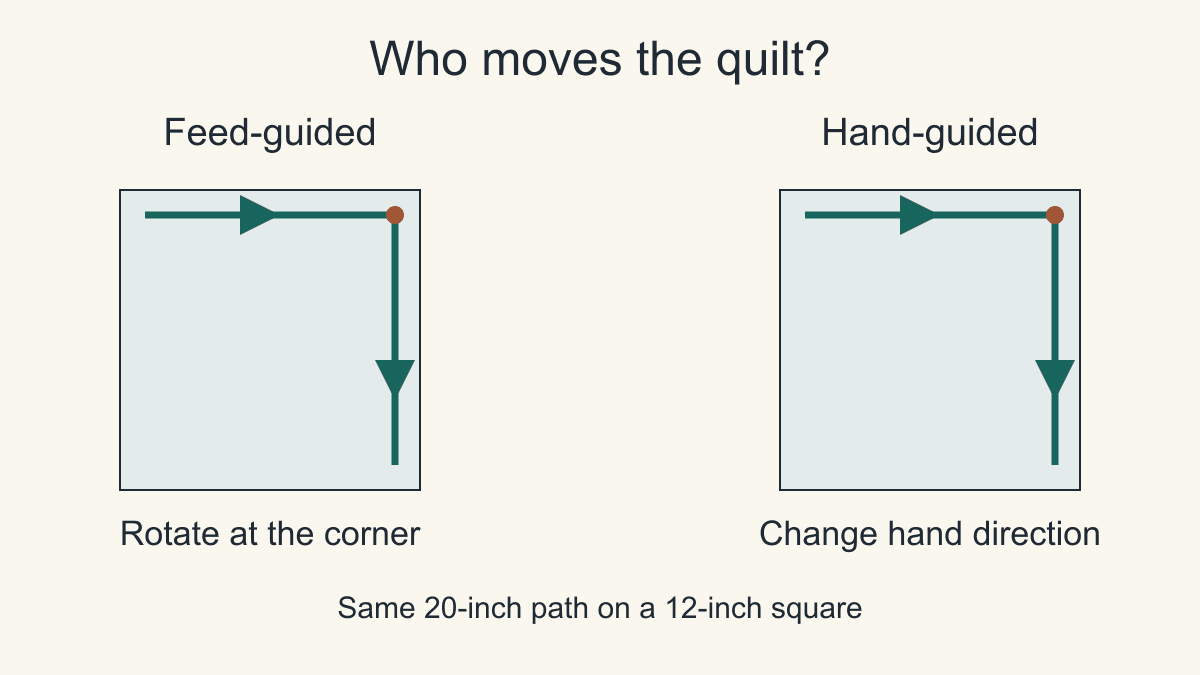
Walking Foot vs Free Motion: Choose a Method
Compare fabric feeding, direction changes and stitch control, using the same measured path to choose a quilting method for your top.
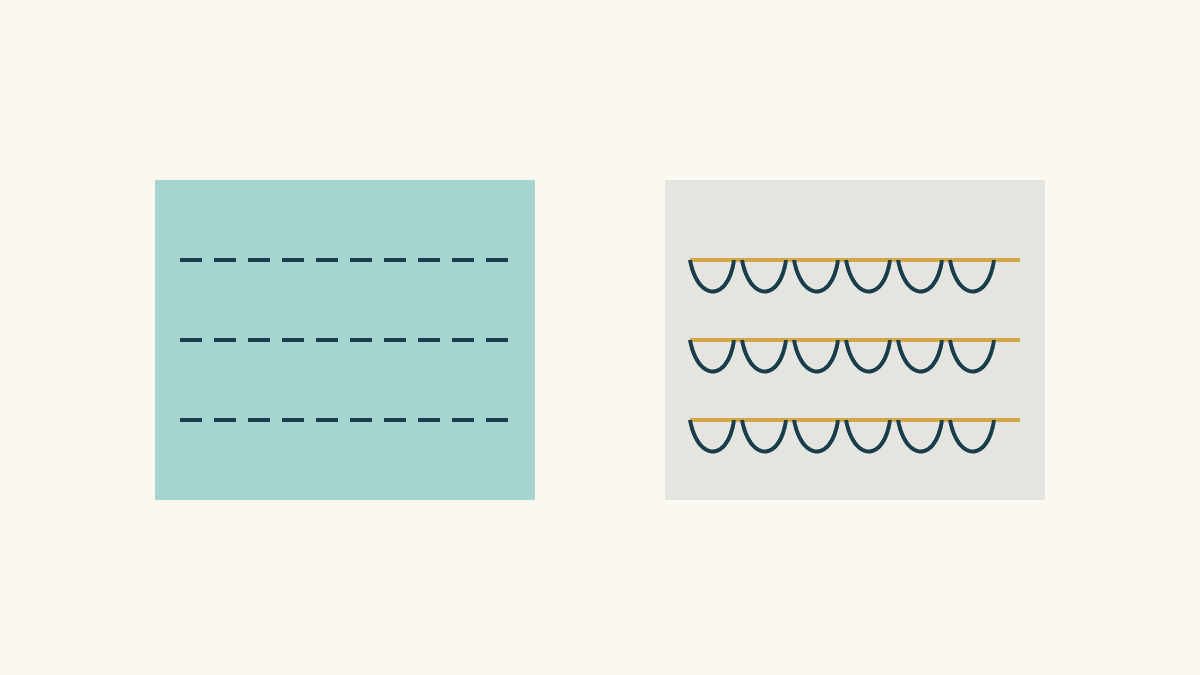
Quilting Tension Troubleshooting: Top and Back
Label both sides of a sample, check threading before the dial, and use a one-change log to narrow quilting stitch-balance problems.
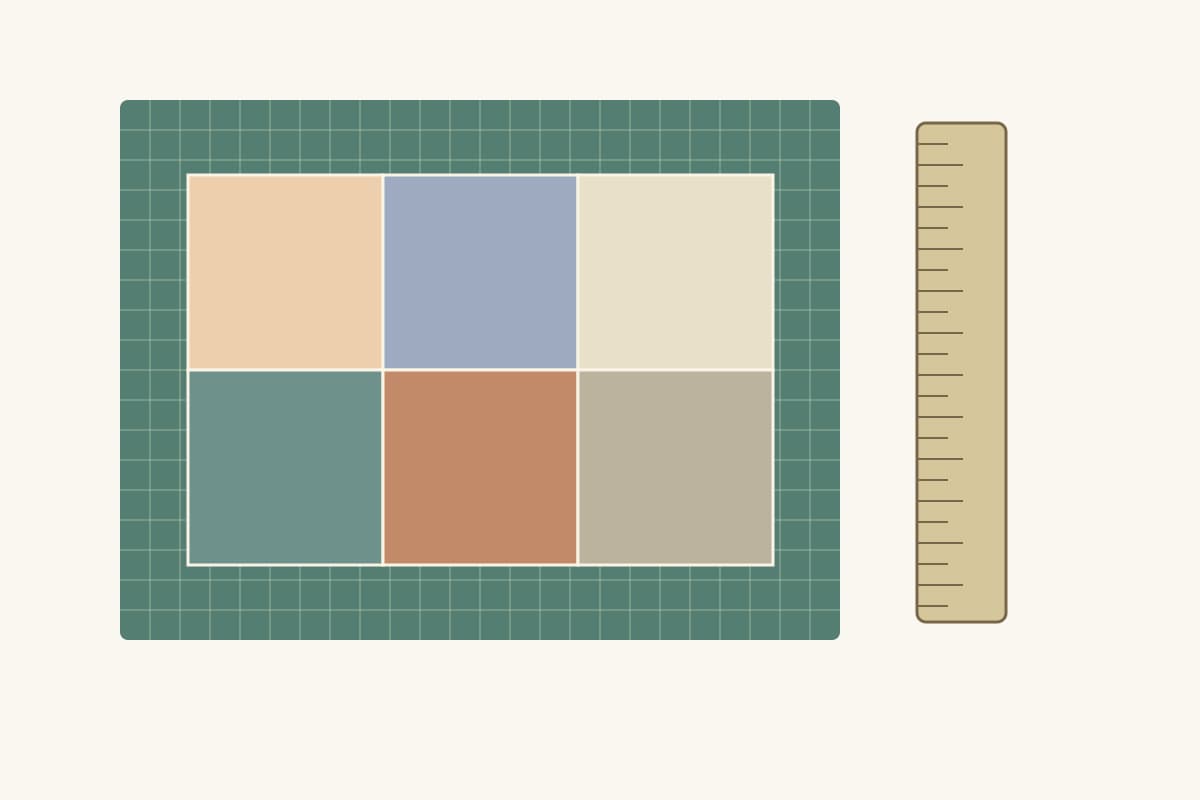
Quilting Supplies for Beginners: Buy First, Add Later
Build a first-project kit by task: what to borrow, what to check, and what to buy, with a measured six-patch practice example.