


Group Quilt Ideas: Choose a Format That Fits
Useful group quilt ideas start with a decision: are you making one quilt together, several quilts for different members, or separate quilts connected by a theme? Each answer changes how much sewing, transport and coordination the group takes on.
Here are six formats to compare, followed by an original six-maker, 30-block quilt plan. The diagrams are planning examples, not photographs of a completed group project. Choose the format before writing detailed block instructions or agreeing to a long exchange.
Compare the kinds of group project
| Format | Main result | What travels |
|---|---|---|
| Contribution quilt | One shared quilt | Individual blocks |
| Rotating bee | Blocks for different members | Blocks or fabric |
| Traveling round robin | A growing top for each participant | Whole quilt tops |
| Stay-at-home robin | Each person's own evolving quilt | Ideas and progress images |
| Theme challenge | Separate quilts with a common prompt | Optional display pieces |
| Row contribution quilt | One quilt built from long units | Completed rows |
These are format choices, not ready-made participation rules. Once the group chooses, it can develop the specific brief, schedule and construction checks that the chosen format needs.
Six group quilt ideas to adapt
1. One contribution quilt for a shared purpose
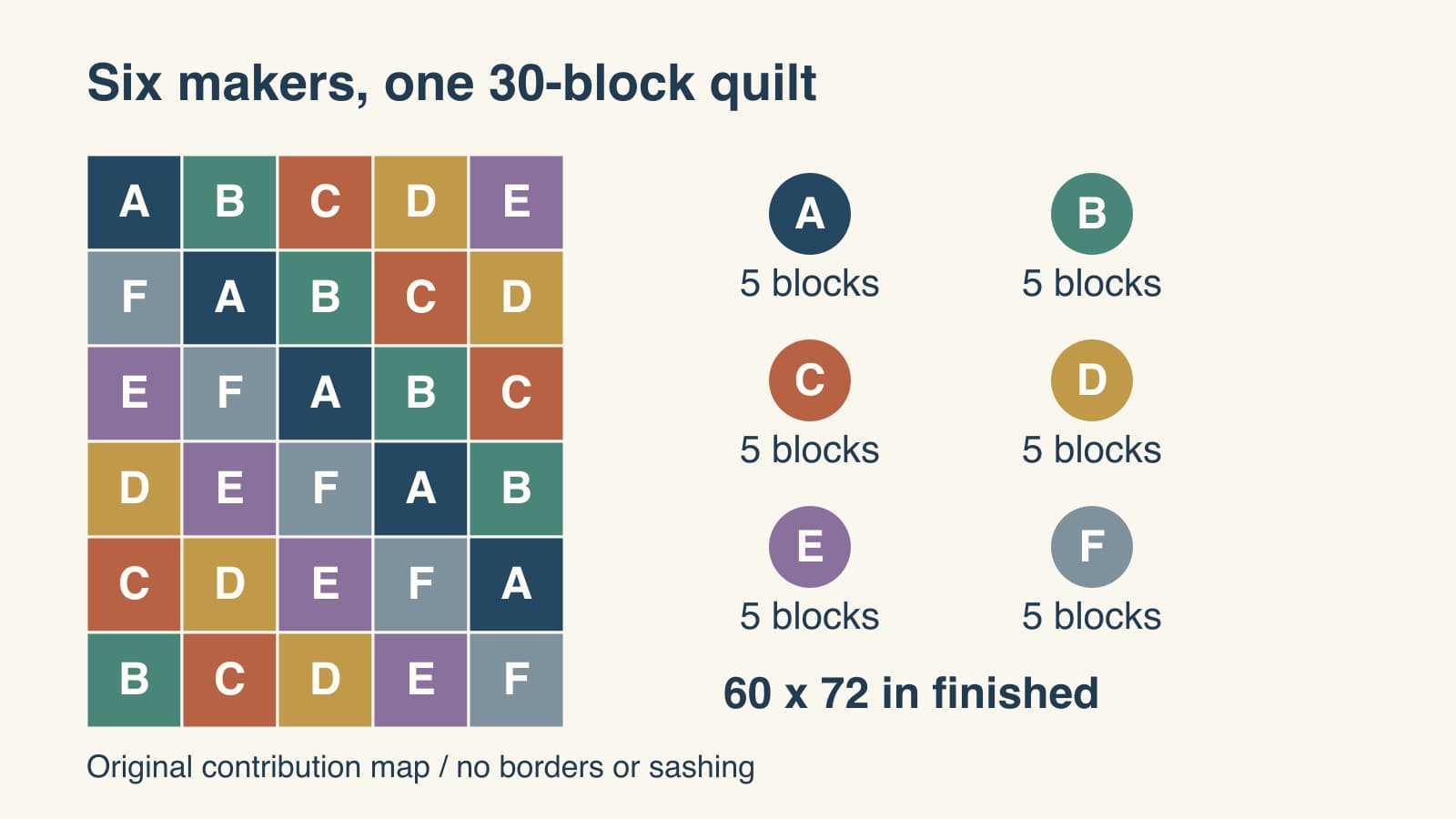
Each maker supplies blocks for a single gift, group keepsake or agreed community project. An assembler brings them together. This makes the output easy to explain: six people can each make five blocks, and the group has 30 blocks for one top.
The work does not end when the blocks arrive. Someone must handle assembly, backing, quilting and binding. Ask for those volunteers while choosing the format. If a recipient organization is involved, verify its current size, material and acceptance requirements before deciding the design. A group-made quilt is not automatically suitable for every donation program.
2. A rotating bee with a different recipient each turn
A bee spreads the benefit across members. The Philadelphia Modern Quilt Guild's bee description explains a monthly recipient who chooses the pattern, palette or theme, while other participants sew the requested blocks. Its captain helps coordinate the group's requirements and communication.
That is a larger commitment than contributing to one top. If six people each request five blocks from each of the other five members, each person receives 25 blocks, and the group makes 150 contributed blocks across all six turns. Those numbers are our example, not the guild's prescribed quota. Check that the total workload matches everyone's availability before using this format.
3. A traveling round robin
Each participant begins a center or starting unit, then passes the growing top to another maker for an addition. The Shawnee Spinning Spools Quilt Guild's round-robin guidelines describe a center moving between quilters, with successive borders added before it returns to its original maker.
Choose this when participants welcome an evolving composition and can transport the work. It is less suited to someone who wants every design choice fixed in advance. One late handoff can affect another person's next round, so establish whether the group wants this dependency before drafting detailed round robin quilt rules.
4. A stay-at-home robin
Participants follow a shared series of prompts but keep their own quilts. The Ottawa Modern Quilt Guild's Roosting Round Robin describes this arrangement: the quilt stays at home while the group shares ideas and progress. Its page documents a past challenge, not a current registration invitation.
This is useful for a remote group, people reluctant to mail a top, or makers who want control over their own sewing. The shared result is a family of related quilts rather than one jointly assembled object. Prompts can connect the work without requiring matching measurements across everyone's quilts.
5. A common-theme challenge
Everyone interprets one agreed idea, such as a limited palette, an architectural shape or a season. Participants make separate pieces, then compare the different solutions. A small wall-quilt format can make displaying the collection more manageable than gathering large bed quilts.
Decide whether the aim is exploration, exhibition or a judged contest. Those are different experiences. Historical guild challenges show how specific the constraints can become: St. Louis Modern Quilt Guild's 2023 round robin used a signature fabric and kept progress hidden from the original maker. Those were that event's choices, not universal requirements for a group challenge. Select only constraints that serve your group's goal.
6. A row contribution quilt
Instead of matching small blocks, makers each create a long row. For example, five rows finishing at 60 x 12 inches create a 60 x 60-inch top when joined, with no intervening sashing. The count is easy to divide among five makers, but long rows can be harder to compare and handle than individual blocks.
Use this format when people want a larger uninterrupted area for their design. Choose a contribution quilt of separate blocks if participants need smaller, easier-to-transport units. The finished-versus-unfinished distinction matters for rows just as it does for blocks.
Work through a six-maker contribution quilt
Suppose six makers want one throw-sized gift. They choose blocks that finish at 12 inches, with no sashing or borders. The group plans five columns and six rows:
- Width: 5 x 12 = 60 inches.
- Length: 6 x 12 = 72 inches.
- Block count: 5 x 6 = 30 blocks.
- Equal contribution: 30 divided by 6 = five blocks per maker.
For an ordinary straight-grid assembly with quarter-inch seams, each completed block should measure 12.5 inches unfinished before joining. Julie Baird's block-drafting guide explains the finished-versus-cut distinction for straight-edged squares and rectangles. Five such blocks minus four half-inch seam losses make a 60.5-inch raw row; six rows minus five half-inch losses make a 72.5-inch raw top. The planned finished dimensions are 60 x 72. Use each block's actual construction instructions rather than adding a seam allowance indiscriminately to every patch.
The diagram spreads contributions A-F through the layout. Its colors identify makers, not a rule that one person must sew every block in one color. Each letter appears exactly five times. This lets the group check ownership and balance separately from deciding the real fabric palette.
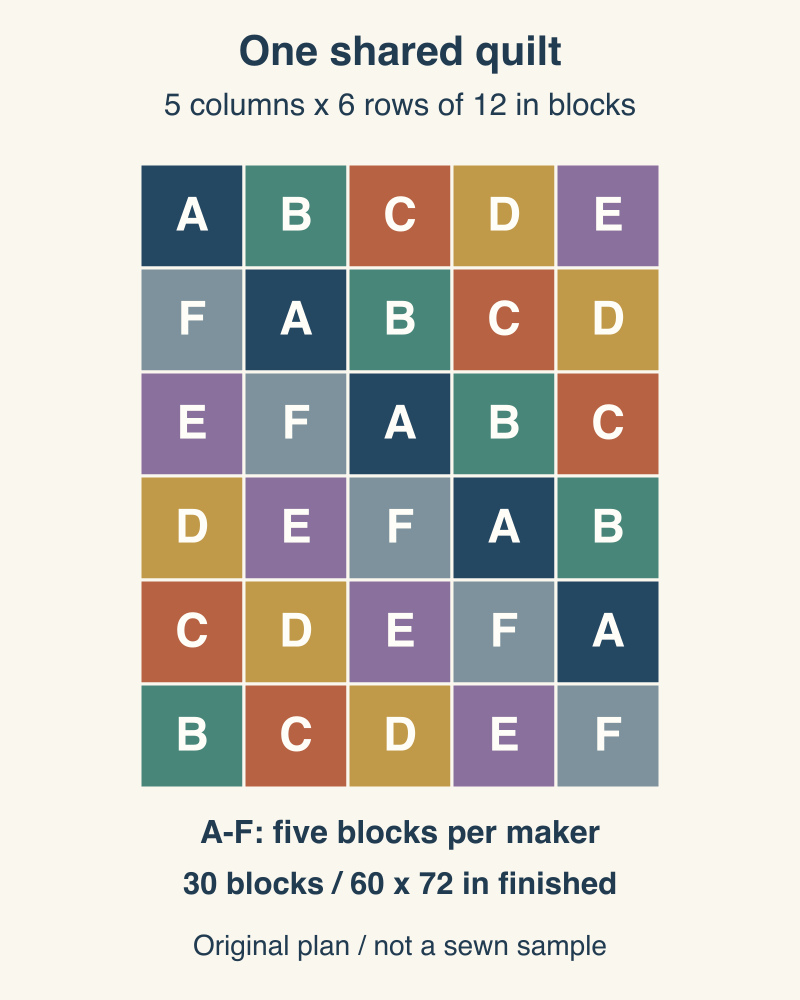
If one maker can complete only three blocks, the available count becomes 28 unless someone supplies the missing two. Leaving two empty spaces does not preserve a complete five-by-six layout. A separate option is a five-by-five layout of 25 blocks, finishing at 60 x 60 inches, with three contributed blocks left for another use. Choose the revised size openly rather than silently increasing somebody's assignment.
For different block designs, sampler layout planning covers balancing the actual motifs. Our contribution map answers a different question: how many usable blocks the chosen group format requires, and where the makers' work might go.
Keep shared design decisions deliberate in QuiltLab
Use a project when the group needs access to the same design assets. The Saving, Recovery and Projects guide explains the destination and permission boundaries. Share opens membership controls. Owner, Editor and Viewer are different roles: use editing access for people changing designs and viewing access for people who only need to inspect them. Sharing a project grants access to its assets, rather than only to the item whose editor opened the dialog. Check current pricing and account limits before organizing around the service.
For project Swatches, Blocks and Quilts, autosave keeps edits in a private draft. Saved privately confirms that destination; it does not mean the group sees the revision. Use Save to Project for a Swatch or Block, and Update project quilt for a Quilt, when you intend to update the shared version. The save badge then reads Shared version.
For example, a layout coordinator could audition a different arrangement of the 30 blocks privately, then explicitly update the project quilt after the group agrees. A maker can similarly revise a project block privately before saving it to the project. Updating the shared block does not automatically replace every placed version: Block updates lets the quilt editor preview a newer block and Accept update applies it. In a project quilt, that acceptance remains private until the quilt is updated. See the Quilt Editor's block-update guide.
If another member has already updated an asset, read the conflict choices before replacing the shared work. Loading the latest version, overwriting when permitted, or saving a new project copy have different results. Project Canvases and Patterns save directly to shared documents; the private-draft boundary above must not be extended to those editors. These are deliberate version-sharing tools, not a promise of simultaneous co-editing or automated deadline reminders.
Choose the smallest format that meets the goal
Before committing, have the group answer four things: how many finished quilts it wants, what unit each maker supplies, who performs the finishing work, and whether work must travel. Then test the count against a complete layout, as we did with six makers and 30 blocks.
A single contribution quilt can satisfy a shared-gift goal. A rotating bee can give every member a turn. A traveling robin can emphasize creative response, while a stay-at-home challenge can connect a distant group with fewer transport dependencies. Choose that relationship first; the detailed brief can follow from a format everyone understands.
Related posts
How to Write a Quilt Pattern: Pages, Diagrams and Testing
Turn a quilt design into a clear pattern with a page plan, checked quantities, useful diagrams and a testing process.
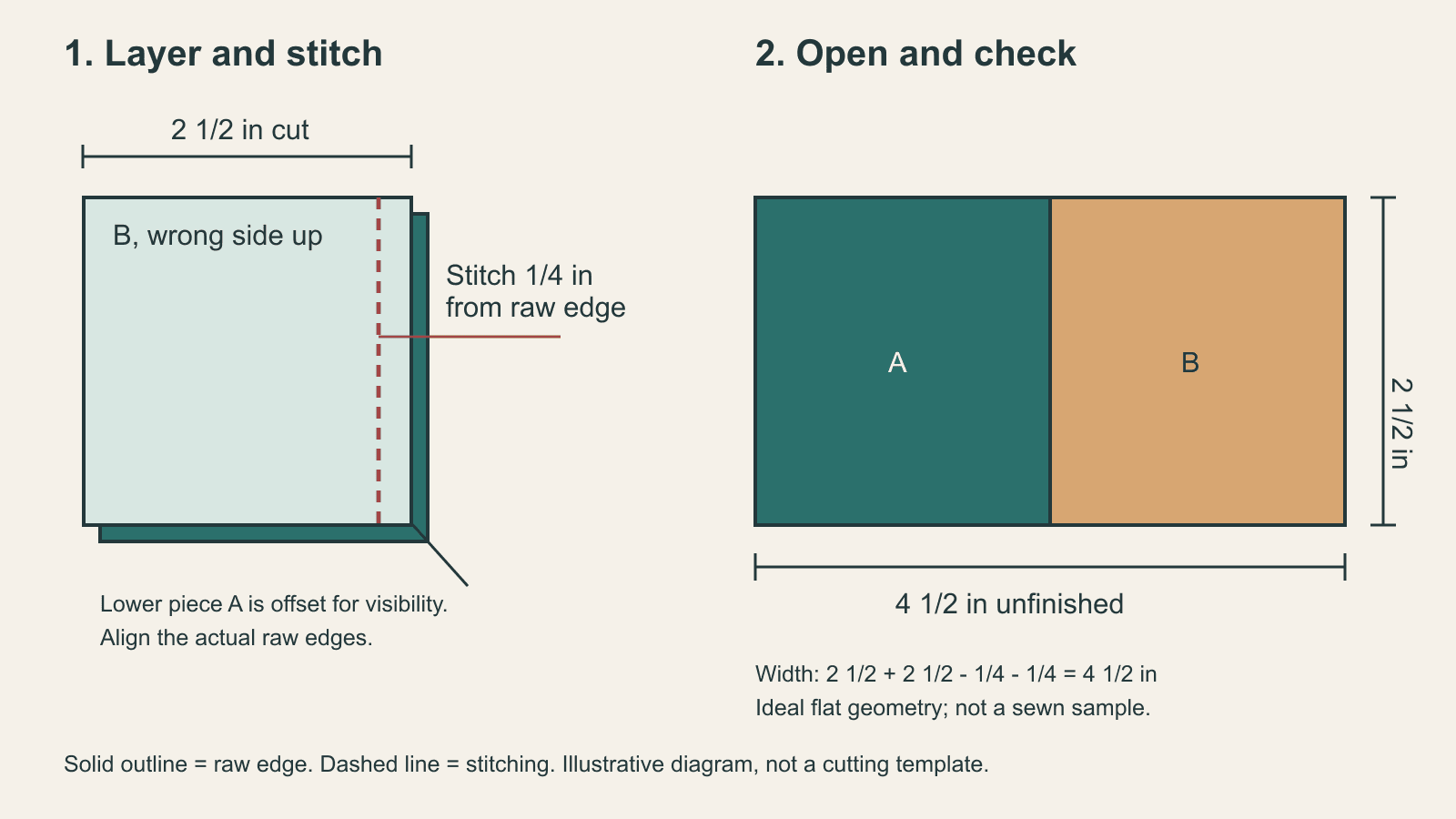
Draw Quilt Pattern Sewing Diagrams That Show the Next Action
Make sewing steps easier to follow with clear fabric orientation, distinct line styles, stable labels and measurable checkpoints.
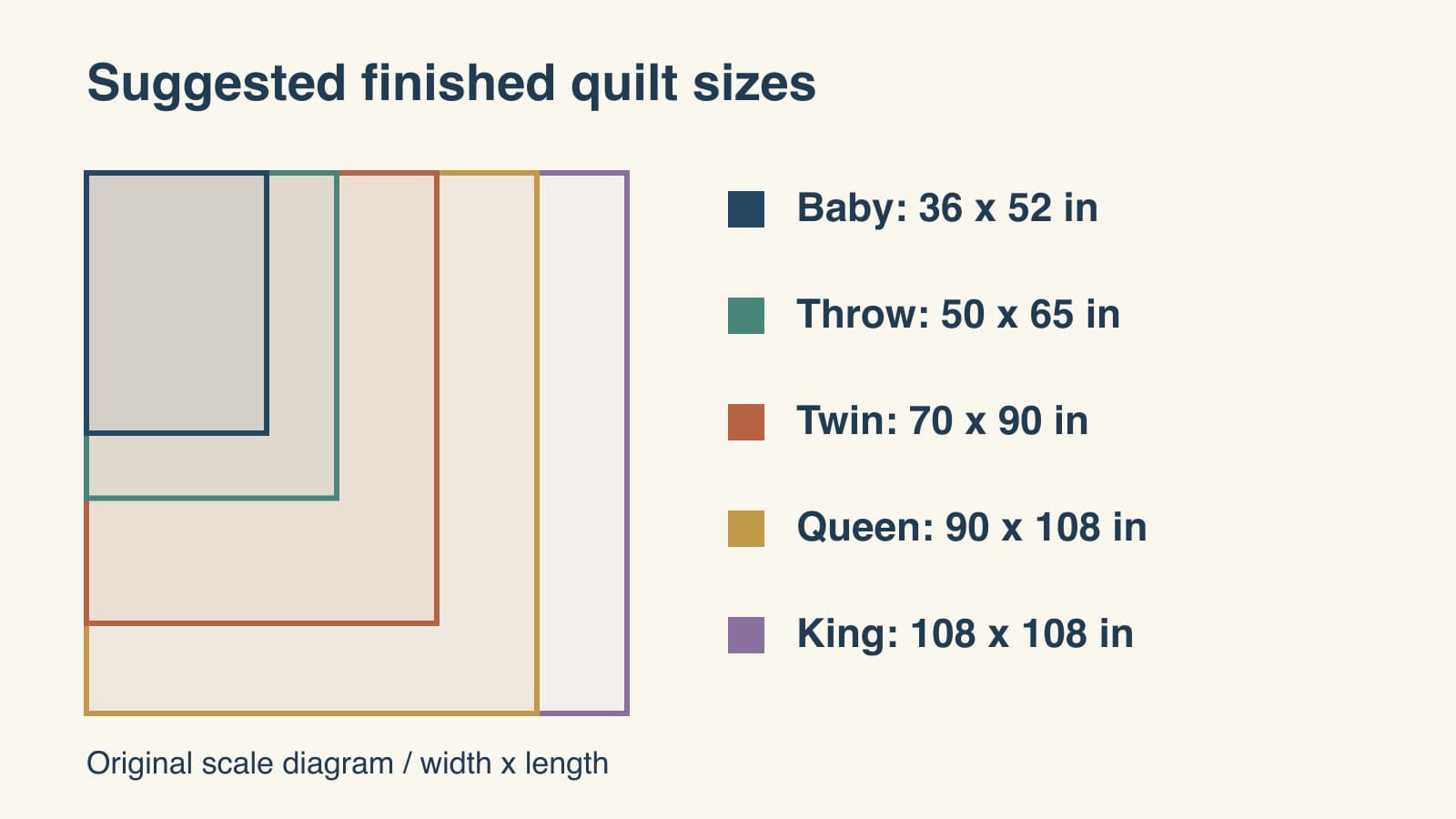
Quilt Size Chart: Baby, Throw, Twin, Queen and King
Compare suggested finished quilt sizes, measure the drop on a real bed, and check how many blocks fit your target before choosing a pattern.