


Should You Prewash Quilt Fabric? Decide by Precuts, Yardage and Color
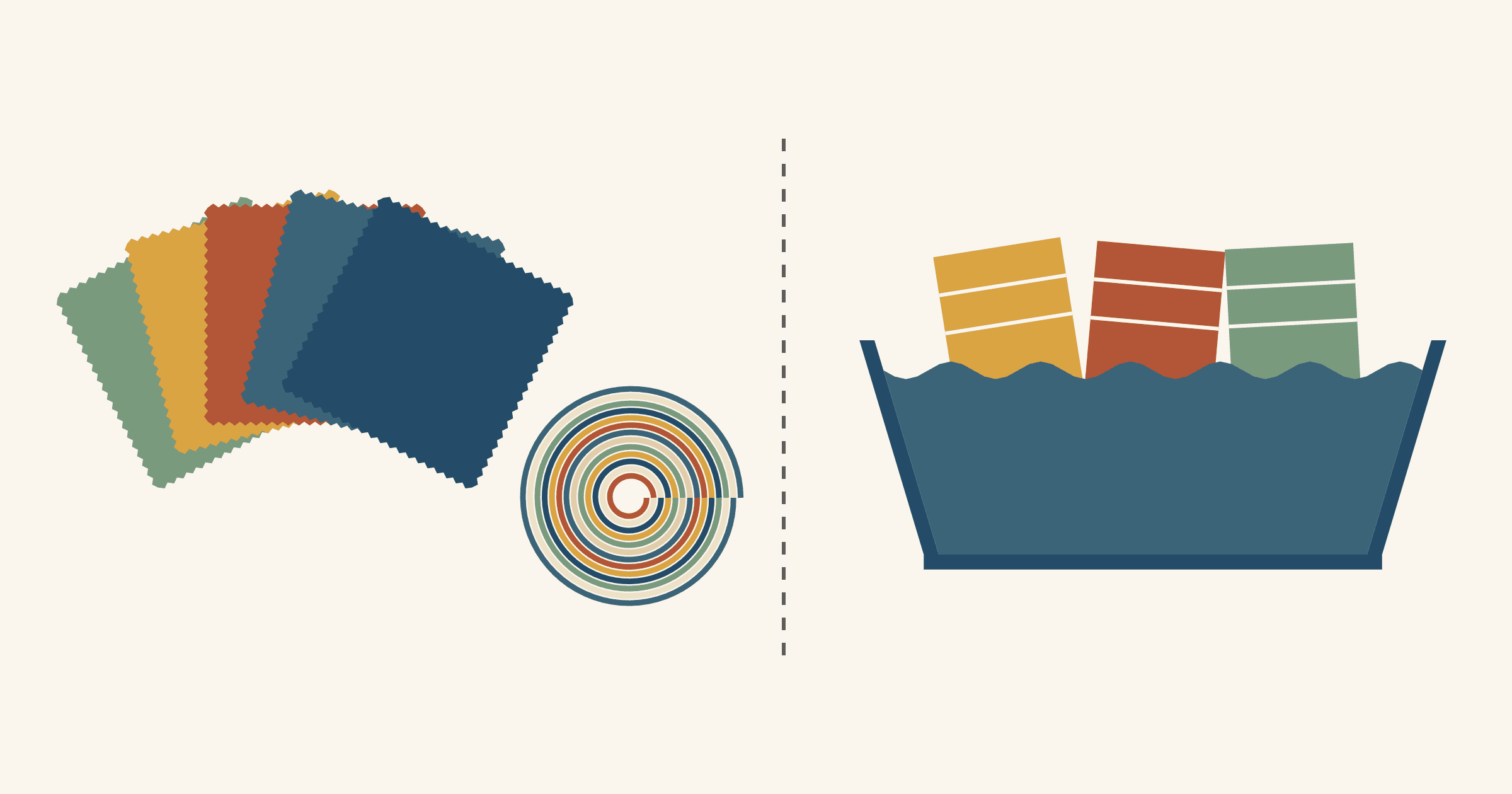
You don't have to prewash quilt fabric if it's good quilting cotton. Whichever way you choose, treat every fabric in the quilt the same: all washed or all unwashed, backing included. That's the rule of thumb ZJ Humbach gives in National Quilters Circle's guide to preshrinking. She notes that cotton can shrink up to 3 percent, so a quilt planned at 100 inches could come out of the wash at 97.
Precuts usually make the choice for you. Charm packs, layer cakes and jelly rolls shouldn't go in the washer, so when a quilt includes them, leave its yardage unwashed too. Then make an exception only when a fabric gives you a specific reason: flannel yardage, or a deep red or navy that marks a white scrap in a quick test.
What prewashing changes
A first wash does three things, whether it happens to the fabric or to the finished quilt.
- Shrinkage. Cotton draws up, and Humbach's figure of up to 3 percent adds up across a quilt. When fabric shrinks after quilting, the quilt crinkles between the stitching lines. Some quilters skip prewashing because they want that soft, puckered look. Others prewash so the quilt stays flat and close to its planned size.
- Loose dye. A deep color can release dye onto a lighter neighbor. Amy Smart of Diary of a Quilter stopped prewashing after she started working in a quilt shop in 2003. In her post on prewashing, she says that of the hundreds of quilts she's seen made and washed, she could count on one hand the ones where a color bled.
- Feel. Washing takes out the sizing that makes new fabric crisp. Washed fabric feels softer and limper, which some quilters like and others find harder to cut accurately. Starch or sizing can put some of that body back before you cut.
None of these means you have to wash everything. They're reasons to decide on purpose before you cut.
A decision table for prewashing quilt fabric
Find the rows that match what's in your quilt. When two rows apply, the more specific one wins: flannel yardage still gets washed even when the cottons around it don't.
| If the quilt has... | Our default | Guidance behind it |
|---|---|---|
| Precuts: charm packs, layer cakes, jelly rolls | Don't wash them | Humbach calls washing precuts the one "absolute no-no"; C&T Publishing says precut makers advise against it |
| Precuts plus yardage for background or borders | Leave the yardage unwashed too | C&T: don't prewash the fabrics you combine with precuts |
| Fat quarters | Wash them only if the rest of the quilt is washed | They fray and shrink, so plan on a smaller piece |
| All yardage, washed often (baby or bed quilt) | Your choice, as long as it's all or nothing | Humbach: if you preshrink one part, preshrink them all |
| All yardage, rarely washed (wall quilt) | Skipping is reasonable | Shrinkage and loose dye show up when the quilt gets wet, including when you block it |
| Flannel yardage | Prewash the flannel | Humbach: flannel lints, ravels and "will definitely shrink" |
| A 108-inch wide backing | Follow its care note, or piece the back to match an unwashed top | eQuilter tells Kona Wide buyers to prewash and allow up to 7 percent |
| A deep red or navy next to white or cream | Test it; wash or replace any fabric that marks white | Amy Smart prewashed a red she was pairing with white |
Why precuts set the rule for the whole quilt
A precut's size is the reason you bought it. A jelly roll strip is cut 2 1/2 inches wide so it finishes at 2 inches, and a charm square is cut 5 inches so it finishes at 4 1/2. Our precuts guide lists the standard sizes. Washing works against both. Humbach warns that jelly roll strips get wrapped around each other and knotted in the washer, and that washed precuts ravel and lose their true size.
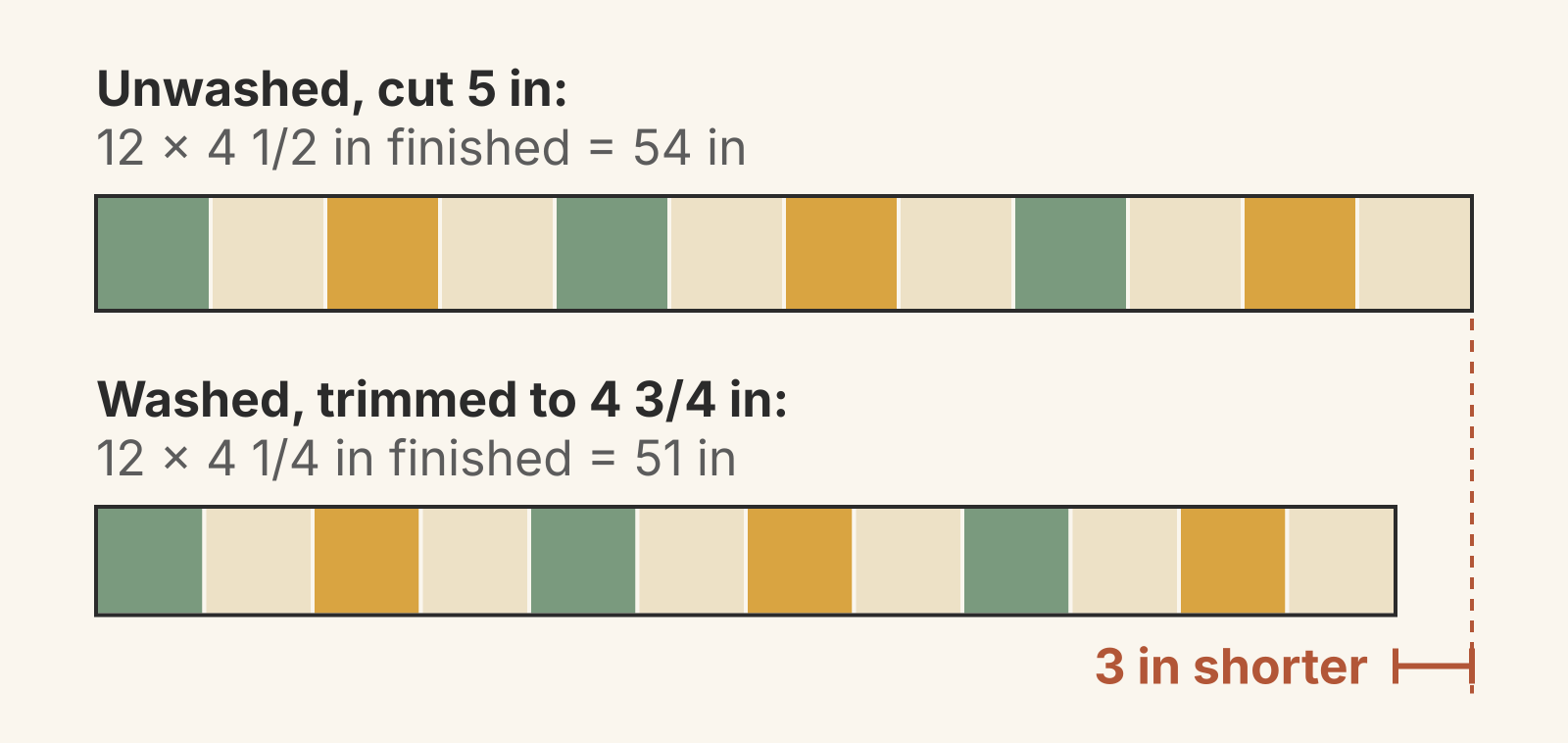
The loss adds up across a row. Suppose washing leaves you trimming each charm square to 4 3/4 inches to get clean, square edges. It now finishes at 4 1/4 inches, so twelve in a row measure 51 inches instead of 54. Every square you cut from yardage then has to be cut at 4 3/4 inches to match, and the quilt comes out smaller than the pattern says.
C&T Publishing's tips for using precuts, from its book Quilter's Precut Companion, take the next step. If you use other fabrics with your precuts, don't prewash those either, because it's best to use all washed or all unwashed fabrics in a quilt.
Fat quarters are a judgment call. They're big enough to wash, but they fray. A fat quarter that shrinks 3 percent goes from 18 x 21 inches to about 17 1/2 x 20 3/8 before you trim the frayed edges. If a pattern counts on the full 18 x 21, that can leave you short. Our fat quarter guide gives the same advice as the table: prewash them only if you're prewashing everything else.
Mixing washed and unwashed fabric
The worry is uneven shrinkage. Washed fabric has already done most of its shrinking. An unwashed patch beside it hasn't, so the first wash of the finished quilt draws up some patches and leaves others alone. The same happens between the layers when an unwashed top sits on a washed backing. That's why Humbach's rule covers every layer: "if you preshrink one component preshrink them all." Some quilters mix good cottons without trouble, but keeping everything alike takes one variable out of the first wash.
Flannel and wide backing: the two exceptions
Two kinds of yardage don't fit the all-or-nothing rule neatly.
Flannel. Humbach recommends preshrinking flannel yardage. It's linty, it ravels, and she says it will definitely shrink. Flannel precuts are still the exception: she says not to wash those either.
Wide backing. eQuilter's listing for Robert Kaufman's Kona Wide 108-inch backing says, "Please prewash and allow for up to 7% shrinkage." That's more than twice Humbach's figure for cotton. It changes how much you buy, and it puts a washed back behind a top you may not wash. Read the care note on the backing you choose; another wide backing may say something different. The worked example below shows how we'd handle it.
Color: test the fabrics that sit next to white
Color is the one risk you can check before you cut. Humbach describes two quick tests: rub a piece of white fabric over the dark fabric and look for dye, or put a couple of inches of it in hot water and watch the water. C&T's version is to wet part of the fabric and press it between two pieces of white fabric. Our guide to testing fabric for bleeding adds a slower contact test against your own light fabric, with check times.
If a yardage fabric releases dye, Humbach suggests preshrinking it. That's an exception to all-or-nothing, and it's worth the small mismatch. Amy Smart prewashed a solid red she was pairing with a lot of white, because she wanted the white to stay white instead of turning pink.
A precut can't go in the washer, so C&T's advice for one that fails is to leave that fabric out or use a Shout Color Catcher when you wash the quilt. Smart usually puts a color catcher in the first wash of any quilt, as an insurance policy. No test or wash guarantees that a dye won't move later, so the safest place for a fabric that fails is outside the quilt.
Spend your testing where it matters: deep prints that will touch white or cream. The layout tells you which ones those are.
Worked example: two charm packs, cream yardage and a wide backing
Here's how the table plays out on a throw that mixes precuts, yardage and a backing decision.
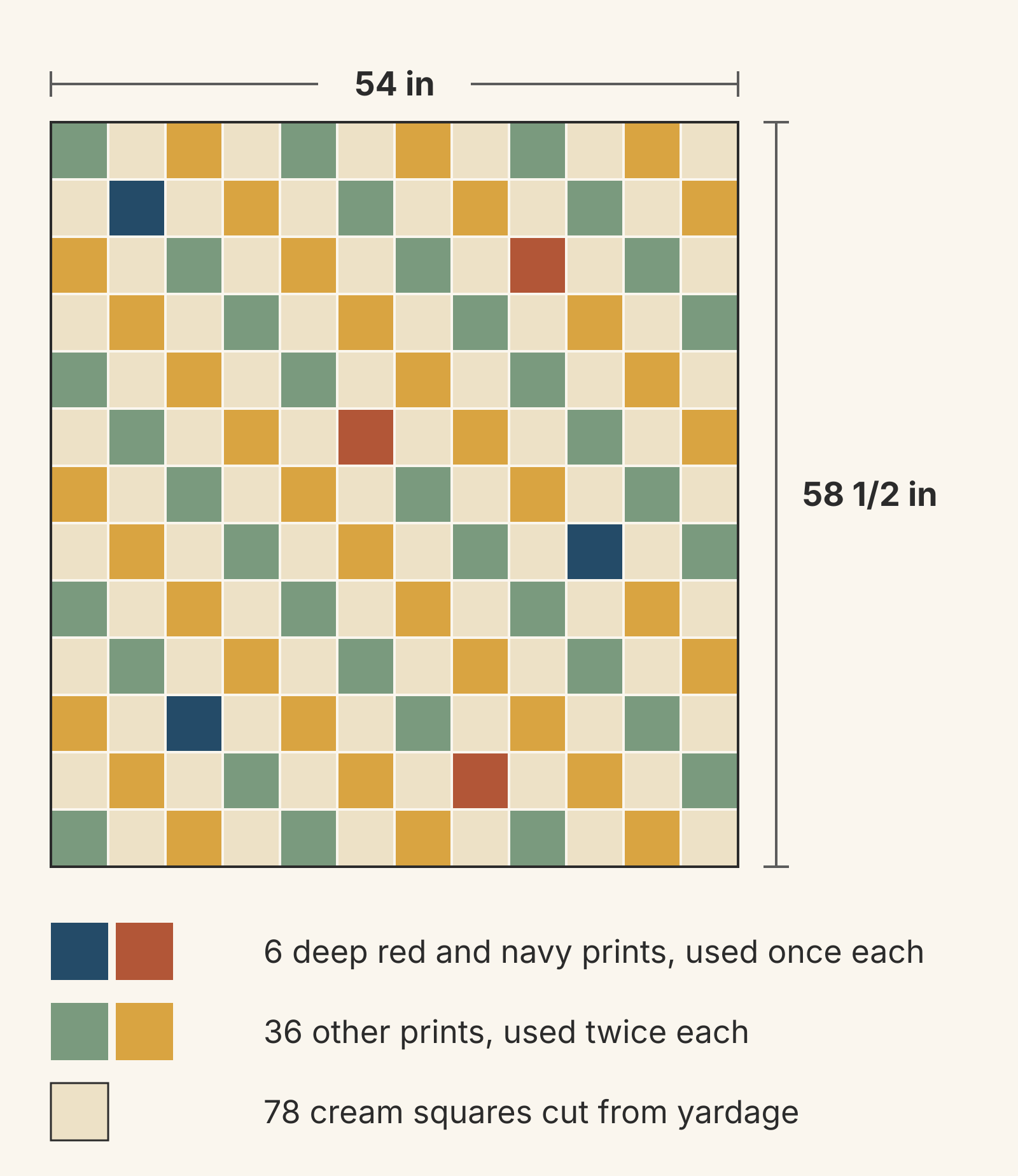
The plan is a checkerboard, 12 squares across and 13 down. Charm squares alternate with 5-inch cream squares cut from yardage. Each square finishes at 4 1/2 inches, so the top finishes at 54 x 58 1/2 inches. That's 156 squares: 78 charm squares and 78 cream.
Two charm packs of 42 squares each give 84, six more than the layout needs. Say six of the 42 prints are deep red or navy. Use each of those once and use the other 36 prints twice, for 78 squares. The six left over are one spare of each deep print: your test pieces.
Now work down the table:
- Charm squares: unwashed. They're precuts.
- Cream yardage: unwashed, to match the charm squares.
- Deep prints: test the six spares in hot water or with C&T's wet-press check. If one releases dye, leave that print out and cut its replacement from a fabric that passes the same test.
- Backing: unwashed 42-inch quilting cotton, to match the top. At 4 inches beyond the top on every side, as in our backing yardage guide, the backing is 62 x 66 1/2 inches. With two panels running crosswise, that guide's method comes to 3 1/2 yards.
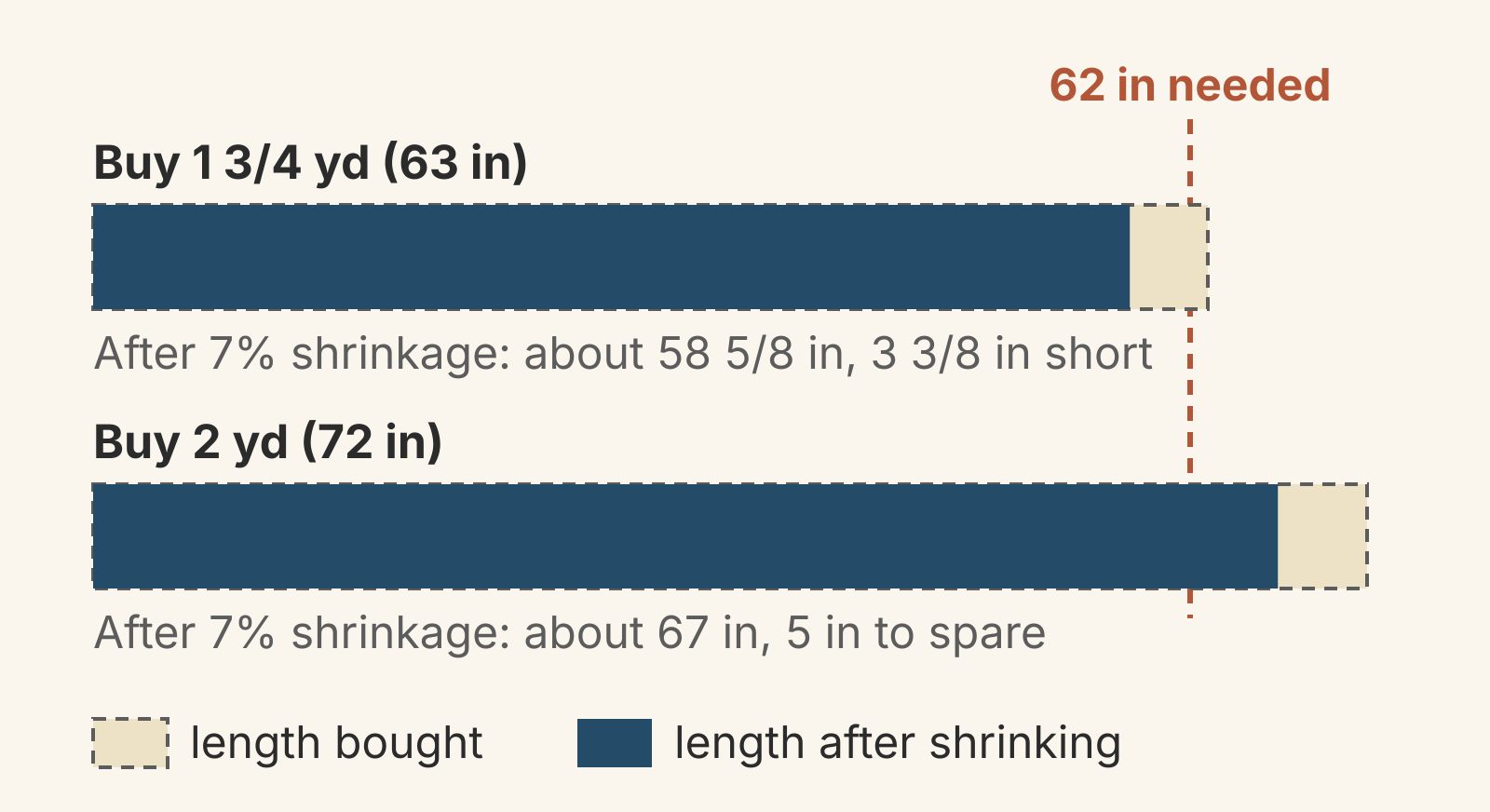
Wide backing saves the seam, but read its care note first. On 108-inch backing, the 66 1/2-inch side runs across the width, so you buy 62 inches of length. That rounds up to 1 3/4 yards, or 63 inches. If the note matches Kona Wide's and you prewash, 63 inches could shrink to about 58 5/8, which is 3 3/8 inches short. Buy 2 yards (72 inches) instead. Even at the full 7 percent, that leaves about 67 inches, 5 to spare. The width is no problem: 7 percent off 108 inches still leaves more than 100.
Even then, a prewashed back sits behind an unwashed top. If the top shrinks the full 3 percent in its first wash, it could measure about 52 3/8 x 56 3/4 inches, while the backing has already done most of its shrinking. Skipping the prewash doesn't solve it either: the backing could then shrink up to 7 percent behind a top that shrinks up to 3. That's why we'd piece this back from regular cotton. Choose the wide backing if one seamless piece matters more to you, and follow its care note.
Your next step
Before you cut, list every fabric in the quilt by type: precut, fat quarter, yardage, flannel or backing. Find each one's row in the table, then test the deep prints that will touch white or cream. Note what you did; our materials record guide shows a simple format that keeps the washing notes with each fabric.
QuiltLab can show you which prints sit next to your background before you start testing. Save photos of your fabrics as swatches in the Swatch Editor, assign them to pieces in the Block Editor, then arrange the blocks in the Quilt Editor's grid. The preview shows placement only; it can't tell you how a dye will behave, so the water test still decides.
Quilt Editor: arrange blocks and fabric →Lay out blocks with your own fabric swatchesRelated posts
Pin Basting vs Spray Basting: Which Fits Your Quilt and Room?
Pins 3 to 4 inches apart hold until you remove them; spray is faster but lasts only as long as its label says. Choose by quilt size, surface and can.
How to Prepare a Quilt for Longarm Quilting
The checklist longarm quilters ask for, with the reason behind each step, then one 64 x 80 inch top checked against two real service sheets.
Starch vs Sizing for Quilting: Which Should You Use Before Cutting?
Starch gives quilting cotton a crisp hold for bias edges and small pieces; sizing adds light body. See which to use, when to skip both, and a worked star quilt plan.