Lightweight Quilt Batting: Check Care First

Choose batting for a lightweight coverlet by its intended use and care requirements first, then compare representative finished samples. Low loft describes thickness; it does not tell you the finished quilt's weight, warmth or drape by itself.
For an everyday coverlet, write down how its owner will wash and dry it before buying the batting. A promising fiber is a poor fit if its required care will not happen.
Give the coverlet a practical brief
Our example is a 54 by 66-inch coverlet intended to fold into a small space and come out for occasional use. The owner wants a flexible quilt and a care routine they can repeat at home.
Those are requirements, not test results. Turn each into something you can check: the full care steps, a sample's handling, and the actual finished weight if weight matters.
Amy Smart's batting overview separates material, loft, quilting spacing and intended use. Keep those questions separate on your shopping sheet. A single word such as "light" cannot answer all of them.
Our batting-loft article covers thickness and surface appearance. Here, care is the first decision because it can rule out a candidate before you compare its feel.
Read the exact product instructions
Two current Hobbs products illustrate why fiber names are only a starting point.
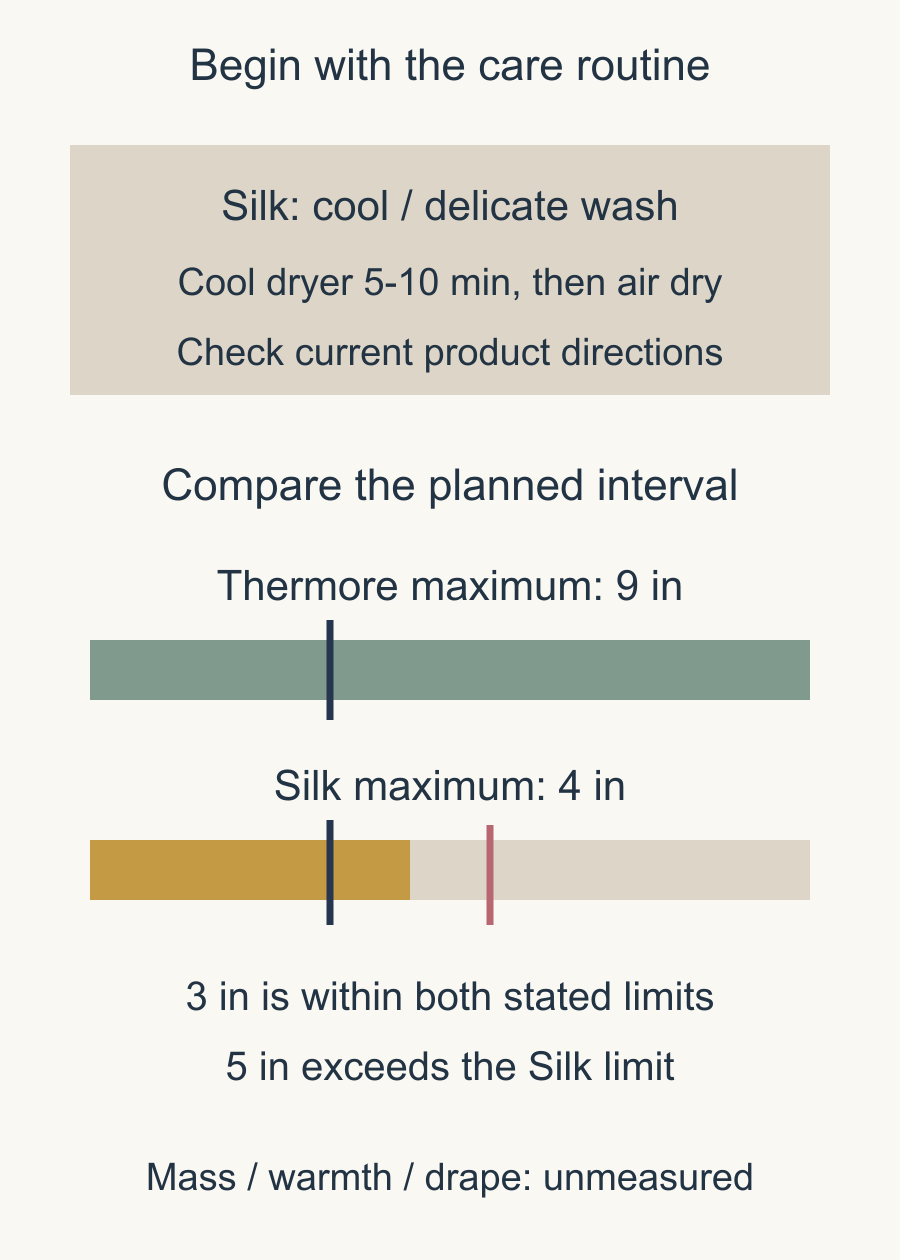
Hobbs Thermore is 100% polyester with an approximate 1/16-inch loft. Hobbs lists quilting up to 9 inches apart and no expected batting shrinkage. The company does not recommend prewashing the loose batting.
Hobbs Tuscany Silk is a 90% silk/10% polyester blend with an approximate 1/8-inch loft. Hobbs lists quilting up to 4 inches apart and expected shrinkage of 3–5%.
These are the maker's specifications, not a measured ranking of completed quilts. Keep the exact product name and current packaging with the project so a later purchase does not silently become a different batting.
Put the care routine into ordinary words
The Tuscany Silk page recommends hand washing or a delicate machine cycle in cool water, without heavy agitation or spinning. For drying, it describes a cool dryer for 5–10 minutes to begin the process, followed by air drying.
That is more specific than saying the product is machine washable. If the recipient needs to wash and fully tumble-dry the quilt routinely, those instructions need a conversation before the choice is made.
Thermore's page allows machine washing, hand washing or dry cleaning of the project. Read the current packaging and check the other materials before writing the complete quilt's care label.
| Brief question | What to record | Why it matters |
|---|---|---|
| Washing | Actual permitted cycle and temperature | "Washable" can hide important limits |
| Drying | Full drying sequence | Partial dryer use differs from full tumble drying |
| Handling | Available space for the required steps | Care must be practical for the owner |
| Other materials | Top, back, thread and embellishments | Batting directions do not settle every component |
Check the quilting plan independently
Suppose the drawn plan uses parallel quilting rows 3 inches apart. That interval is within both Thermore's stated 9-inch maximum and Tuscany Silk's 4-inch maximum.
A move to 5-inch rows changes the result: it remains within the Thermore figure but exceeds the Silk figure. The batting choice and the drawn spacing therefore have to agree.
Inspect the whole quilting design, including open areas and places where lines stop. A single row interval does not prove the entire quilt complies. Our batting-distance planning guide explains that separate review.
Do not quilt farther apart simply because the intended coverlet should feel light. Choose a suitable batting and a complete pattern of stitching that meets its instructions.
Separate loft from finished mass
The 1/16-inch and 1/8-inch loft figures describe the products' approximate thicknesses. They are not weights per quilt. The top and backing contribute material too, and different quilting plans can change how the finished combination handles.
If carried weight matters, make a representative sample and weigh it with its dimensions recorded. Use the same top, batting, backing and quilting approach you intend to compare. Keep any estimate for the full quilt separate from a measurement of the sample.
For warmth, judge the intended use with the actual combination rather than assigning a universal ranking from fiber names. We have not measured mass, thermal performance or drape for these products in this study.
For a rough area-based estimate, the 54 by 66-inch coverlet contains 3,564 square inches. A finished 12 by 12-inch sample contains 144 square inches, so the area ratio is 3,564 ÷ 144 = 24.75. Multiply the sample's measured mass by 24.75 to estimate the matching interior layers. Use the same fabric coverage and quilting density; binding, seams and sample edges can change the result. This is a way to use your own measurement, not a measured weight for either batting.
Leave that result blank until you have a sample. The product specifications answer different questions from the finished weight.
Check light fabrics and expected change
Hobbs advises checking Tuscany Silk with white or light fabrics because its natural color may darken their appearance. Place the actual top fabric over a representative batting sample under the light where the quilt will be judged.
Also keep the stated 3–5% batting shrinkage separate from the complete quilt's final dimensions. Fabric preparation, seams, quilting and laundering all belong to that larger outcome. The product's percentage is not a guaranteed reduction to apply blindly to the 54 by 66-inch plan.
Follow the maker's advice to sample the product and learn how the combination needles and launders. Record the actual sample measurements before and after the permitted care routine if dimensional change matters to the project.
Make the decision easy to hand over
Keep a one-page brief with the chosen product, care steps, quilting limit, actual planned spacing and any sample observations. Attach the packaging or a dated copy of the product instructions.
If the sample changes your mind, revise the batting choice before buying the full size. If the product works but its care is inconvenient, tell the intended owner exactly what would be required.
Start with the drying requirement today. Once that is practical, compare the actual samples for the flexibility and weight you want. That order saves you from choosing a coverlet by a word on the package that does not describe how it will be used.
Plan your next quilt
Lay out blocks and try colors in QuiltLab's grid editor before you cut.
Free forever, no card needed.
Get quilting tips by email
QuiltLab updates, tips and quilting inspiration. Unsubscribe anytime.
Related posts
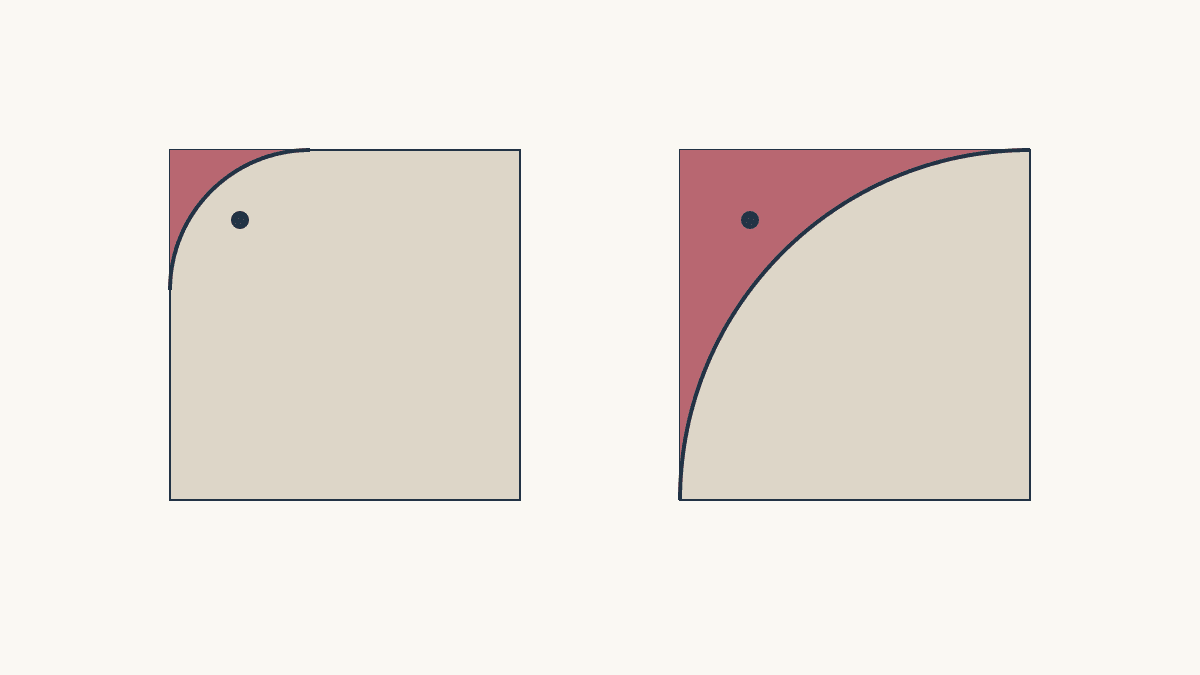
Rounded Quilt Corners: Will Your Motif Survive?
Compare two corner radii against nearby motifs before trimming, then plan a consistent curve and suitable binding method.
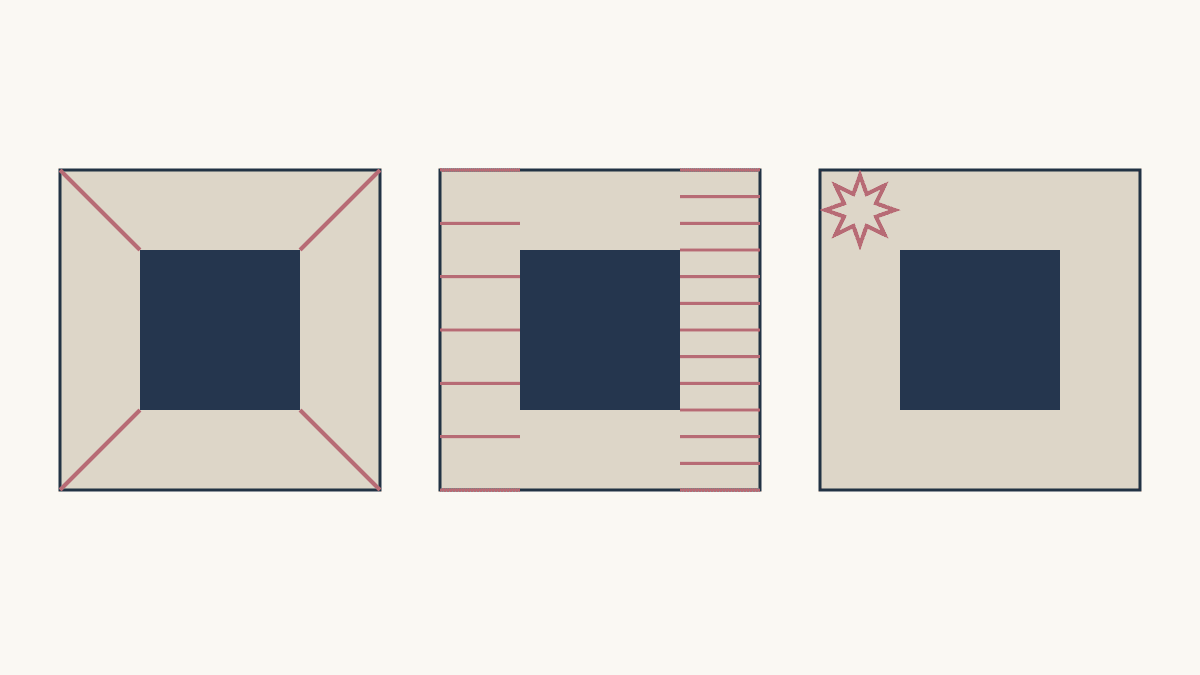
Quilting Negative Space: Extend, Fill or Echo
Compare three quilting approaches on one fixed quilt layout, then count the lines and check the open areas.
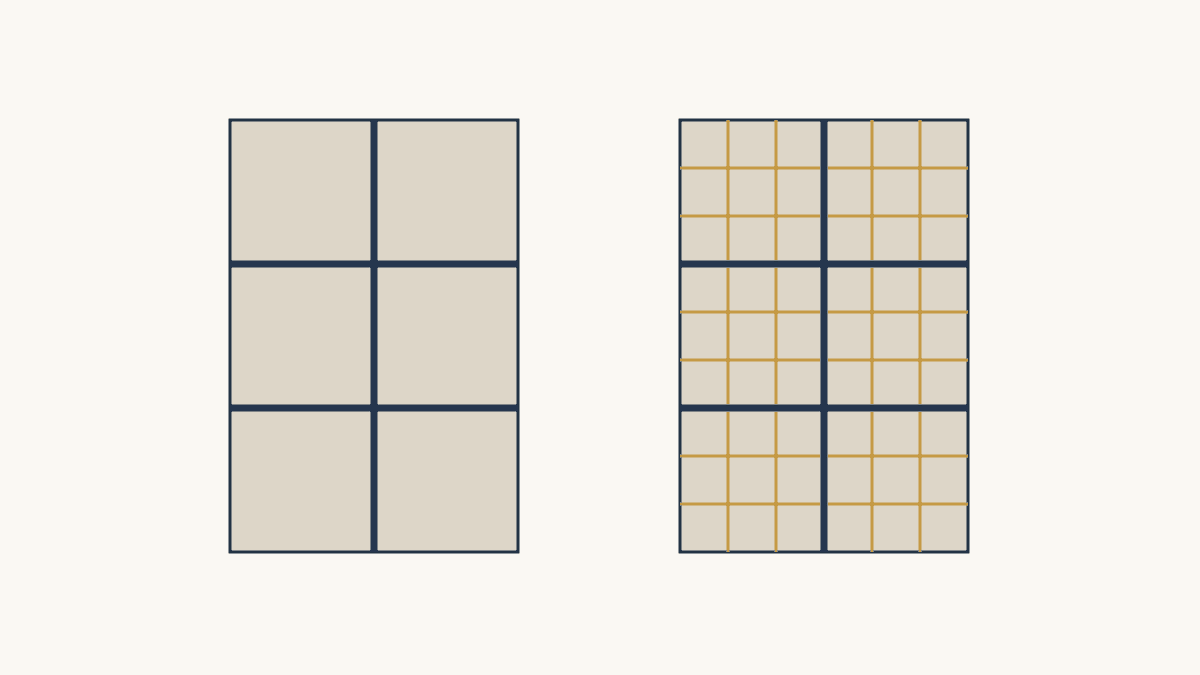
Quilting Order: What Should You Stitch First?
Map structural quilting separately from decorative fill, check the remaining gaps, and use the sequence suited to your machine.