Gee's Bend Quilts: The Makers and Their Work
Gee's Bend quilts are the work of generations of Black quiltmakers from Boykin, Alabama, a community beside a bend in the Alabama River. Their quilts grew from making bedcovers for home and family into a widely recognized body of American art. The best way to begin looking is with individual makers, named quilts and the stories behind them.
Start with Souls Grown Deep's directory of Gee's Bend quiltmakers. It introduces the community and leads to individual artists and their works. Keep a maker's page open beside a quilt image: a color arrangement becomes much more interesting when you know who made it and what she says about her work.
Where is Gee's Bend, and why does its history matter?
Boykin is in Alabama's rural Black Belt. Gee's Bend is the name associated with its position along the Alabama River and the plantation established there by enslaver Joseph Gee. Enslavement, tenant farming and the struggle for land ownership are part of the community's history, not background details to leave out of its art.
The community history on Visit Gee's Bend describes the former plantation's purchase by the federal government in 1937. Low-interest loans then helped families buy land and houses. Remaining on that land helped sustain family connections and the passing of quilting knowledge between generations.
Those connections matter when you read a museum label. The recurring surname Pettway reflects the history of enslavement as well as family relationships; it does not mean every maker with that name belongs to one immediate family. Read each biography rather than guessing a relationship from the name.
Begin with three quiltmakers
The National Endowment for the Arts' 2015 profile and interview provides a useful introduction to Mary Lee Bendolph, Lucy Mingo and Loretta Pettway. They received a joint National Heritage Fellowship that year. The profile also shows how differently makers learned and developed their work.
- Mary Lee Bendolph learned from her mother. The NEA describes her use of old clothing and her combinations of geometric forms with abstract arrangements.
- Lucy Mingo taught quiltmaking as well as making quilts herself. A 2006 apprenticeship grant supported her teaching her daughter, Polly Raymond.
- Loretta Pettway made her first quilt at 11 with guidance from women in her family. The NEA identifies the stepped bricklayer pattern as a recurring form in her work.
These are three starting points, not a complete list. As you follow the maker directory, add another name to your reading. Comparing two people is more useful than trying to attach one description to an entire community.
Individual piecing and shared quilting
In Mary Lee Bendolph's account of quiltmaking, published by Souls Grown Deep, she distinguishes piecing a top on her own from gathering with others to quilt it. She also describes differences between her family's approach and the slower, more careful work of other makers.
That distinction gives you two things to look for. A top can express one person's choices while the quilt also belongs to a wider network of learning and shared work. A community tradition does not require everyone to design or sew alike.
Souls Grown Deep describes the reuse of worn clothing, sacks and other available cloth as important to the tradition. It also describes improvisational work, sometimes called “my way” quilts. Reused fabric carries a history into the object; it is not simply a shortcut to a particular color palette.
When looking at a quilt, ask what the catalog actually tells you about its materials. Denim, corduroy and cotton are different descriptions, and a maker's account can explain more than the photograph alone. Leave room for what the record does not establish. A small image cannot tell you every fabric's previous use or why a maker chose it.
Three named quilts to look at
The New Orleans Museum of Art's Gee's Bend gallery puts names, dates and materials alongside its images. Open the gallery and compare these three works:
| Maker and work | Museum's date | Cataloged materials |
|---|---|---|
| Nettie Young, Stacked Bricks | 1928 | Cotton and corduroy |
| Polly Bennett, Checkerboard-Four-Block Variation Divided by a Cross | About 1955 | Cotton |
| Mary Lee Bendolph, Work-clothes quilt | About 2002 | Denim and cotton |
The dates span decades. Look at each work on its own before comparing them. Where does your eye pause? Which shapes repeat, and where does a repetition change? How much does the fabric's texture contribute to what you notice?
Use those questions to describe what you can see, then return to the label. A title may name a construction or arrangement; the materials and date tell you something different. Keeping those details together is a better introduction than collecting anonymous images under a single style label.
Museum recognition came after a long tradition
The NEA records national attention for the quilts in the 1960s, when the Freedom Quilting Bee helped bring income into the community during the Civil Rights movement. Museum attention in the following decades widened that audience.
A major milestone was The Quilts of Gee's Bend. The Whitney Museum's exhibition record gives its New York dates as November 21, 2002, through March 9, 2003, and credits the Museum of Fine Arts, Houston, and Tinwood Alliance with organizing the exhibition.
That record is worth reading alongside the artists' accounts. The exhibition marks a moment in public recognition, not the beginning of the quiltmaking tradition. Likewise, a museum's acquisition date is not the date a quilt was made. Collection pages often list both, so check which date you are recording.
Find the makers and their work today
For current places to learn and buy, begin with Visit Gee's Bend's community directories. Its maker-shop directory names individual makers and links their shops. Its Shop the Bend page also points to local destinations, including the Gee's Bend Quilters Collective.
Follow those links to the current listing or organization before making plans. Check the maker's name, the item's description, dimensions and materials. A handmade quilt, a print of a quilt and a licensed commercial product are different purchases. Read the listing rather than assuming the words “Gee's Bend” tell you which one it is.
If you want to visit or take a workshop, use the community's current contact and booking information. Do not build an itinerary from an old museum exhibition page or assume an individual maker is available because a biography mentions teaching.
Keep the maker's name with the quilt
When saving a link for later, record four details: maker, work title, date and the collection or maker page. A screenshot without that information is hard to trace, and it separates an artist's choices from her name.
Our introduction to improv quilt design gives a separate exercise for planning your own work. Studying the Gee's Bend makers is an opportunity to learn about their art and lives in their own right, beyond any technique you might use afterward.
For your next step, choose one quilt from the museum gallery, read its label, then open that maker's account or biography. Spend time with one named work before moving on to the next.
Free patterns to try
Printable PDF patterns with cutting charts and diagrams, free to download.
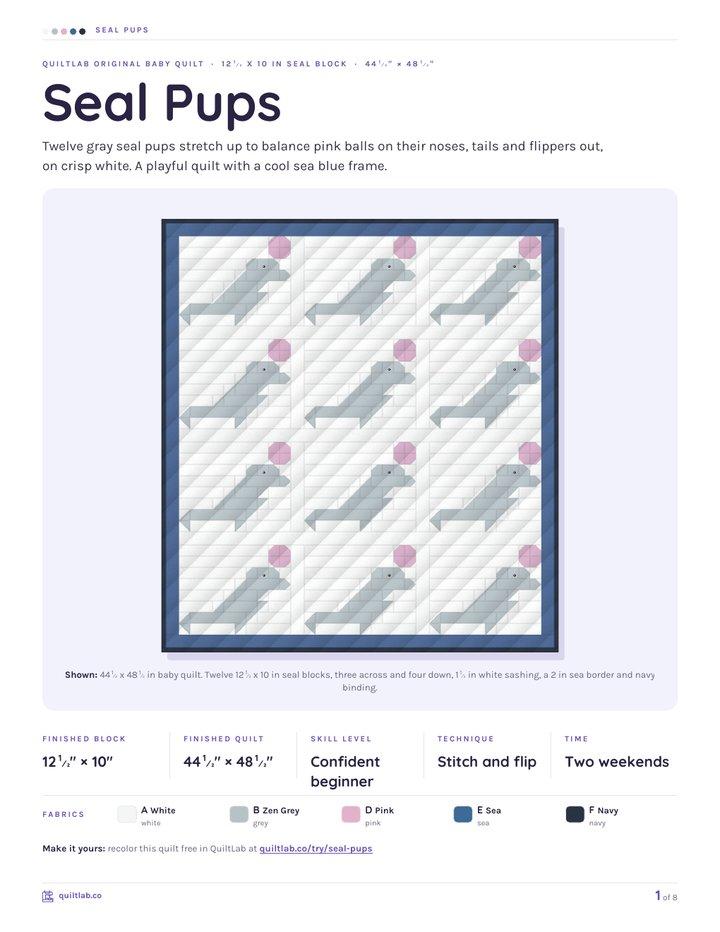
Seal Pups
Quilt patternBeginner · 44½″ × 48½″ baby quilt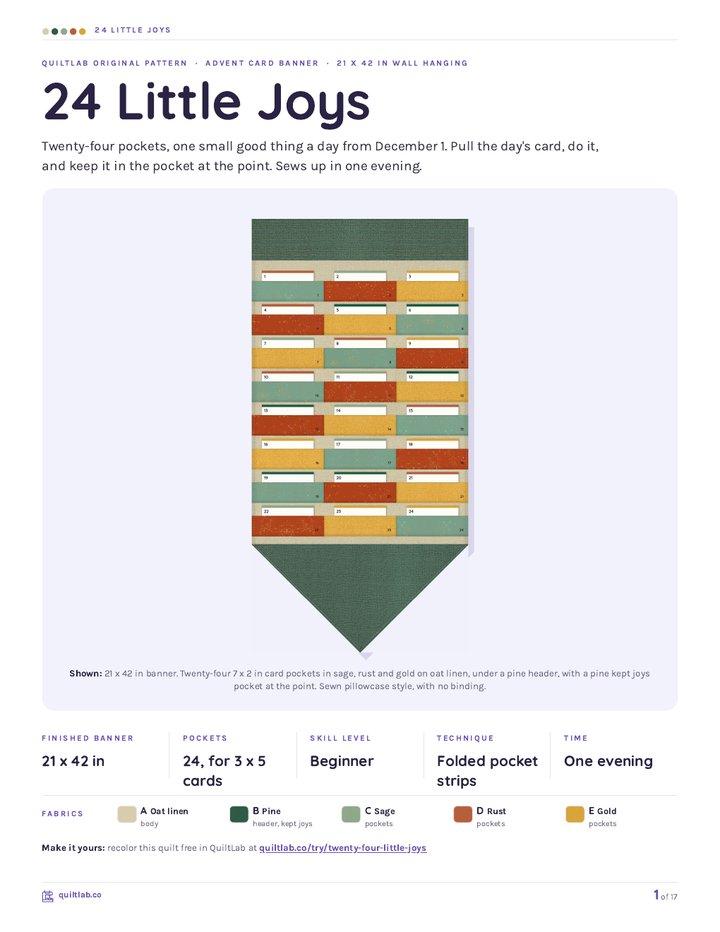
24 Little Joys
Quilt patternBeginner · 21″ × 42″ wall hanging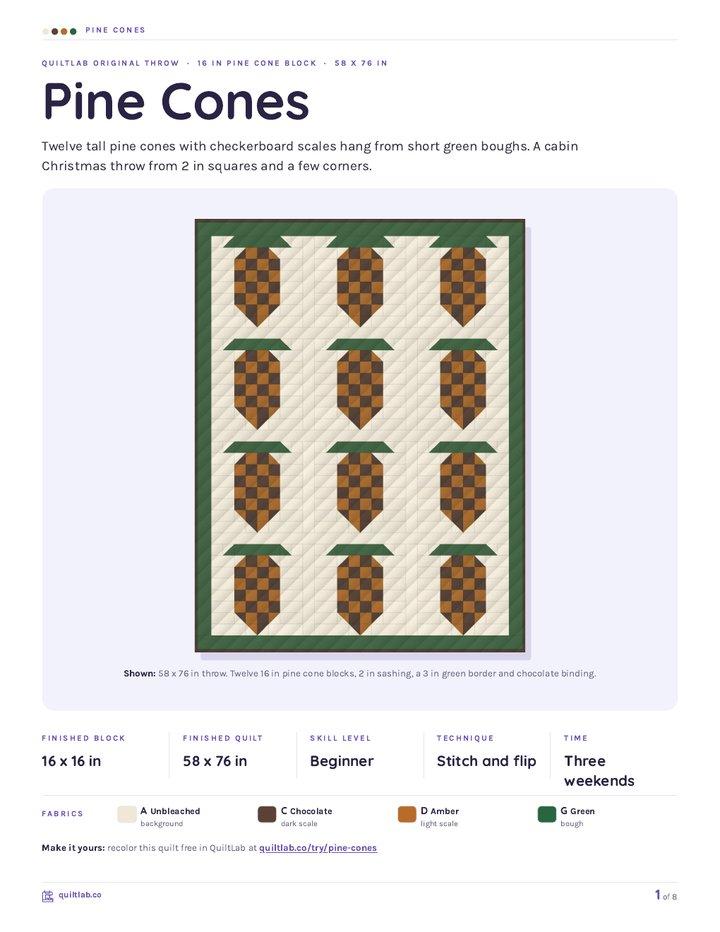
Pine Cones
Quilt patternBeginner · 58″ × 76″ throw
Plan your next quilt
Lay out blocks and try colors in QuiltLab's grid editor before you cut.
Free forever, no card needed.
Get quilting tips by email
QuiltLab updates, tips and quilting inspiration. Unsubscribe anytime.
Related posts
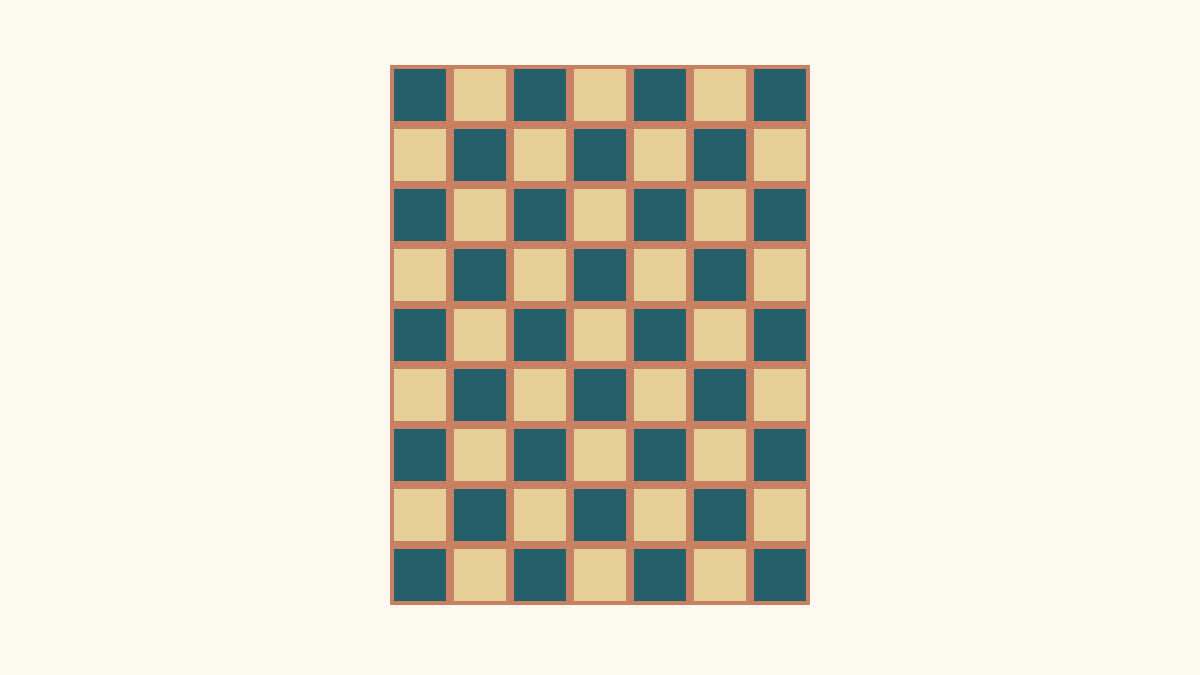
How to Make a Rag Quilt with Flannel Squares
Plan a flannel rag quilt with exposed seams, a measured throw layout and clear clipping steps. Count every layer and allow for the outside fringe.
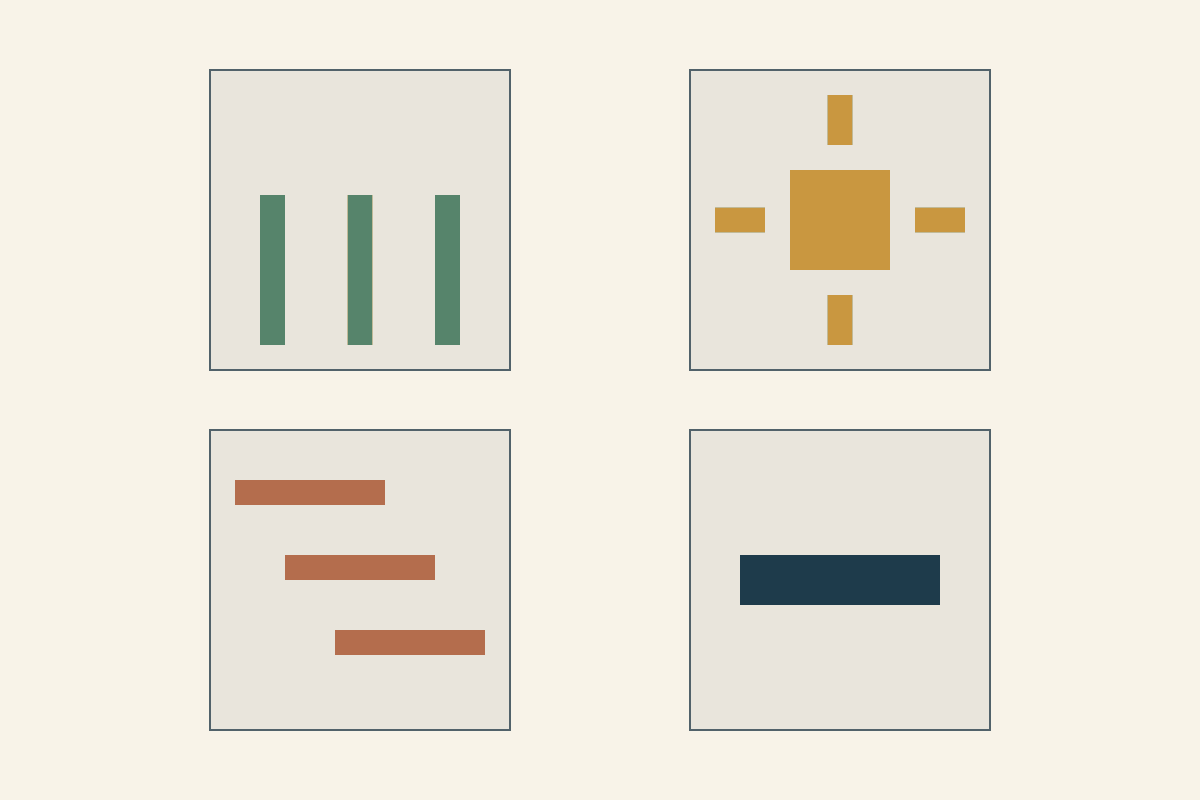
Seasonal Quilt Design Ideas from Simple Shapes
Turn a personal seasonal word into a few shapes, then compare four small layouts. Worked drawings show rising stems, rays, drifting bars and a pause.
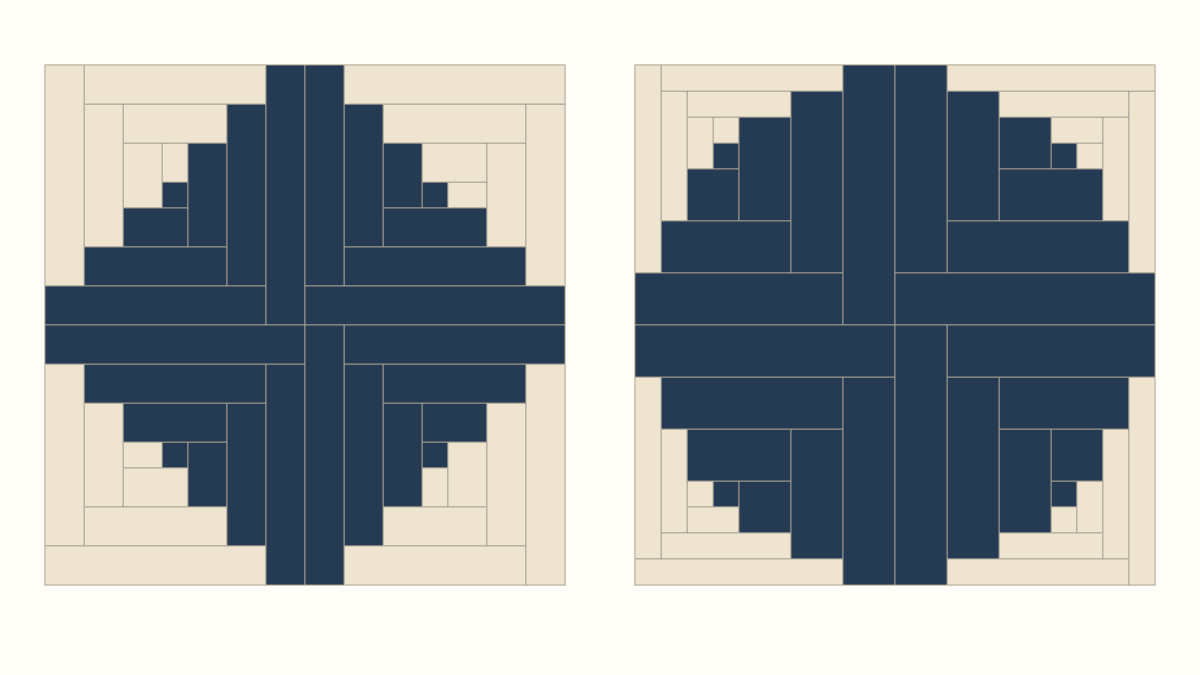
Curved Log Cabin Blocks with Straight Logs
Unequal straight logs make a curved-looking outline. Compare two ten-inch blocks, then turn four together without changing the finished size.