Japanese Quilting Fabric: A Guide to Kokka, Lecien, Yuwa, Olympus and Daiwabo
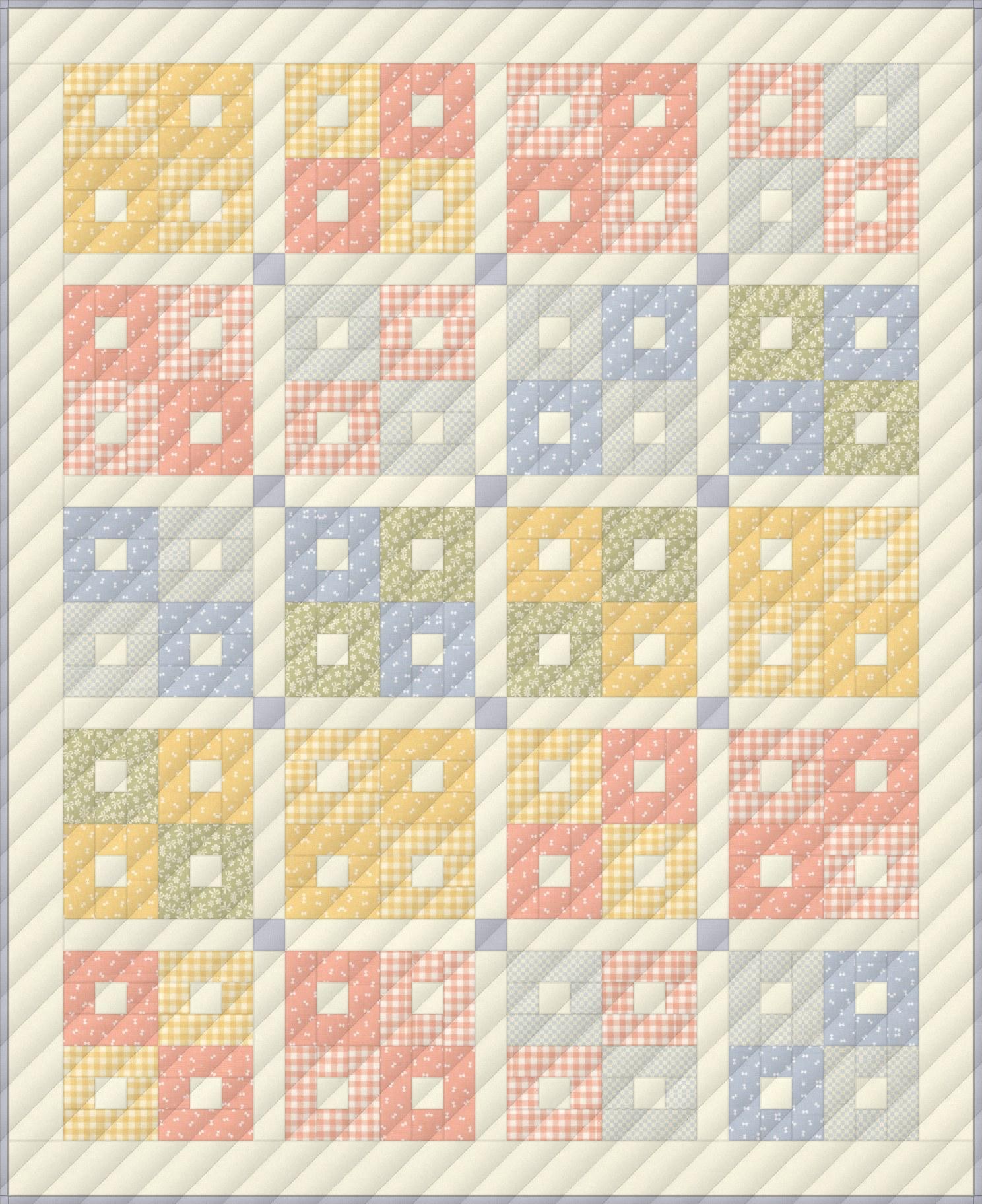
Japanese quilting fabric usually means cotton woven, printed or dyed in Japan by a handful of established houses. The five names quilters ask about most are Kokka, Lecien, Yuwa, Olympus and Daiwabo. Most of their cottons are about 110 cm (43″) wide, so they fit American patterns written for 42″ width of fabric. In Japan they're sold by the centimeter, not the yard.
If you're starting a stash, pick by look rather than by brand. Small, tidy 1930s-style prints point to Yuwa. Soft florals and reproduction prints point to Lecien. Muted, grayed "taupe" colors point to Daiwabo. Bold modern prints point to Kokka. Sashiko cloth points to Olympus.
What sets Japanese quilting fabric apart
Width. Japanese cotton is commonly about 110 cm wide. Couleurs Japon, a European importer, sells its Japanese cottons at "around 110cm" wide unless a listing says otherwise. That is close to American quilting cotton's usable 42″ (107 cm), so a pattern's width-of-fabric cuts still work.
Sold in 10 cm steps. Japanese shops sell yardage in 10 cm increments. Couleurs Japon, for example, cuts "in multiples of 10cm with a minimum of 40cm." To replace a yard (91.4 cm), ask for 100 cm. For half a yard (45.7 cm), ask for 50 cm.
More than quilting cotton. The same companies also sell canvas, cotton-linen blends and double gauze. These handle very differently from quilting cotton in a pieced block. Read the substrate on every listing before you add a print to a quilt.
Precuts with their own sizes. Some Japanese precuts don't match American sizes. Homespun Hearth's Durham Quilt Collection Sushi Roll from Lecien is 40 strips at 2⅞″ wide, not the 2½″ strips of a jelly roll. Check strip widths before you follow a jelly roll pattern with one.
The five brands
| Brand | Based in | Known for |
|---|---|---|
| Kokka | Osaka, since 1948 | Bold modern prints; echino and nani IRO lines |
| Lecien | Kyoto, since 1933 | Soft florals, reproduction prints, COSMO thread |
| Yuwa | Osaka | Small-scale prints, including Atsuko Matsuyama's 30's Collection |
| Olympus | Nagoya, since 1908 | Sashiko thread, sashiko cloth and kits |
| Daiwabo | Japan | Taupe: muted, grayed prints and yarn-dyes |
Kokka
Kokka has been making fabric in Osaka since 1948. It says most of its textiles are printed, dyed and finished in Japan. Its best-known lines outside Japan are echino and nani IRO. Many Kokka prints come on canvas or double gauze as well as cotton, which is exactly where the substrate check above matters. Kokka's large-scale prints are a good fit for wide borders and plain-square quilts that show off a big motif. Our guide to placing large-print fabric covers how to cut them.
Lecien
Lecien Corporation was founded in Kyoto in February 1933. Its business covers cotton fabrics and embroidery goods, including COSMO embroidery thread. Quilters know it best for the Durham Quilt Collection: soft florals and reproduction prints, often on cream backgrounds, that blend into scrappy quilts.
Yuwa
Yuwa is an Osaka fabric house. Quilters seek out its designer collections, especially Atsuko Matsuyama's 30's Collection. Fabric and Frolic describes her prints as "vintage-inspired prints with cute animals, sewing themes, and coordinating cherry designs." The tiny scale makes them easy to mix in small patchwork pieces such as nine-patches and postage-stamp squares.
Olympus
Olympus Thread was founded in Nagoya in 1908 and began selling sashiko thread and kits in 1979. A Threaded Needle notes that Olympus also makes traditional Japanese fabrics to go with its threads. Choose Olympus when you want cloth and thread meant to work together for hand stitching. Our sashiko quilting guide covers the stitching itself.
Daiwabo
Daiwabo is the name most quilters connect with Japanese taupes: browns, grays and muted colors with a soft, aged look. Maria Tamaoka of Pinwheels explains what Daiwabo taupe is, and how she used it in her Union Square Quilt, in this video. Taupes have very close values, so plan for contrast on purpose. Our post on monochromatic fabric selection explains how to sort a narrow-value palette.
Mixing Japanese prints with American quilting cotton
Japanese cottons and American quilting cottons sit together well in most quilts. Watch for three things:
- Weight. A lightweight lawn next to a standard quilting cotton stretches and frays differently. Keep each block to one weight where you can.
- Shrinkage and dye. Treat imported prints like any new fabric. Test darks for bleeding and decide whether to prewash everything or nothing.
- Scale and color family. Japanese collections often have their own color story. Our guide to mixing fabric collections walks through pulling prints from several lines.
Buy the right amount in centimeters
A pattern written in yards still works with 110 cm fabric. Convert each amount and round up to the next 10 cm.
| Pattern says | Exact | Ask for |
|---|---|---|
| 1/4 yd | 22.9 cm | 30 cm |
| 1/2 yd | 45.7 cm | 50 cm |
| 1 yd | 91.4 cm | 100 cm |
| 2 1/2 yd | 228.6 cm | 230 cm |
QuiltLab's free patterns can show these numbers for you. On any pattern page, switch the measurements toggle to "cm / m", and the sizes and fabric amounts change to metric, with fabric rounded up to the next 10 cm. A second toggle downloads the PDF on A4 paper.
Audition the prints before you cut
Imported fabric costs more, so try it in the design before you cut. Photograph the print flat and square, crop it in the Fabric Editor and save it (how to prepare fabric images). Then use it in your blocks and quilts like any other fabric.
A good first quilt for a small stack of Japanese prints is one with simple shapes and room for each print. The free Jelly Roll Bento Boxes pattern uses 2½″ strips. If your roll has 2⅞″ strips, trim them to 2½″ first.
Free patterns to try
Printable PDF patterns with cutting charts and diagrams, free to download.
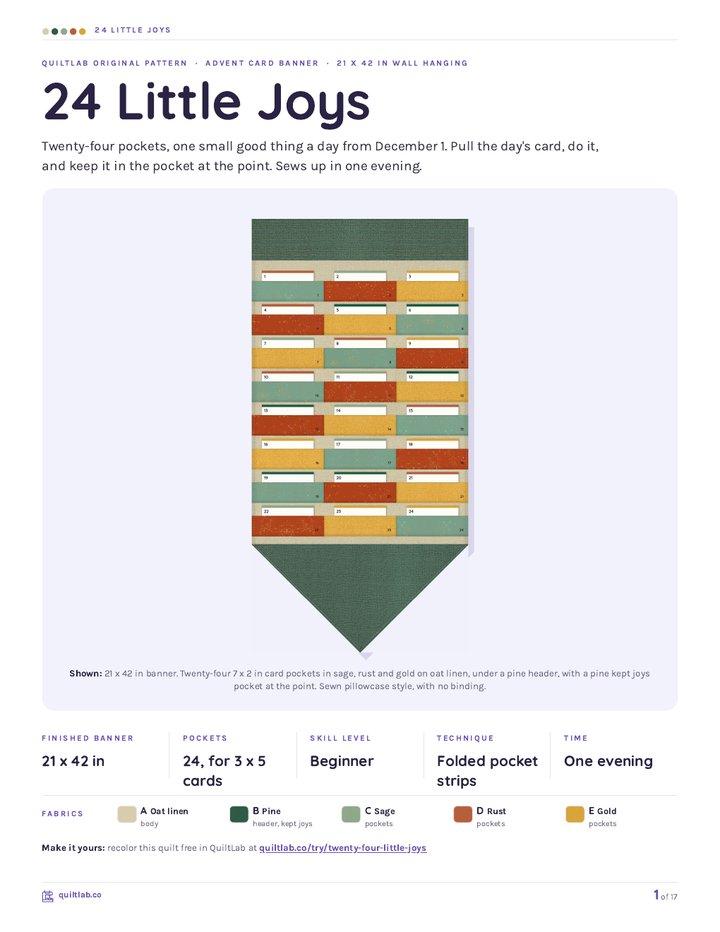
24 Little Joys
Quilt patternBeginner · 21″ × 42″ wall hanging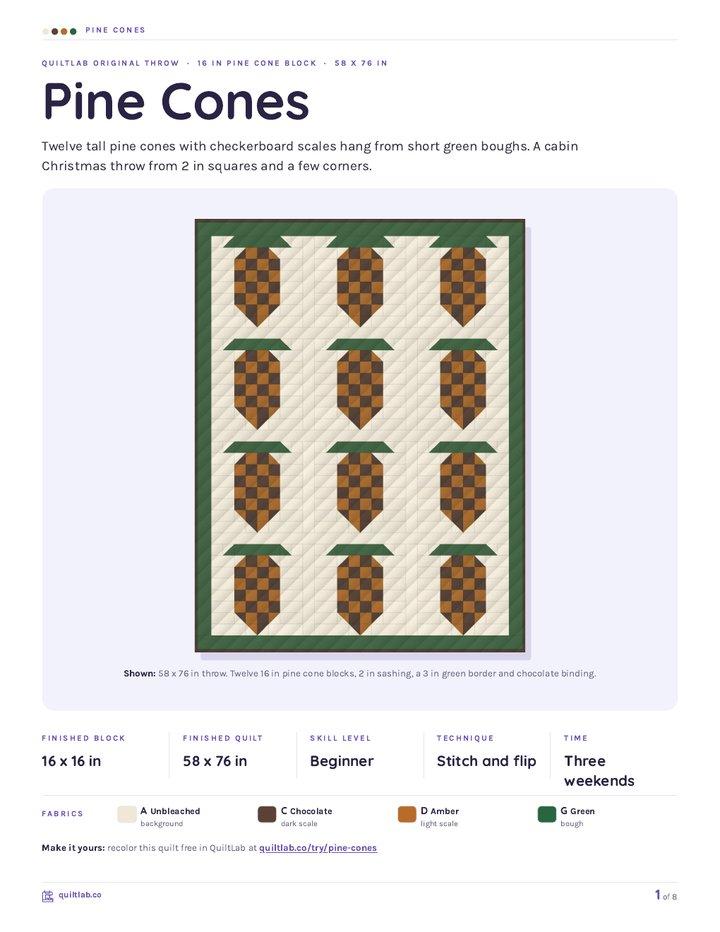
Pine Cones
Quilt patternBeginner · 58″ × 76″ throw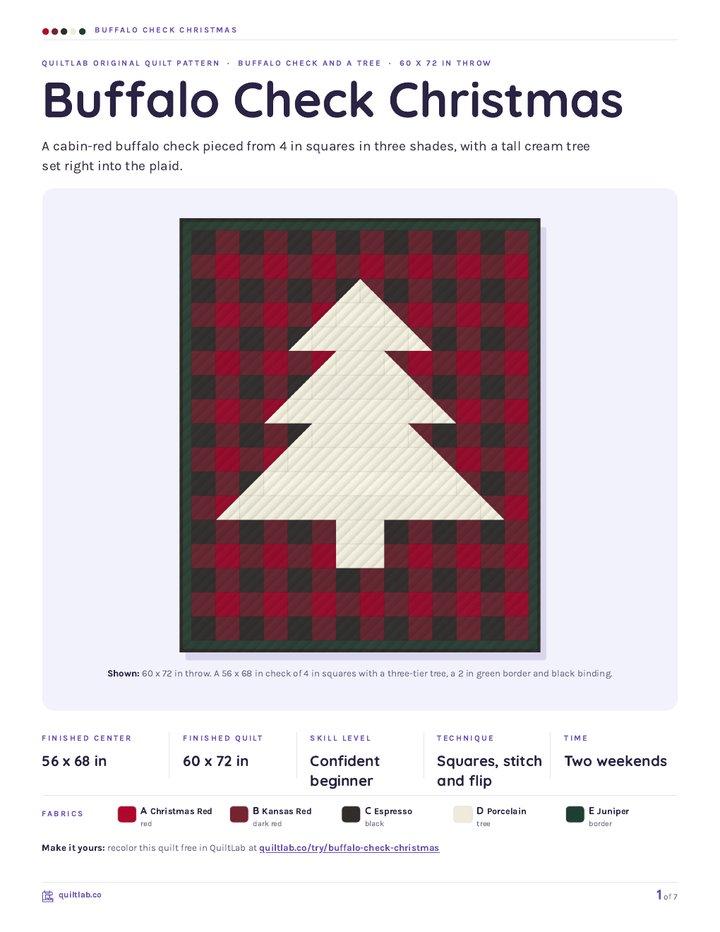
Buffalo Check Christmas
Quilt patternBeginner · 60″ × 72″ throw
Plan your next quilt
Lay out blocks and try colors in QuiltLab's grid editor before you cut.
Free forever, no card needed.
Explore designing with your fabricsGet quilting tips by email
QuiltLab updates, tips and quilting inspiration. Unsubscribe anytime.
Related posts
Walking Foot Compatibility: Check Before You Buy
A low-shank label alone does not establish fit. Use the exact machine model, manufacturer accessory list and part number before buying a walking foot.
Quilt Backing Seam: Horizontal or Vertical?
Two widths of fabric decide which way a quilt backing seam runs. See how far 40, 41 and 42-inch fabric reaches, with two layouts for a 62 x 74 inch throw.
Walking Foot vs Free Motion Quilting: Which Should You Use?
Use a walking foot for straight lines and gentle curves, and free motion for designs that turn often. A 20-inch path and stitch-length math show why.