Write Quilt Pattern Fabric Substitutions Clearly
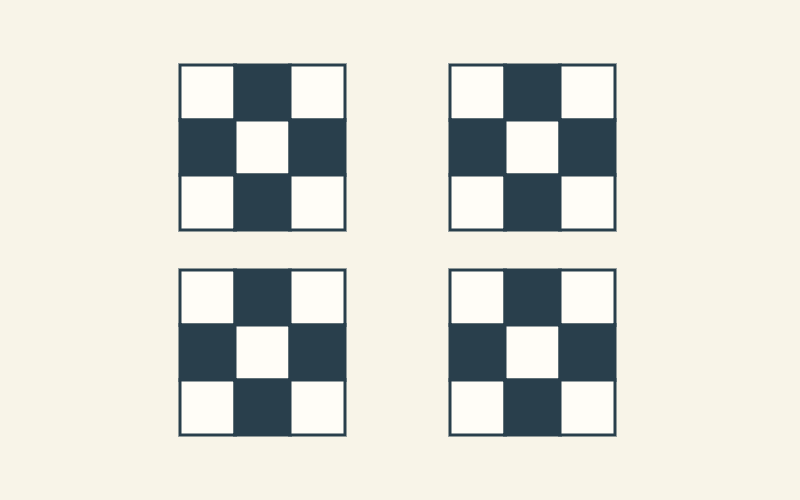
Write fabric substitutions as a map from each pattern label to the job that fabric must do. Name the value, print scale and direction relationships that matter, then keep the same labels through materials, cutting and diagrams. A reader should be able to replace a collection without guessing which parts of the design depend on it.
Start with the important shared edges. If a dark shape must remain separate from its background, say so. A list of collection names and color numbers can identify the cover fabrics, but it does not explain what a replacement must preserve.
Give the fabric ID a stable meaning
Choose one identifier for each fabric role and use it everywhere. A can mean the background and B the contrasting structure. Avoid using A for a fabric on one page and a unit type on another without a clear distinction.
Keep the example color as an example: "A: light background, shown in cream." That gives a reader permission to investigate another light fabric while preserving the role your instructions require.
GE Designs' fabric-substitution guidance points readers toward value and print scale when choosing replacements. As the pattern writer, you can make that investigation easier by identifying the relevant relationships before the reader reaches the cutting table.
The goal is a usable brief. Do not promise that every pale print or every navy solid will work merely because its color name matches.
State which properties the design depends on
Use a few specific fields rather than a vague instruction to choose coordinating fabrics.
| Property | Useful instruction to develop |
|---|---|
| Value | Which neighboring shapes must stand apart? |
| Print scale | What must remain recognizable at patch size? |
| Direction | Which rotations or orientations affect the motif? |
| Repetition | Where must one fabric appear consistently? |
These fields need answers from your actual design. A small allover print and a large directional print may require different cutting plans even when their overall colors look similar.
The official Woven print-fabric supplement from Denyse Schmidt Quilts gives a concrete author-facing example. It explains using prints in a design originally shown with solids, preserving distinct roles and considering how print value and scale affect the woven appearance. Its pattern-specific choices are a model of clear communication, not a layout to copy into another pattern.
Audit a small replacement map
Our drawn document example contains four hypothetical nine-patch blocks. Each block has five A positions and four B positions. We have not sewn it; the exercise checks role labels and counts rather than releasing construction instructions.
Suppose the cover example shows a cream solid for A and a navy solid for B. The proposed replacement is a light small-scale print for A and a dark, quieter print for B.
| Pattern ID | Role to preserve | Example replacement |
|---|---|---|
| A | Light positions; distinct from B | Light small-scale print |
| B | Dark structure; distinct from A | Dark quieter print |
Those descriptions still need an actual fabric audition. A light print with a dark flower in the chosen patch may not supply the light area you intended. Tell the reader which neighbors and patch windows to compare.
Follow the role count through the document
Four blocks each use five A patches: 20 A patches. Four blocks each use four B patches: 16 B patches. Together they require 36 patches, matching four blocks times nine positions.
| Role | Per block | Blocks | Total positions |
|---|---|---|---|
| A | 5 | 4 | 20 |
| B | 4 | 4 | 16 |
| Both | 9 | 4 | 36 |
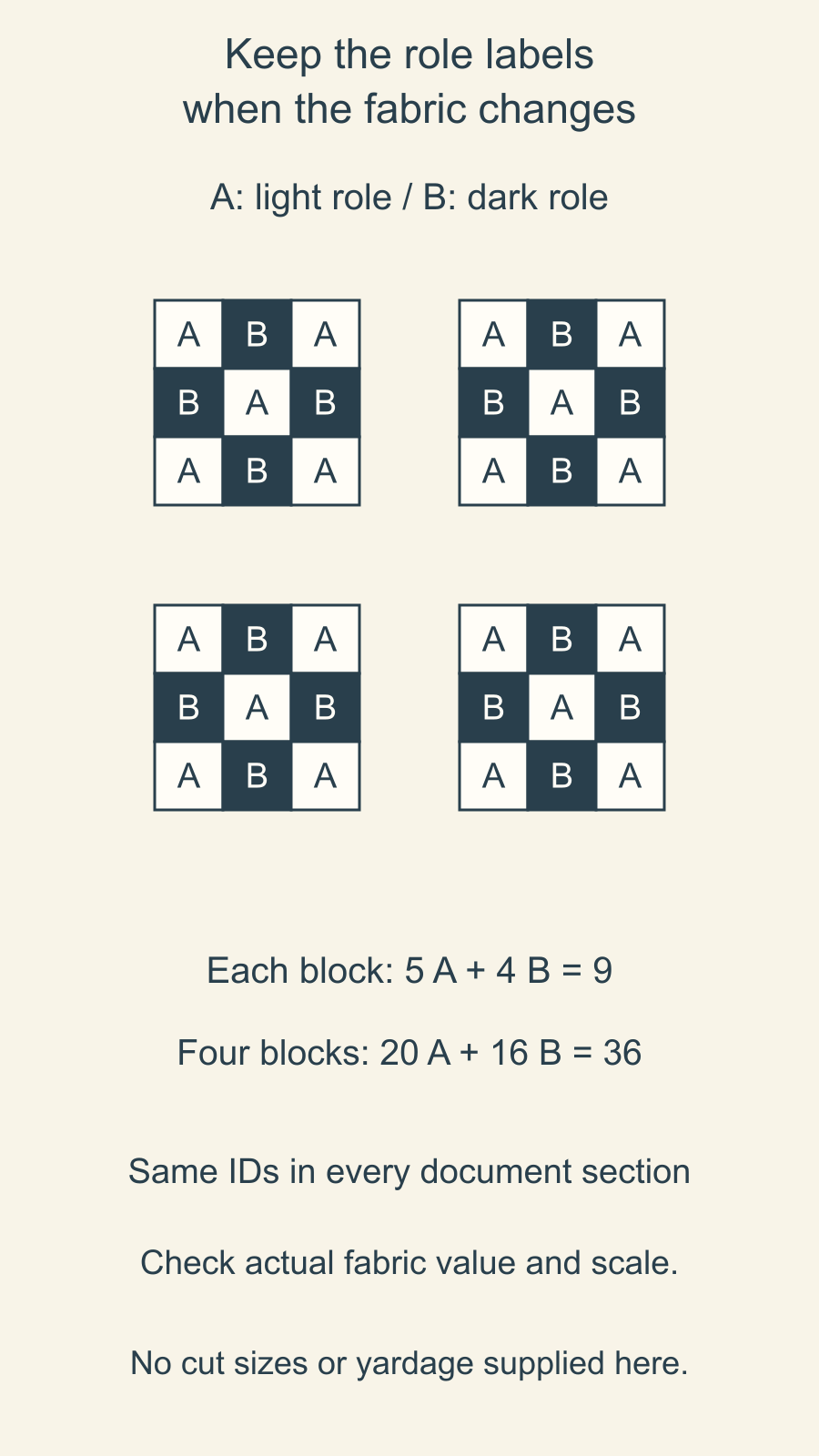
In the four-block example, imagine an assembly caption changing to 'A: dark structure' while the materials key still reads 'A: light background.' A reader could count the correct total of 36 patches and still place the roles incorrectly. Compare the materials page, cutting list, unit diagram and assembly caption against the same role key; matching totals do not excuse a changed fabric ID.
Keep count checks separate from fabric purchases. These positions have no declared cut dimensions or usable-width layout, so they do not establish a yardage amount. Our fabric-requirements discussion in the pattern-writing guide explains that wider process.
Keep replacement guidance beside the relevant information
Put the role key near the first materials and cutting information, then repeat a short reminder where a direction or contrast requirement affects an action. Avoid making readers hunt through the introduction to understand one arrow in a diagram.
The Sophia pattern from Jinny Beyer Studio, written by Elaine Kelly, numbers fabrics in its yardage and cutting table and includes a January 2017 fabric-substitution revision note. When a pattern is revised for fabric substitutions, readers need stable IDs and a clearly identified version.
For your own pattern, record whether the substitution changes only a named product or also changes a cutting condition. If the replacement requires a directional layout, return to the cut plan and quantities rather than leaving the old purchase amounts untouched.
Check labels without relying on color alone
Use text IDs on the important diagrams. Two colors can become similar in a printed copy, and a reader may choose a completely different palette.
Read a page using only the IDs and instructions. Can you tell which fabric supplies the next piece? Then compare it with the drawing and the role key. Our sewing-diagram guide covers making those visual instructions readable.
Our collection-mixing guide serves the reader choosing fabrics. Your job here is different: make the pattern's requirements clear enough that their choice can be checked.
Verify the changed version before sharing it
Keep the replacement map with the exact document version it describes. If you change the cutting orientation or construction, repeat the affected calculations and sewing checks before treating the revised pattern as ready.
Give an independent reader the current role key, relevant pages and replacement guidance. Ask them to identify the A and B positions without your verbal explanation. Record any place where they have to infer a fabric's job.
Choose two roles in your pattern now. Write what each must preserve, map one possible replacement and trace those IDs through the materials, cutting and diagram pages. Fix any disagreement before adding another fabric option.
Free patterns to try
Printable PDF patterns with cutting charts and diagrams, free to download.
Honey Pot Pantry
Quilt patternBeginner · 44 x 50 in lap quilt
Hidden Picture Advent
Quilt patternBeginner · 40 x 28 in wall quilt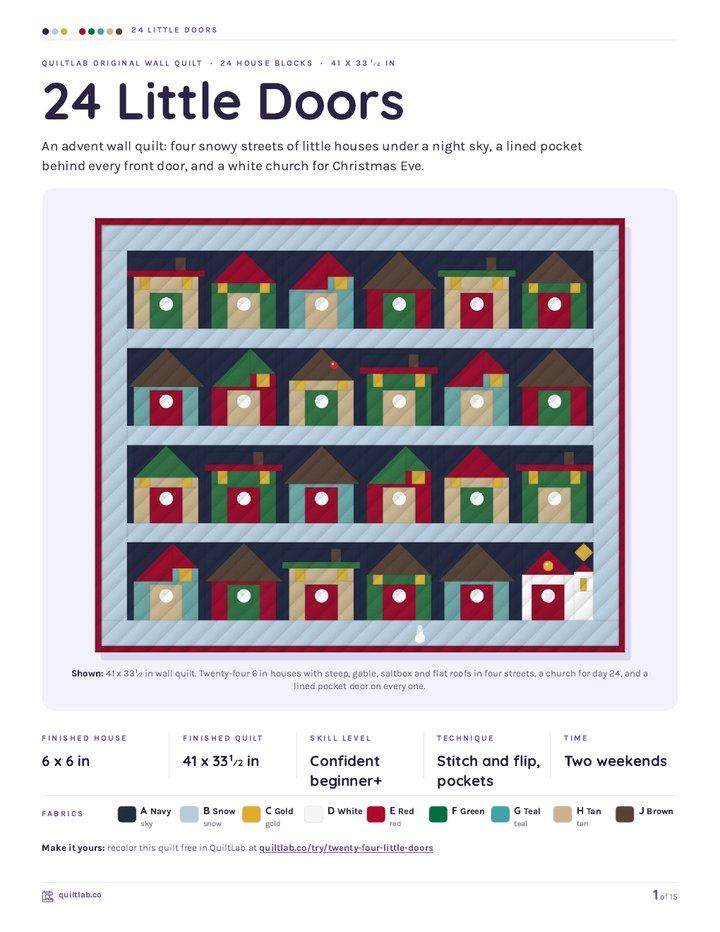
24 Little Doors
Quilt patternIntermediate · 41 x 33 1/2 in wall quilt
Plan your next quilt
Lay out blocks and try colors in QuiltLab's grid editor before you cut.
Free forever, no card needed.
Explore making your own quilt patternsGet quilting tips by email
QuiltLab updates, tips and quilting inspiration. Unsubscribe anytime.
Related posts
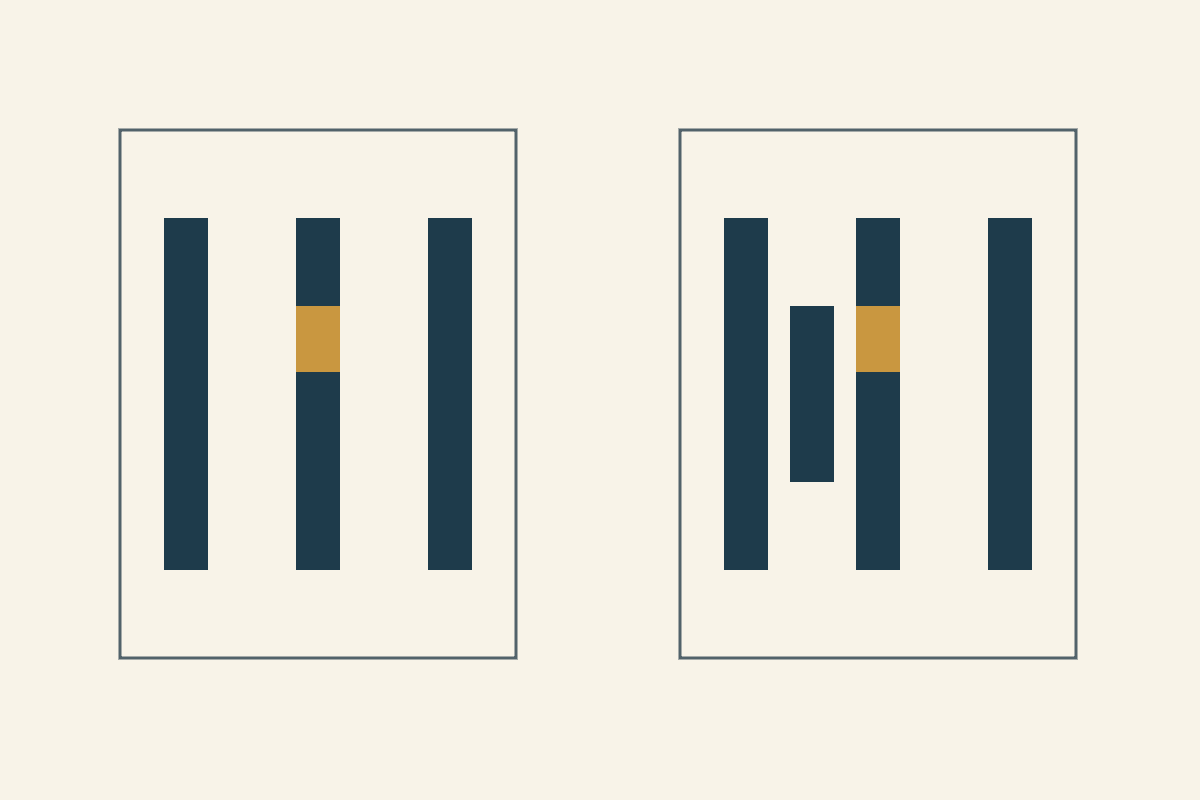
When Is an Improv Quilt Finished?
Stop changing a composition when it answers your current design question. A before-and-after study helps separate necessary fixes from new ideas.
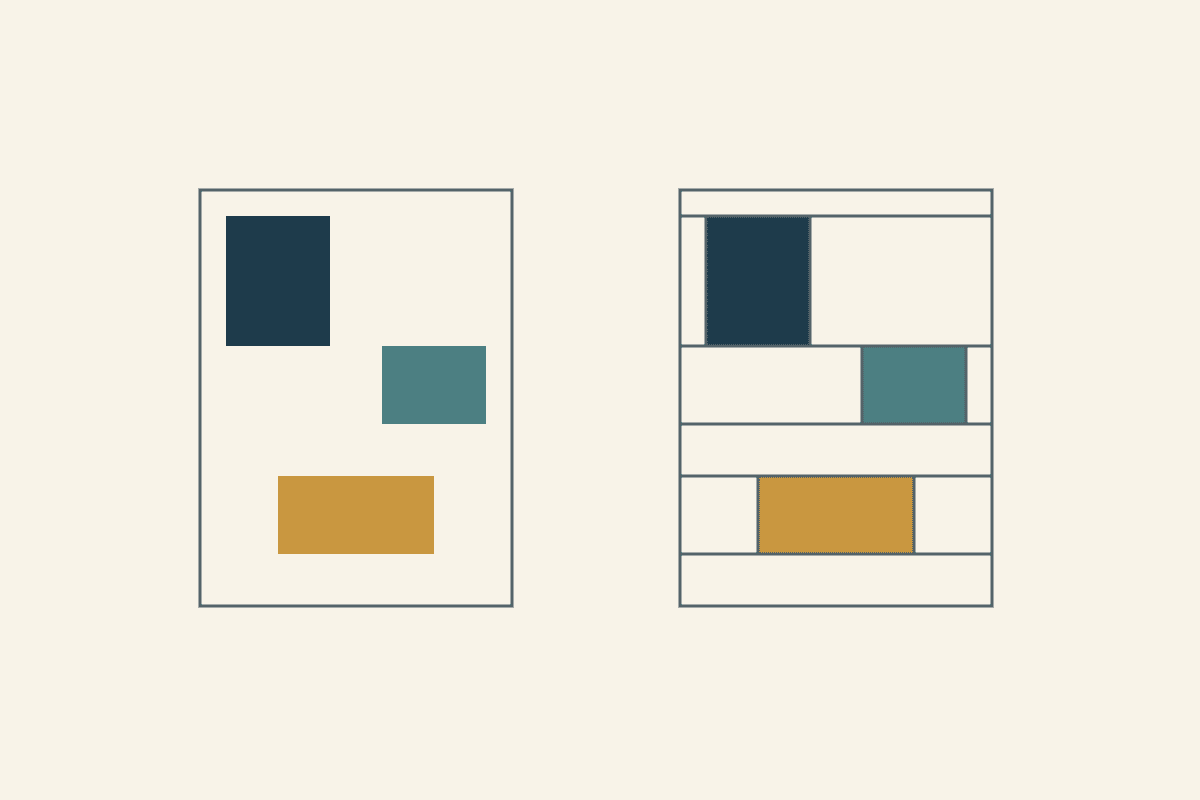
Build an Abstract Quilt Design from Three Shapes
Turn a sketch you own into a clear patchwork plan. Three colored rectangles show how to preserve a composition while extending a few straight seams.
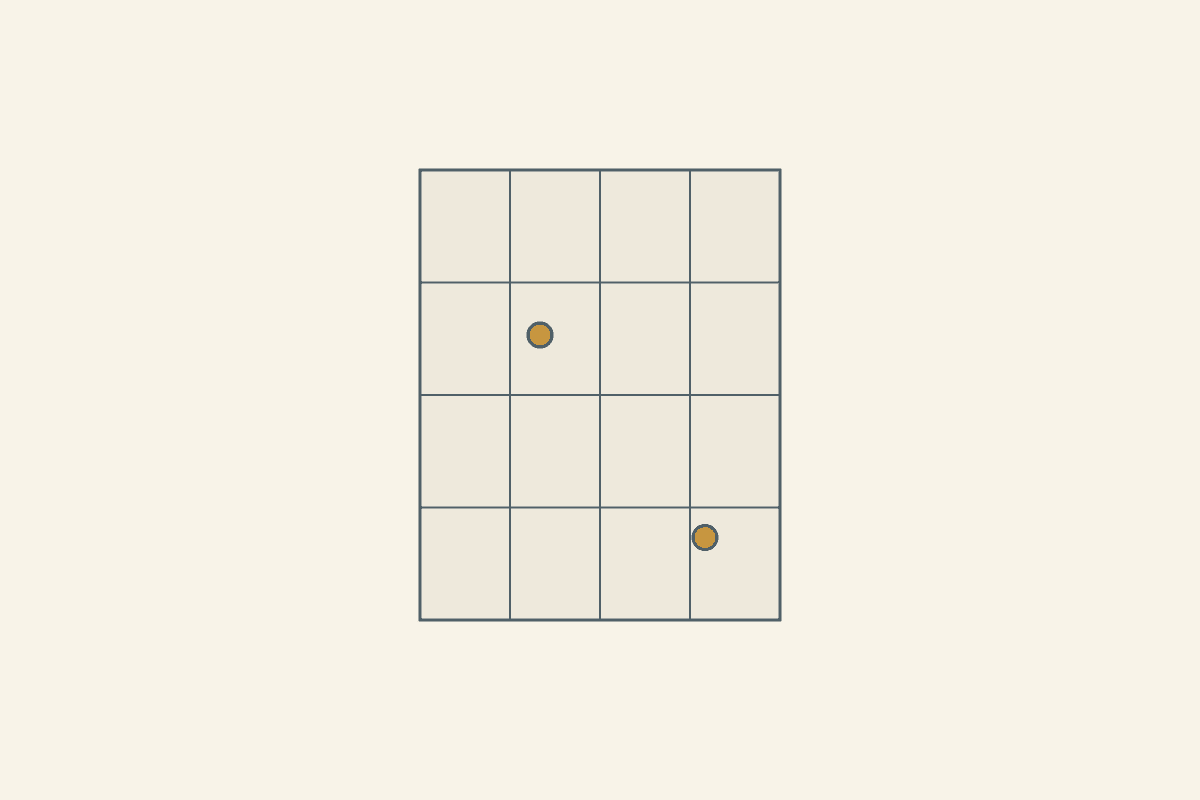
Start a Damaged Quilt Assessment Before Repair
Record what you see, what you were told and what remains unknown before changing a damaged quilt. A simple condition map organizes the questions.