Quilting with Linen and Cotton: What to Check
Before mixing linen and quilting cotton, read the exact fiber labels and check how the two fabrics behave together under the preparation, seam and care your project needs. Start with a small paired sample and a written record. The word linen alone does not tell you the weave, weight, blend or suitable seam treatment.
For a first project with an unfamiliar combination, choose a pattern and method you can investigate on a small sample before cutting the full set. Keep construction decisions open until you have checked the actual cloth.
Distinguish pure linen from a named blend
Pure linen and a linen-cotton blend are different starting materials. A shop's general category can include both, so find the composition for the product you intend to use.
Robert Kaufman's Essex specification lists that line as 55 percent linen and 45 percent cotton, 43 inches wide and 5.6 ounces per square yard. Those facts describe the named Essex product. They do not supply the composition or behavior of every fabric called linen.
Write the manufacturer, line, composition and any care directions beside each candidate. Include the quilting cotton too. If you cannot identify an existing scrap, record that uncertainty rather than assigning it a composition from its appearance.
You may still choose to investigate an unidentified piece, but a quilt intended for frequent washing asks a different question from a small display study. Let the intended use help you choose the next sample check.
Use experienced makers' reports to choose questions
The Hackney Quilter's linen-quilting article describes working with a linen-cotton blend in a Rockwood quilt. It discusses preparation, handling, fraying and context-dependent seam choices.
Rachel LaBour's Linen for Quilts account at Stitched in Color describes linen seam allowances unraveling and seams opening with regular wear when paired with quilting cotton at a quarter-inch allowance. She also reports a different quilt whose zigzag-finished linen allowances held up in use. Her experience makes the exposed seam edge a useful place to inspect; it does not establish how your particular pairing will perform.
Keep the source question specific: "How does this edge behave in my chosen seam?" is more useful than "Is linen good?" A maker's successful quilt or failed seam does not measure your cloth for you.
Prepare four simple sample records
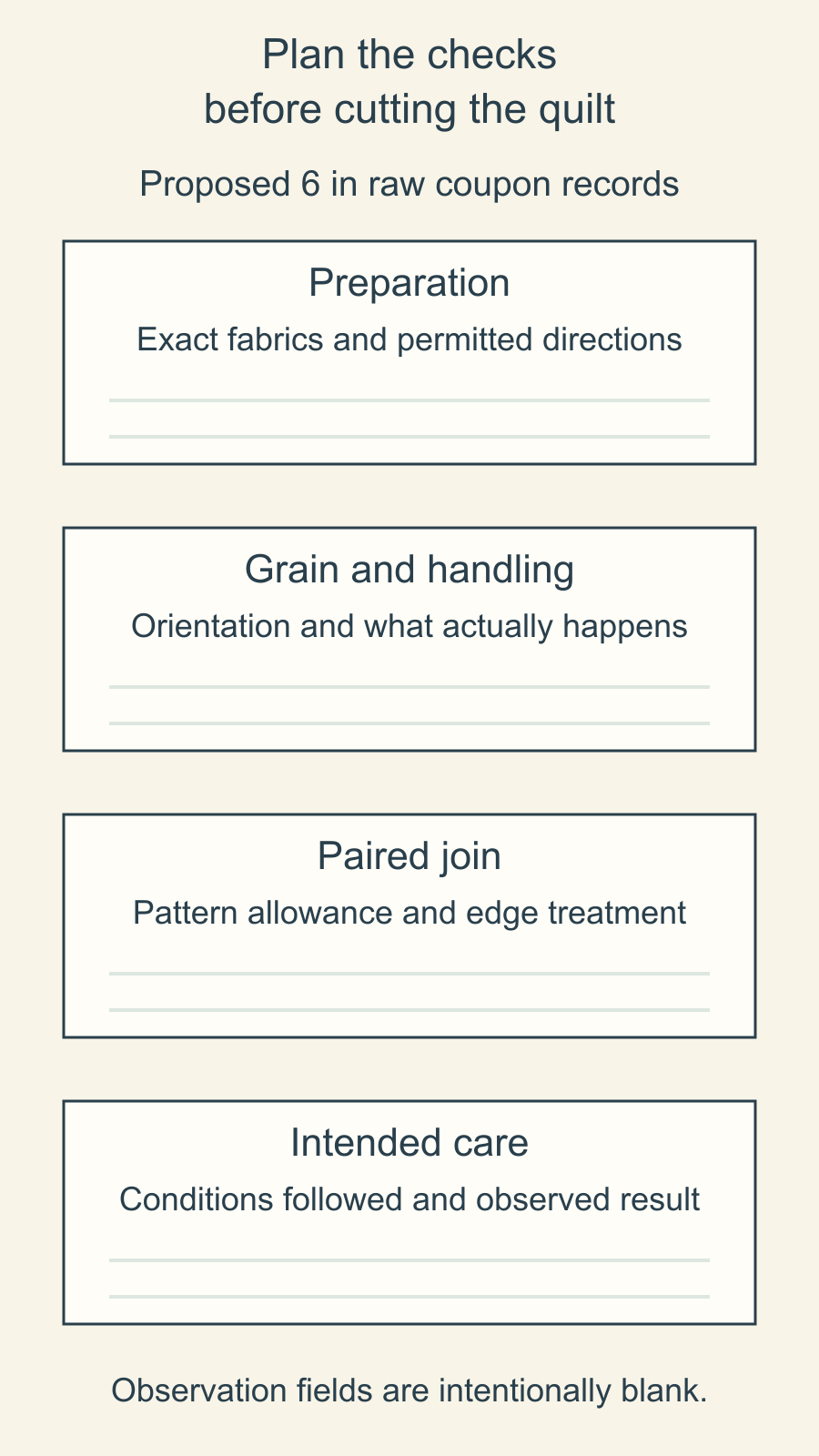
Our example is a proposed four-check plan using 6-inch raw fabric coupons. The observations are blank because we have not sewn or washed these samples.
The coupon size organizes the exercise; it is not a guaranteed minimum for every method. If your actual construction requires a longer seam or larger unit to inspect meaningfully, use a suitable sample instead.
| Record | Main question | What to identify |
|---|---|---|
| Preparation | What happens under the permitted preparation? | Each exact fabric and its directions |
| Grain and handling | How does the planned orientation behave? | Grain direction and handling method |
| Paired join | Does the intended seam remain usable? | Pattern allowance and edge treatment |
| Care | How does the joined sample respond? | The intended permitted care conditions |
Keep a fabric label or a small matching offcut with each record. Name the cotton and linen-side candidate consistently so a later substitution does not inherit an unrelated result.
Record preparation before comparing dimensions
Read the instructions for both fabrics and decide what preparation the pairing permits. If you need clarification from the supplier, settle it before treating the sample as representative of the finished quilt.
If you record dimensions, identify when and how they were measured. A raw coupon before treatment and a pressed sample afterward are different states. Use the same measuring references so you can tell a real change from an inconsistent check.
Do not borrow a shrinkage percentage from another person's cloth. Keep the measured starting dimensions, the treatment actually followed and your observed final dimensions on the same line.
Our prewashing guide covers the wider preparation decision. Here, the purpose is to keep the exact pairing and its observations connected to the project you are planning.
Check the grain and the seam you intend to use
Mark the grain direction before cutting the sample. Handle it the way the real pieces will be handled and notice whether an edge changes while you position, sew and press it.
For the paired-join record, sew one join between identified coupons using the intended grain direction, the pattern's allowance and relevant machine/material instructions. Photograph its raw seam edges after the permitted pressing, then compare those same edges after the intended care check. Record whether fraying approaches the stitching, whether the join lies as intended and whether either fabric shows a change near the seam. Leave the outcome blank until you have made that observation.
If you consider a wider allowance or another edge treatment, return to the pattern dimensions. Changing the allowance without changing the appropriate cuts changes the size a unit can finish. The expert sources discuss their own construction choices; they do not authorize silently altering every quarter-inch pattern.
For a dimension-only comparison, imagine two 6-inch raw squares joined along one edge. A quarter-inch allowance consumes a quarter inch from each square, leaving 6 + 6 - 0.5 = 11.5 inches across the joined pair before its outer edges are finished. A half-inch allowance leaves 6 + 6 - 1 = 11 inches. That half-inch difference comes from the allowance alone; the sample's actual response to washing remains a separate observation. Check the pattern's required unit size before choosing a different allowance.
Write down the adjustment and repeat the relevant sample check. Keep the earlier record too, so the reason for the change remains visible.
Include the intended care in the decision
A sample that looks tidy before use has answered only part of the question. Consider the actual permitted care and the quilt's job when deciding which observation you still need.
Use a record like this after following the appropriate directions:
| Field | Your observation |
|---|---|
| Fabric pair and preparation | Record here |
| Construction and edge treatment | Record here |
| Care conditions actually used | Record here |
| Dimensions and seam appearance afterward | Record here |
| Decision and any unresolved question | Record here |
If dye transfer is a concern, our fabric-bleeding test guide covers that separate investigation. Dimensional stability, color transfer and seam durability should not be collapsed into one vague pass label.
The resulting sample is evidence about that pairing under the conditions you used. Keep its identity with it rather than extending one result to all future linen purchases.
Choose the next step from what remains uncertain
If you cannot yet explain the seam, preparation or care choice, keep the full cutting plan open. You may need a supplier's answer, another sample or a different fabric that better suits the intended use.
When the pairing and construction are settled, keep the sample record beside the pattern. Reopen it if you replace the fabric or change the care the finished quilt must tolerate.
Read your two fabric labels now and write the project use at the top of the page. Prepare the four check records, fill them with observations from the actual cloth and settle the unresolved join before cutting the full quilt.
Free patterns to try
Printable PDF patterns with cutting charts and diagrams, free to download.
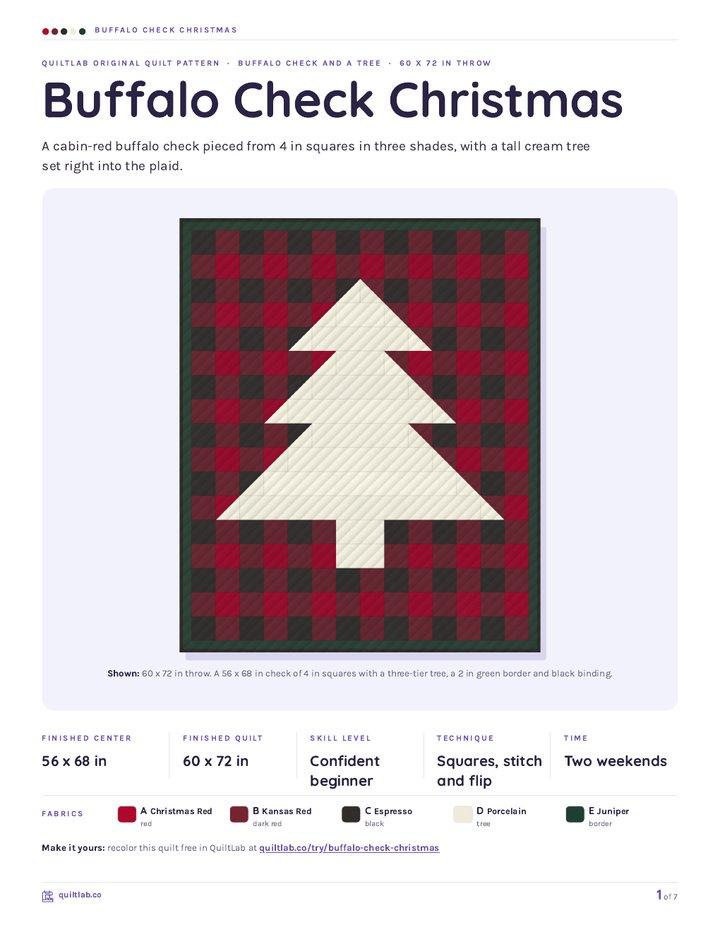
Buffalo Check Christmas
Quilt patternBeginner · 60 x 72 in throw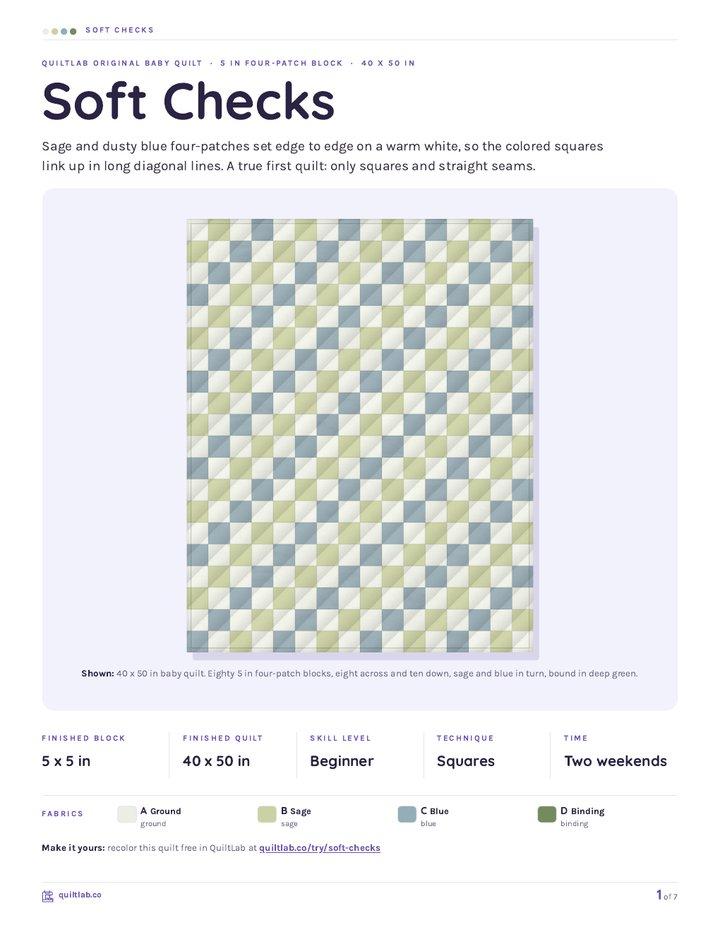
Soft Checks
Quilt patternBeginner · 40 x 50 in baby quilt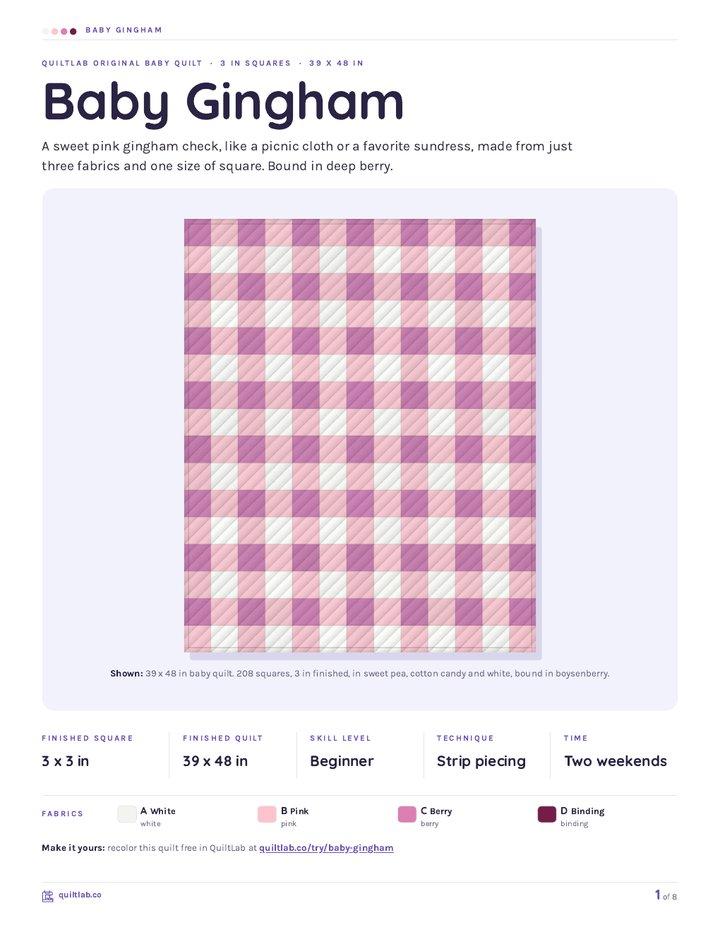
Baby Gingham
Quilt patternBeginner · 39 x 48 in baby quilt
Plan your next quilt
Lay out blocks and try colors in QuiltLab's grid editor before you cut.
Free forever, no card needed.
Get quilting tips by email
QuiltLab updates, tips and quilting inspiration. Unsubscribe anytime.
Related posts

Plan a Small Sewing Room Around One Quilt
Draw a measured small sewing room with machine, chair, cutting and pressing footprints, then check door swing, movement and storage.
Mark the Top of a Directional Quilt Backing
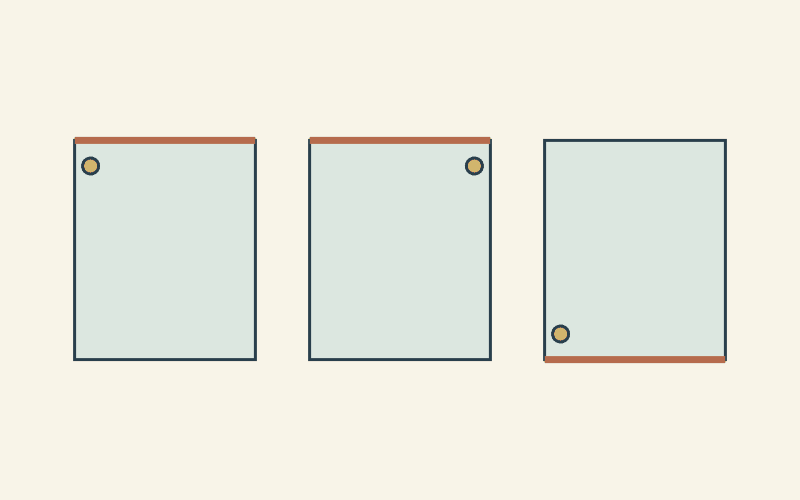
Label the physical top of both quilt layers, compare two ways of turning the quilt, and give your quilter a clear directional backing note.
Design a Pieced Quilt Back with Leftover Blocks
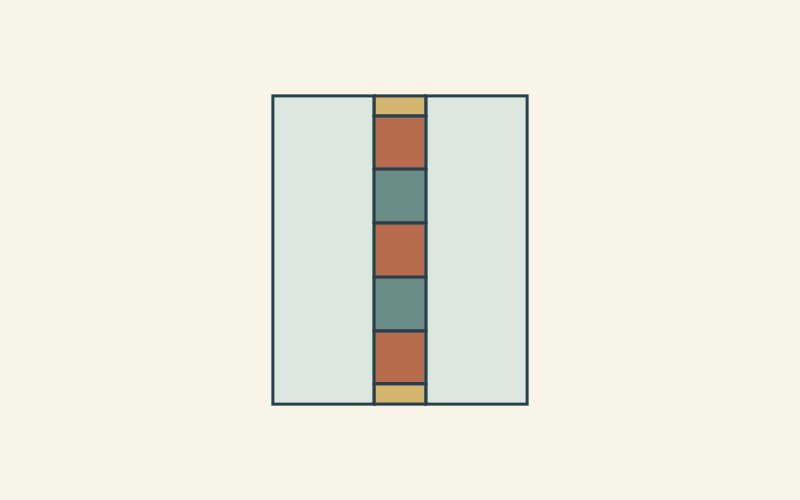
Check a leftover-block stripe against backing margins, inherited seams and new half-inch joins before preparing the surrounding panels.