How to Choose T-Shirt Quilt Interfacing
For a first T-shirt quilt, follow a complete pattern and use the interfacing it names. Fusible interfacing is an established way to steady stretchy shirt fabric for cutting and sewing. Choose the weight for that method and the feel you want, then test the exact product before cutting the keepsakes. Some established methods work without interfacing.
Your choice of interfacing affects handling, feel and preparation. Keep the product directions with the pattern's cutting and joining steps.
Decide what the interfacing must do
Start with the problem you want to solve. Does a knit panel stretch while you measure it? Does your chosen method join it to woven sashing? Does the pattern require a particular fusible interfacing before final trimming?
Those are more useful questions than asking for the strongest product. A firmer layer may help handling while giving a different feel from the shirt you started with. Decide what matters to this project, including the recipient's intended use.
Pellon's 2012 T-shirt-quilt discussion names several options rather than one winner. It discusses different handling preferences and notes that several listed interfacings retain some stretch. A package labeled lightweight doesn't by itself promise complete stability. Use that historical guidance to frame your questions, then check the exact product's current documents.
Write a one-line requirement: "Support these knit panels for this pattern's woven sashing, while keeping a feel the recipient likes." Then identify products whose current instructions fit that job.
Keep a no-interfacing method intact
Andrea Funk explains Too Cool T-shirt Quilts' approach without iron-on interfacing. Her account connects that choice to the company's construction, equipment and fabric handling. It demonstrates that interfacing is not an unavoidable ingredient of every shirt quilt.
It doesn't mean removing one step from a different pattern gives the same result. If you choose a method without interfacing, learn how it controls stretchy material and joins its pieces. Practice that handling on replaceable cloth before using a meaningful logo.
If your selected pattern does call for stabilization, keep that requirement while investigating a candidate. Ask the pattern author about a substitution that changes the handling substantially. Changing the interfacing and the joining method together creates more decisions than a product swap alone.
The T-shirt layout guide addresses a different question: how usable designs and measured panel sizes fit together. Settle the stabilization method before treating an unprepared panel's dimensions as final.
Read the exact product documents
Keep the full identifier, including its suffix. Pellon 911FF Fusible Featherweight and 906F Fusible Sheerweight are different products. A shelf label saying lightweight interfacing doesn't identify either one.
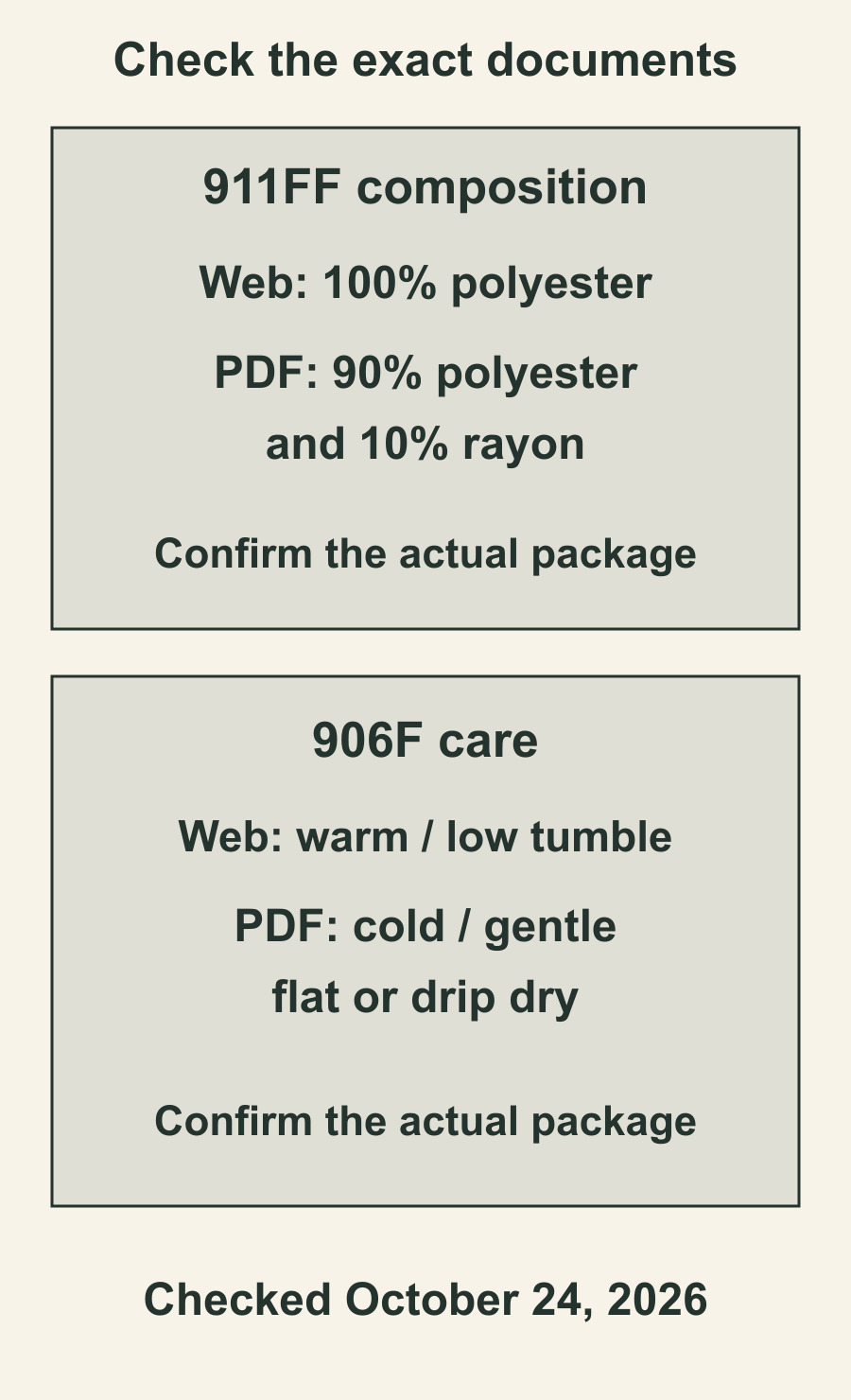
On October 24, 2026, we compared each manufacturer's product page with the PDF linked from that page. The same differences remain in the linked documents:
| Product | Product page | Linked PDF | Question to resolve |
|---|---|---|---|
| 911FF | 100% polyester | 90% polyester, 10% rayon | Which composition describes the actual package? |
| 906F | Warm machine washing; low tumble drying | Cold gentle washing; flat or drip drying | Which care directions apply to this version? |
The 911FF page identifies a nonwoven fusible for light-to-midweight fabrics. Its linked 911FF PDF supplies the different composition shown above. The disagreement is visible in the maker's own documents; it isn't a composition we measured.
The 906F page identifies a lighter nonwoven product for sheer-to-lightweight fabrics. Its linked 906F PDF has the different washing and drying directions in the table. We don't have an actual package that resolves that version question.
Keep a photo of your package and ask the maker which directions apply if the documents disagree. Don't quietly select the instruction that sounds easiest or combine settings from different versions.
Check the shirt and graphic as well as the interfacing
A garment's fiber label, its printed design and its condition are separate parts of the decision. Record what you actually know about all three. A cotton label doesn't by itself establish how a particular transfer or decoration tolerates heat.
Funk's account specifically discusses heat-sensitive materials and shirt graphics as reasons to consider the method carefully. Treat that as a prompt to investigate the actual item, rather than proof that every print will fail or that every non-fusible approach will succeed.
If an item is irreplaceable and there is no representative spare material, acknowledge that limit before applying an adhesive. Choose a method or seek guidance that respects what you can verify. A successful trial on unrelated plain jersey doesn't establish how a sentimental decorated shirt will behave.
Record any restriction from the owner, including which areas may be cut and whether unused pieces must be returned. The choice of interfacing doesn't replace that conversation.
Prepare a sample record before heating anything
Once you have compatible, version-specific directions, make a small sample using replaceable material representative of the planned panel. Follow the exact maker's procedure, including preparation, pressing protection and cooling. Keep those instructions beside the sample instead of copying a universal iron recipe.
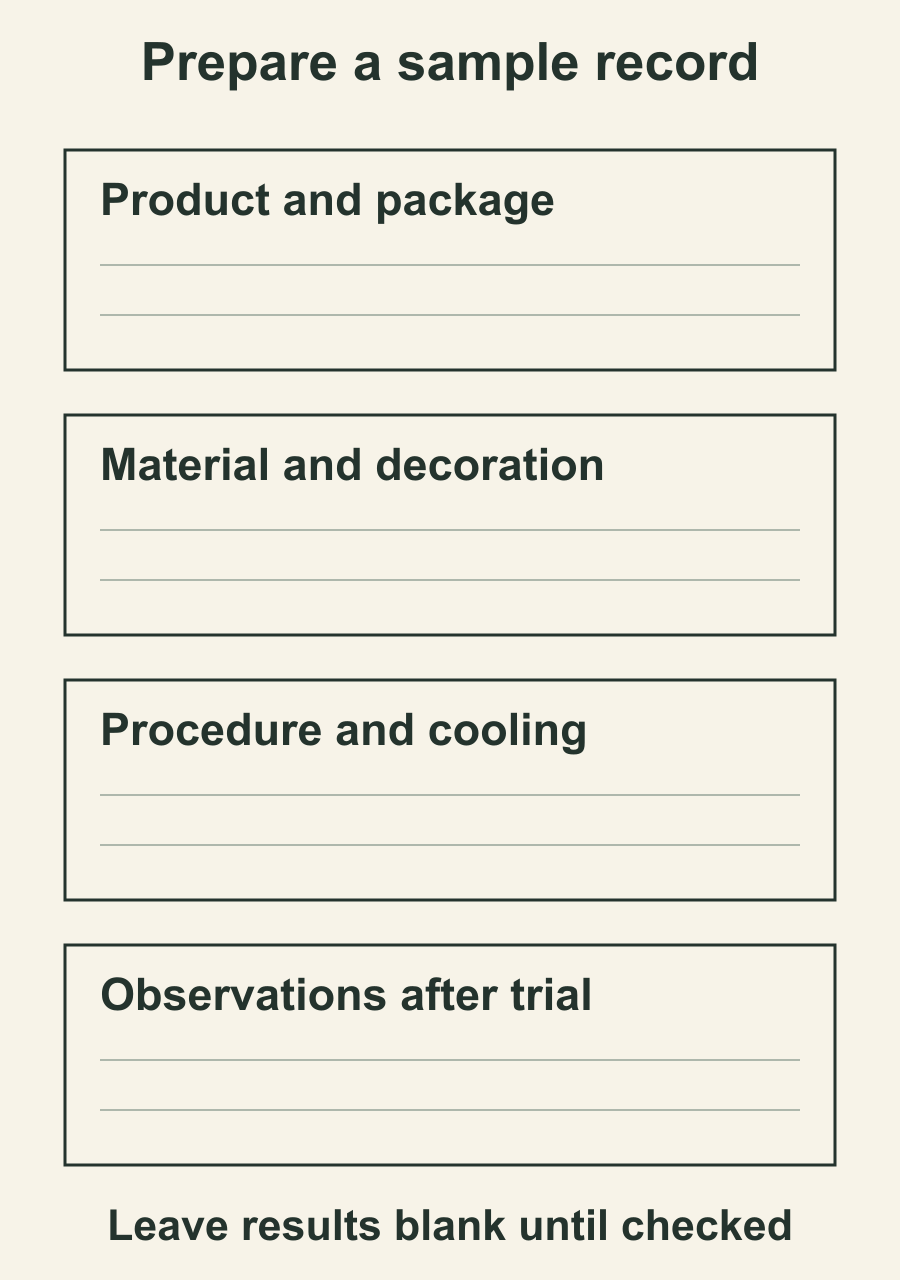
Give the sample an ID and leave its results blank until you perform the steps. Include the product name, package version, shirt material and graphic description. Add the machine and joining method when you reach sewing.
Before starting, write what a useful result would look like. The prepared knit should be manageable for the pattern's measuring and joining steps, and its cooled feel should suit the quilt. Include a representative seam in the trial: an adhesive that bonds well can still produce a combination you dislike sewing or handling.
| Check | Before the trial | After the relevant step |
|---|---|---|
| Appearance | Record face and back condition | Look for any visible change |
| Handling | Note stretch and feel | Compare control and drape after cooling |
| Bond and seam | Identify maker's check and planned join | Record adhesion and actual sewn behavior |
| Care | Resolve compatible directions first | Record only the care trial actually performed |
Don't infer care performance from adhesion after cooling. Those answer different questions. If you need a care trial, first confirm that its procedure fits the actual shirt, decoration and interfacing together.
Finish the record with use this combination, change and retry, or question unresolved, plus the observation behind that decision. For example, if the surface looks unchanged but the planned seam is difficult to control, record both results. Resolve the sewing problem before preparing every panel. A blank observation or an untried care step stays open even when another check succeeds.
Keep the decision with the quilt
Choose the method and candidate that meet your documented needs, then keep the successful sample and its directions with the project. If the trial reveals an unresolved problem, investigate it before preparing all the panels.
Use our quilt materials record to retain product identifiers, directions and open questions alongside the other components. That record will matter when the eventual quilt combines shirts, backing, batting and thread with different histories.
Start by writing your construction method and the job the interfacing must do. Find the exact product documents, reconcile them with the actual package, and prepare one useful sample. You will then be choosing from evidence that belongs to your shirts and method.
Free patterns to try
Printable PDF patterns with cutting charts and diagrams, free to download.
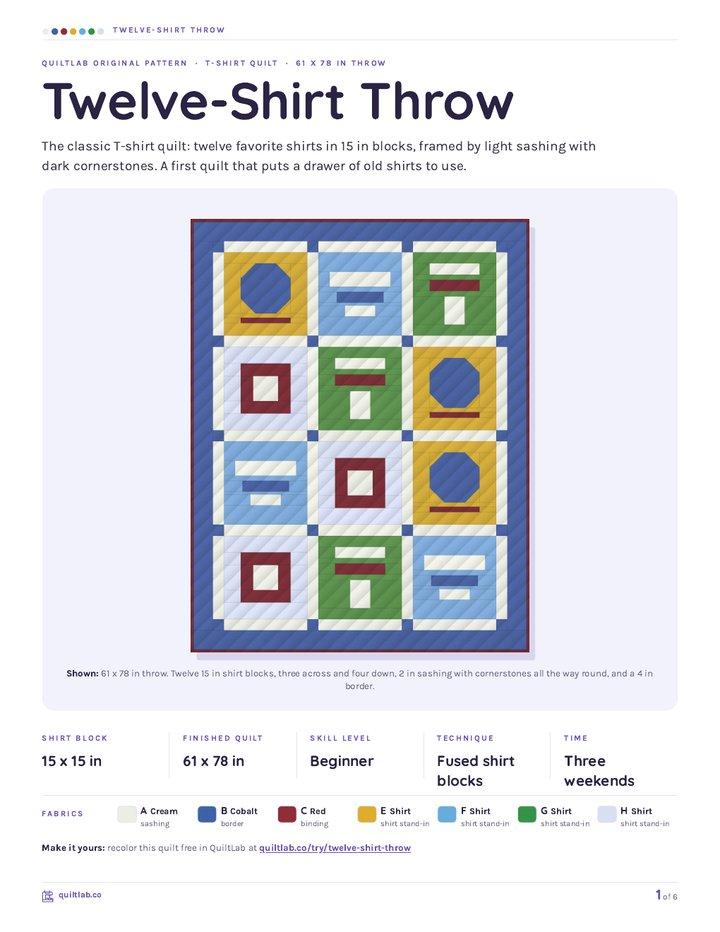
Twelve-Shirt Throw
Quilt patternBeginner · 61 x 78 in throw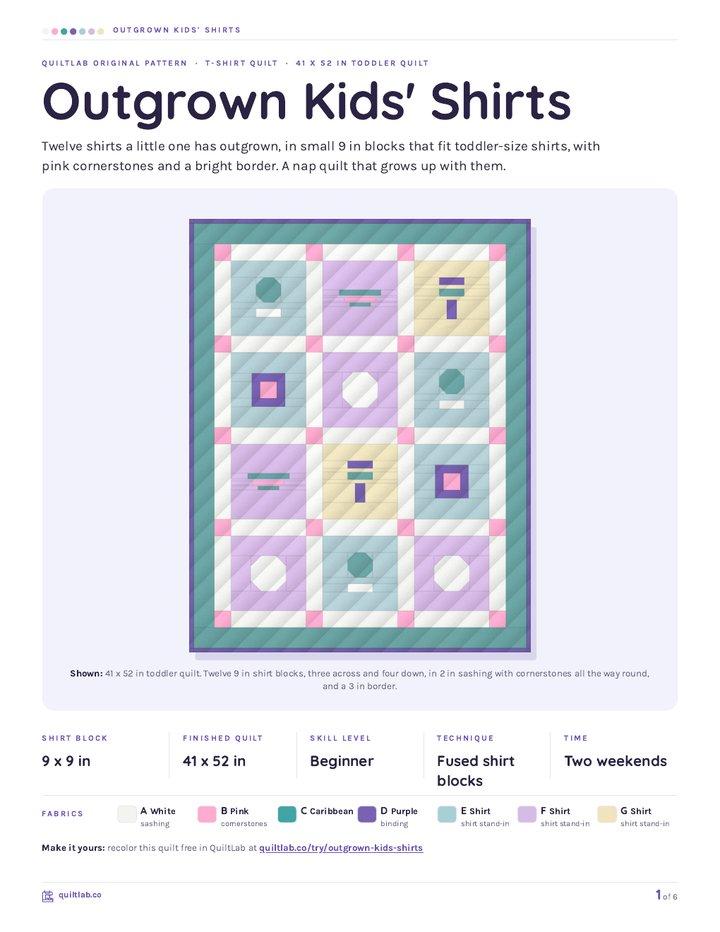
Outgrown Kids' Shirts
Quilt patternBeginner · 41 x 52 in toddler quilt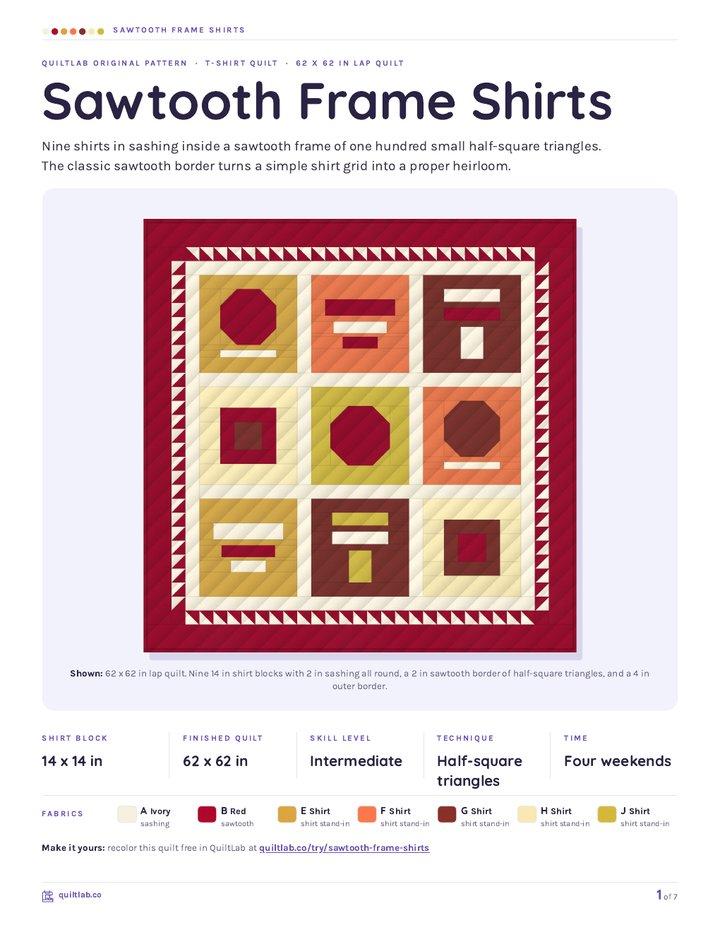
Sawtooth Frame Shirts
Quilt patternIntermediate · 62 x 62 in lap quilt
Plan your next quilt
Lay out blocks and try colors in QuiltLab's grid editor before you cut.
Free forever, no card needed.
Get quilting tips by email
QuiltLab updates, tips and quilting inspiration. Unsubscribe anytime.
Related posts
How to Wash a Quilt for the First Time
Use the directions for the quilt's actual materials, check the finished construction, and record what happened after it dries before writing a care note.

Joining Quilt Binding Ends: Overlap by the Strip Width
Overlap the two binding tails by the cut width of your strip, then sew them on a 45-degree diagonal. Here's why that works, with a 12-inch worked example.
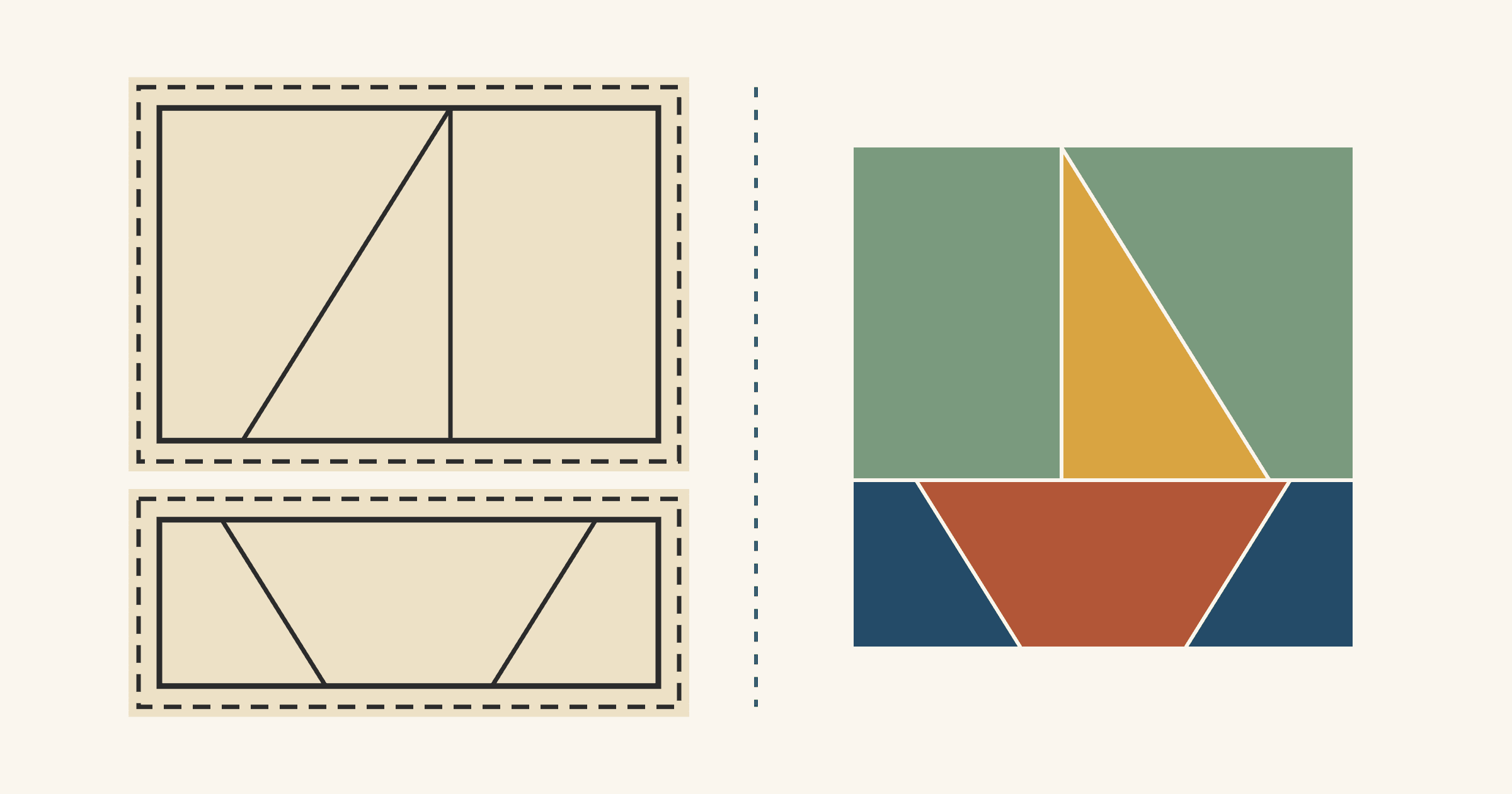
How to Read a Foundation Paper Piecing Pattern: Which Line Is Which?
Numbers set the sewing order, the lines inside a section are where you stitch, and the outer pair of lines marks the finished edge and the trim line.