Sorting Quilt Scraps by Value Before You Choose a Layout
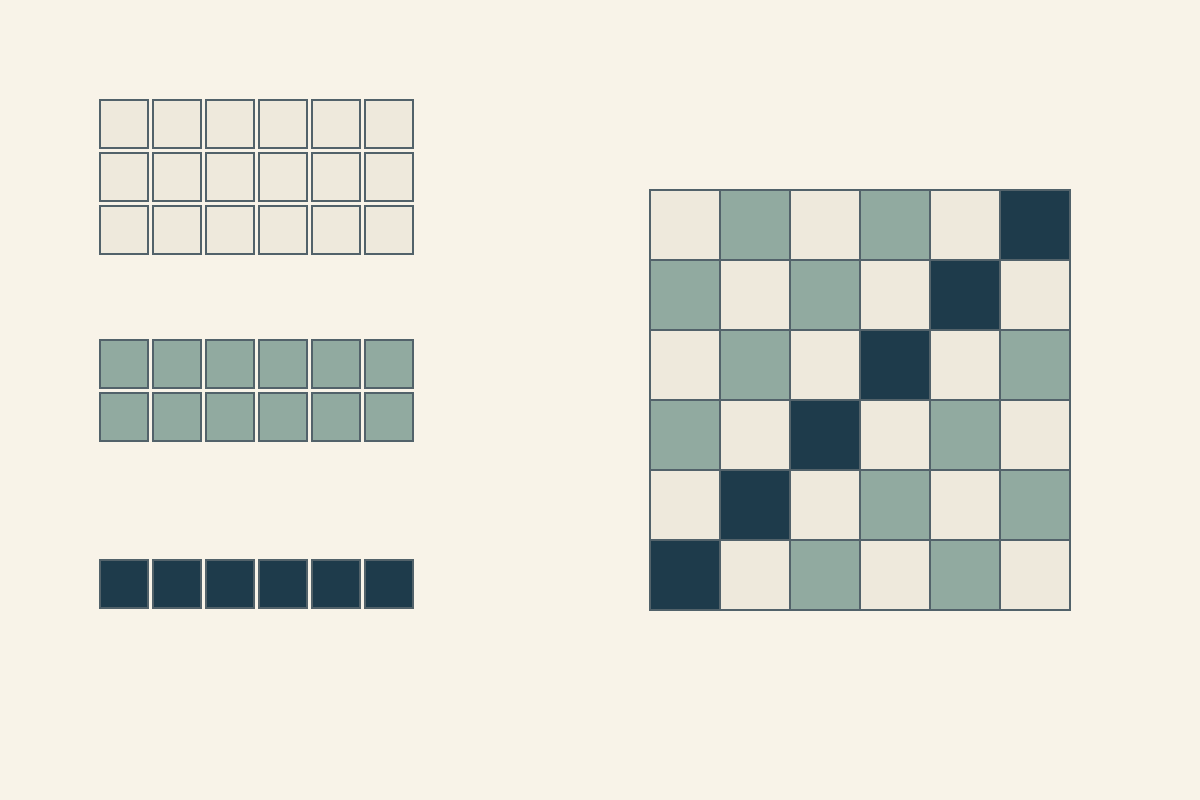
Sort scraps by their light-dark role in this project, then count how many usable pieces each role can supply. Compare that count with the layout before committing to it. A bin with plenty of fabric can still lack the dark pieces a strict light-dark checkerboard needs.
Begin with lights, mediums, darks and a small uncertain pile. Keep color families loose while you decide which fabrics can do the same job. You can bring color back into the plan after the value counts work.
Sort against neighbors rather than a color name
Choose one clear light and one clear dark from the fabrics you might use. Put candidates between them and compare the actual pieces in the same light. A fabric is a medium in relation to this pull, rather than because someone called its color sage or rust.
Carolyn Gibbs' scrap-quilt advice explains how different fabrics can share a value job and why mediums need particular attention. The important question is whether the fabric stays distinct from its intended neighbor.
A navy print with large cream spaces may move between roles depending on the cut. Fold or cover it to the intended patch size and inspect several possible areas. Don't classify the entire scrap from one dark corner.
Leave ambiguous pieces aside while you choose the basic structure. An uncertain pile is useful information, not a sorting failure.
Count usable patches, not the size of the pile
Write the required cut size before counting fabric. A long strip that's too narrow for that cut doesn't become usable because there is more length elsewhere.
Our usable-size scrap inventory works through that measurement problem. For the value count here, assume the pieces have already passed the project's size and condition checks.
Record how many pieces you can actually use in each role. Keep spare fabric for a sample or possible recut separate from the design count. If a scrap could provide either one large piece or several small pieces, choose its use once rather than counting both possibilities.
The value list can be short: "18 light units, 12 medium units, six dark units." Keep fabric IDs or small swatches beside the totals so a later recount uses the same classification.
Work a thirty-six-piece inventory
For a hypothetical study, imagine 36 equal-sized usable pieces:
| Role | Available pieces | Share of the total |
|---|---|---|
| Light | 18 | One half |
| Medium | 12 | One third |
| Dark | 6 | One sixth |
The total is 18 + 12 + 6 = 36. That is enough to fill a six-column, six-row map. It doesn't establish that every six-by-six arrangement will work.
We drew the inventory and placement study for this article and haven't sewn them. The letters describe assumed roles; actual fabrics still need to earn those roles together.
Suppose your first idea is a strict alternating light-dark checkerboard. An even six-by-six grid contains 18 light positions and 18 dark positions. The light pile is complete, but six dark pieces leave you twelve dark pieces short.
The twelve mediums don't automatically close that gap. If they merge with the lights at the edges that matter, putting them into dark positions changes the intended structure.
Choose a layout the value counts can support
One option is to find twelve more usable dark pieces and keep the original checkerboard. Another is to choose an arrangement with three deliberate roles.
For the three-value map below, each row contains three L cells, two M cells and one D cell. Across six rows, that uses exactly 18 lights, 12 mediums and six darks.
The first row reads L-M-L-M-L-D. Each following row shifts the sequence one cell to the left, with the first cell moving to the end. The dark position steps across the map, while the medium and light pieces fill their own positions.
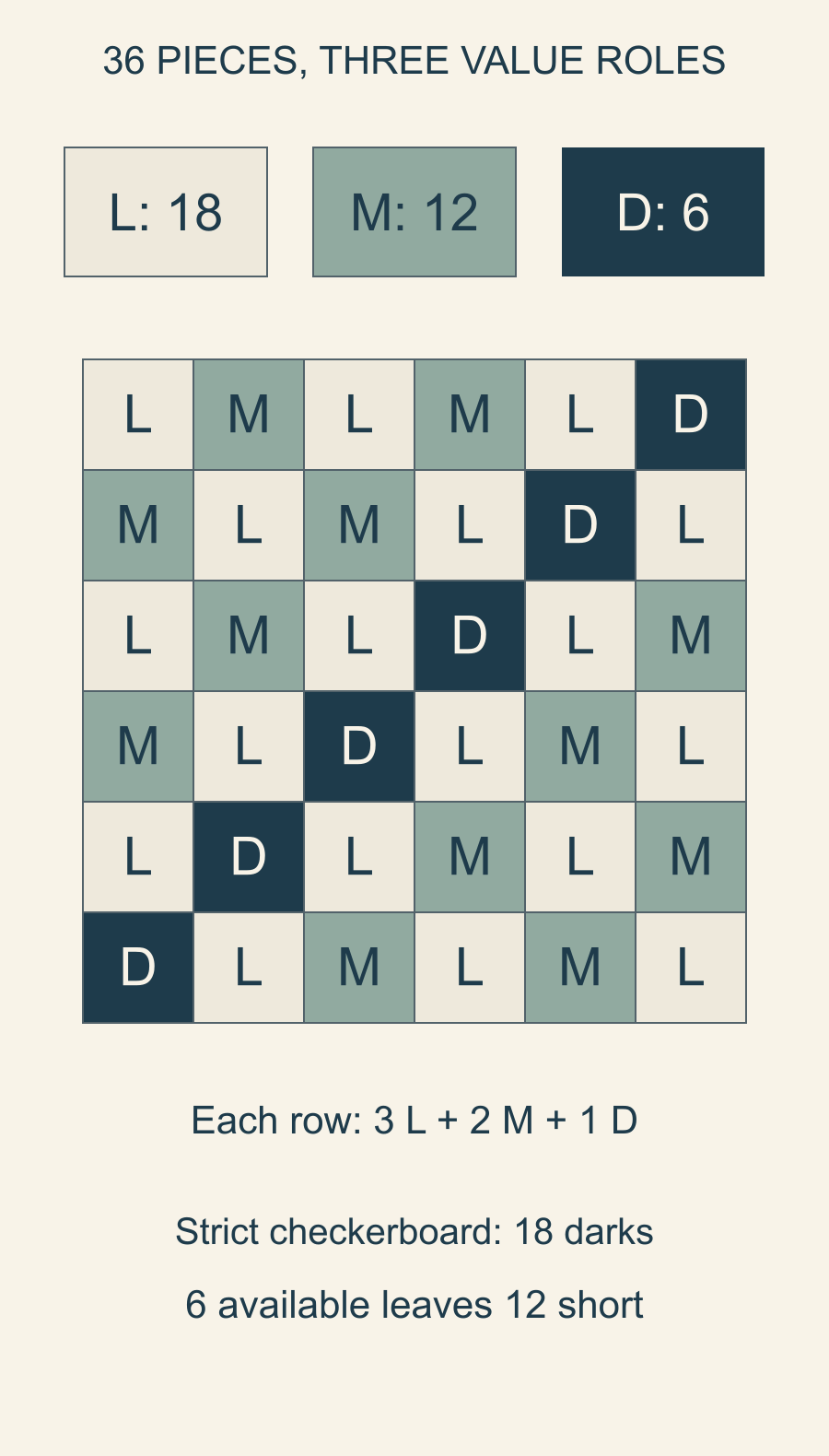
This arrangement asks the six darks to provide occasional strong marks rather than half the field. Decide whether that suits the quilt you want. The arithmetic makes it feasible with the assumed inventory; the actual fabric pull decides whether its relationships read clearly.
If you dislike that role pattern, sketch another with the same totals. The useful constraint is the inventory, not an obligation to keep our arrangement.
Keep mixed-value prints visible in the record
Chris of Chris Quilts describes difficult mixed-value fabrics in Scraps, Value and Beautiful Buts. A print can be appealing while carrying enough light and dark to resist one simple category.
Try such a fabric in the exact position you are considering. If its dark motif falls against a dark neighbor, that local edge may disappear even when the rest of the patch reads light.
You can reserve the fabric for a larger area, move it to a less demanding position or leave it for another project. Note the reason beside the scrap's ID. That keeps the same doubtful piece from drifting back into the count unnoticed.
Don't try to solve every print by adding a fourth value label. A temporary question mark is often clearer than a category that only one fabric occupies.
Check the pull at the scale of the quilt
Arrange a few rows of actual pieces together. Step back, then look closely at the most important shared edges. Check whether the dark marks remain distinct and whether any medium unexpectedly takes over a light role.
Leslie's color-value account at The Seasoned Homemaker describes using a black-and-white phone photo during a class to compare fabric values. Our grayscale checking guide explains that method in more detail.
Use a photo to help compare the current pull, while remembering that the quilt will contain the real prints. A tiny phone view may simplify busy marks that remain obvious nearby.
Exchange the positions of one medium and one dark, and the inventory stays at 18 lights, 12 mediums and six darks. Mark their new positions on the map and check the neighbors at both places.
Reclassifying a piece is a different change. If one medium earns a dark role in this pull, the totals become 18 lights, 11 mediums and seven darks. Change one M position to D on the map as well. You still have 36 pieces; you've changed the roles the layout must accommodate.
Swap prints without losing the plan
Once the role map works, try different prints within the same role. Swapping one light for another keeps the light count steady while letting you spread a distinctive motif or color.
Lay out the strongest prints first if you want to avoid an accidental cluster. Then fill the quieter positions. Our scrappy-quilt planning article shows a broader approach to keeping a mixed pull coherent.
Start with one bin and one intended project. Record the usable value counts, compare them with a proposed layout, and inspect a small group of actual neighbors. Choose the pattern after that count gives you a realistic place to begin.
Free patterns to try
Printable PDF patterns with cutting charts and diagrams, free to download.
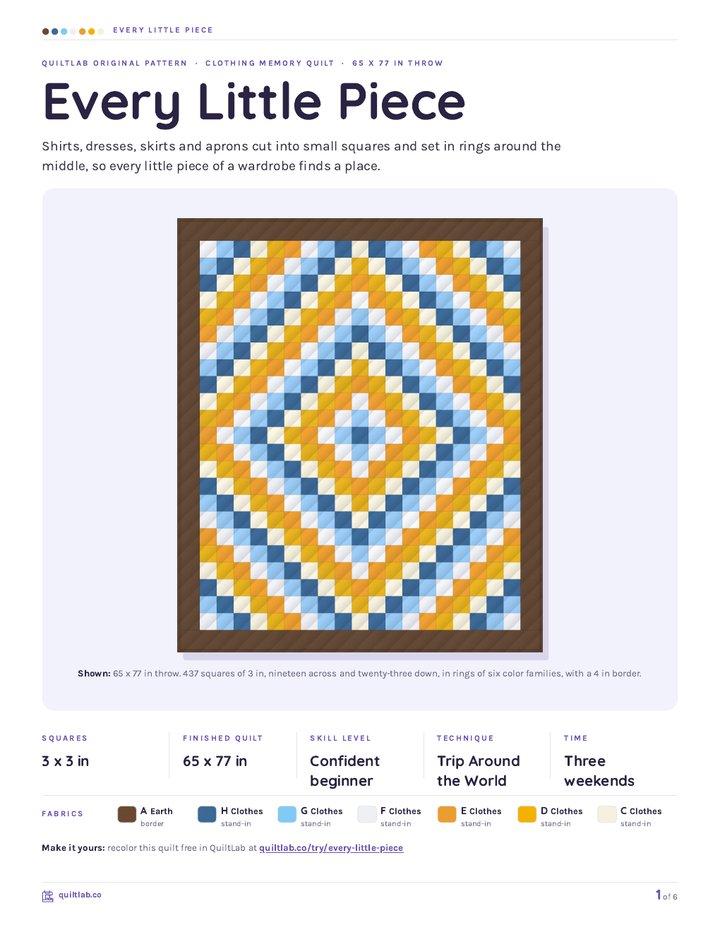
Plan your next quilt
Lay out blocks and try colors in QuiltLab's grid editor before you cut.
Free forever, no card needed.
Get quilting tips by email
QuiltLab updates, tips and quilting inspiration. Unsubscribe anytime.
Related posts
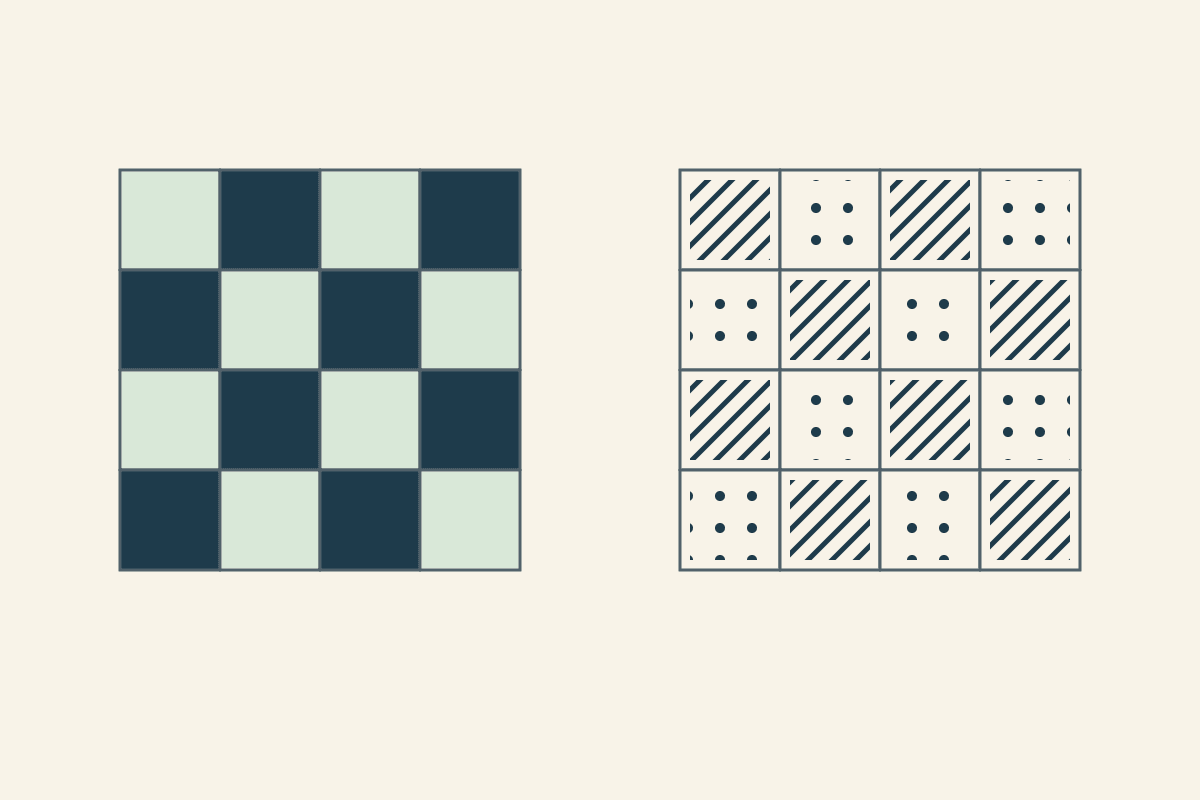
How to Plan a Colorblind Friendly Quilt Design
Give fabrics clear roles, check their light-dark contrast and use a readable placement key. A sixteen-cell study keeps the plan clear without hue alone.
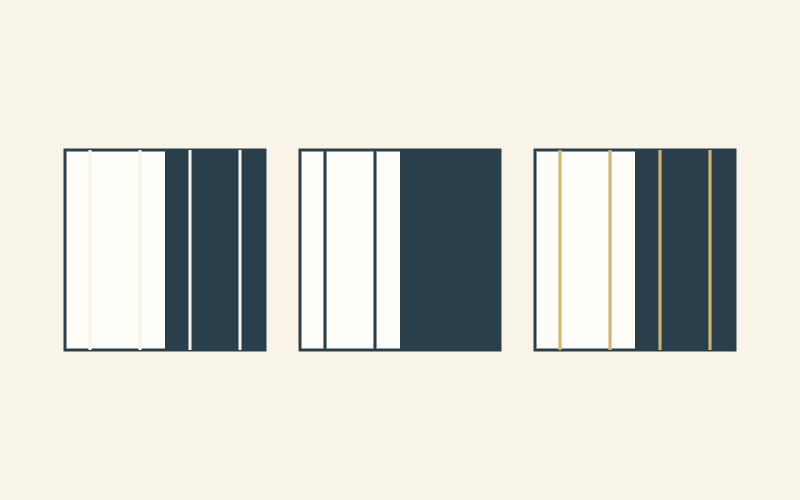
Choose Quilting Thread Color to Blend or Stand Out
Hold the quilting path still while comparing colors, read exact thread specifications, and make a labeled sample with your actual fabrics.
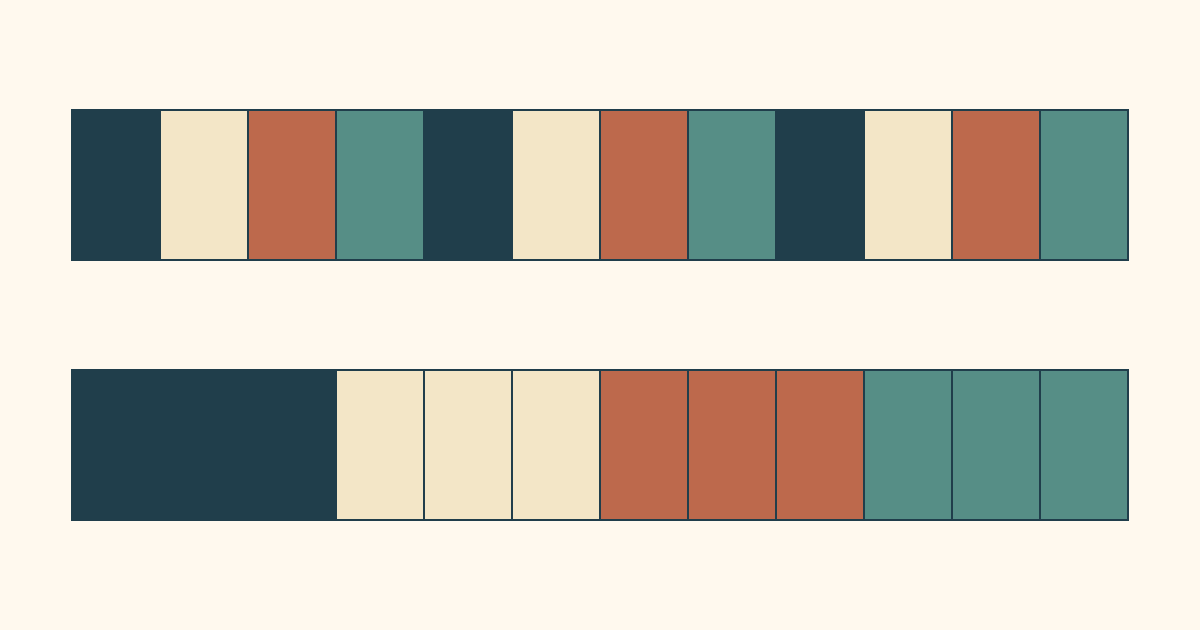
Scrappy Quilt Binding: Plan the Color Rhythm
Give leftover binding strips a deliberate order. Compare repeated and grouped colors, allow for joins and audition the sequence around a 40 x 52 quilt.